


Jewelry Clasps: Types, Comparison, and Choosing the Right Closure
Jewelry clasps play a crucial role in both the security and style of necklaces, bracelets, and other adornments. Different types of clasps, such as lobster clasps, spring rings, and toggle clasps, offer varying levels of ease, durability, and aesthetic appeal. Choosing the right clasp depends on factors like the jewelry’s weight, the wearer’s dexterity, and the desired balance between function and design.
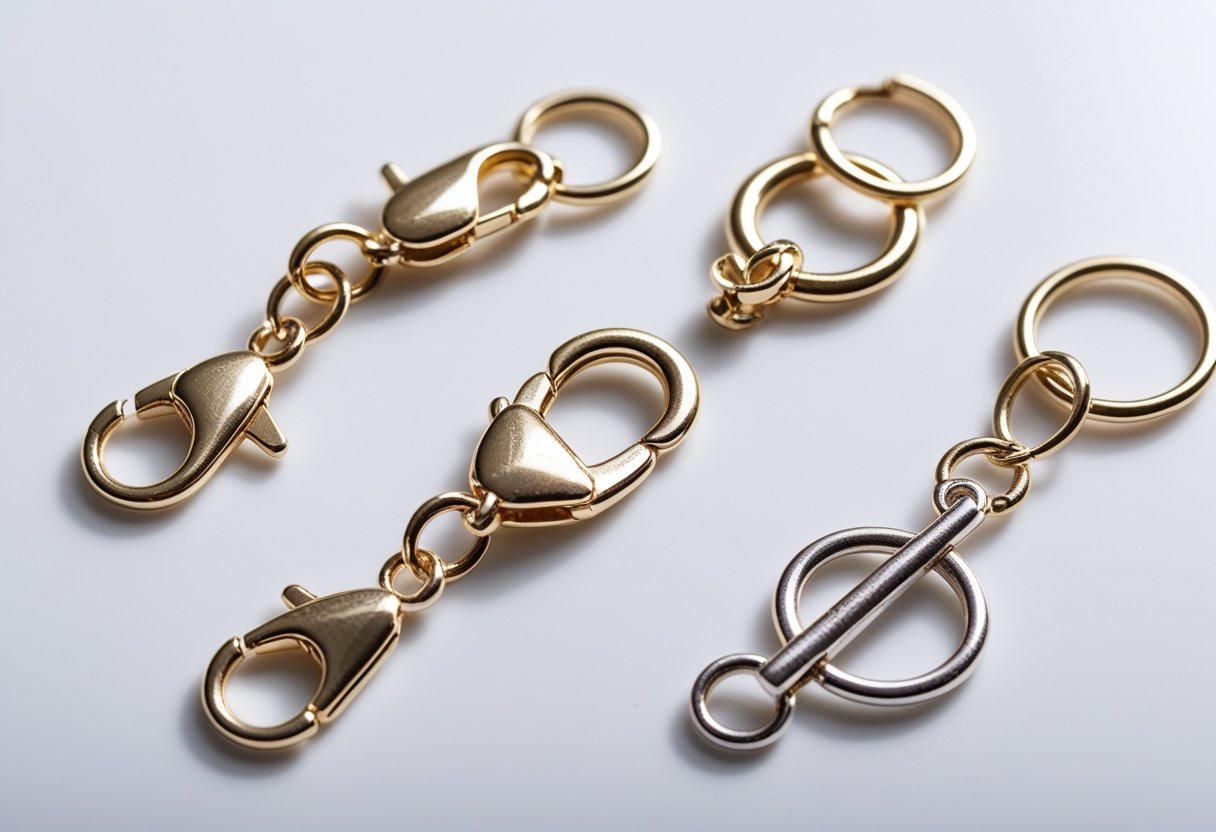
Comparing lobster clasps and spring rings highlights contrasts in security and usability. Lobster clasps are generally stronger and easier to operate with one hand, making them ideal for heavier pieces, while spring rings suit lighter, more delicate jewelry but can be harder to manage. Toggle clasps add a decorative element and ease of use for bracelets, though they rely on weight and tension to stay secure.
When selecting a clasp for bracelets or necklaces, understanding these differences helps in making practical choices that enhance wearability and longevity. For jewelry makers, having the right clasp as part of their supplies is essential to create pieces that meet both functional and stylistic needs.
Overview of Jewelry Clasps
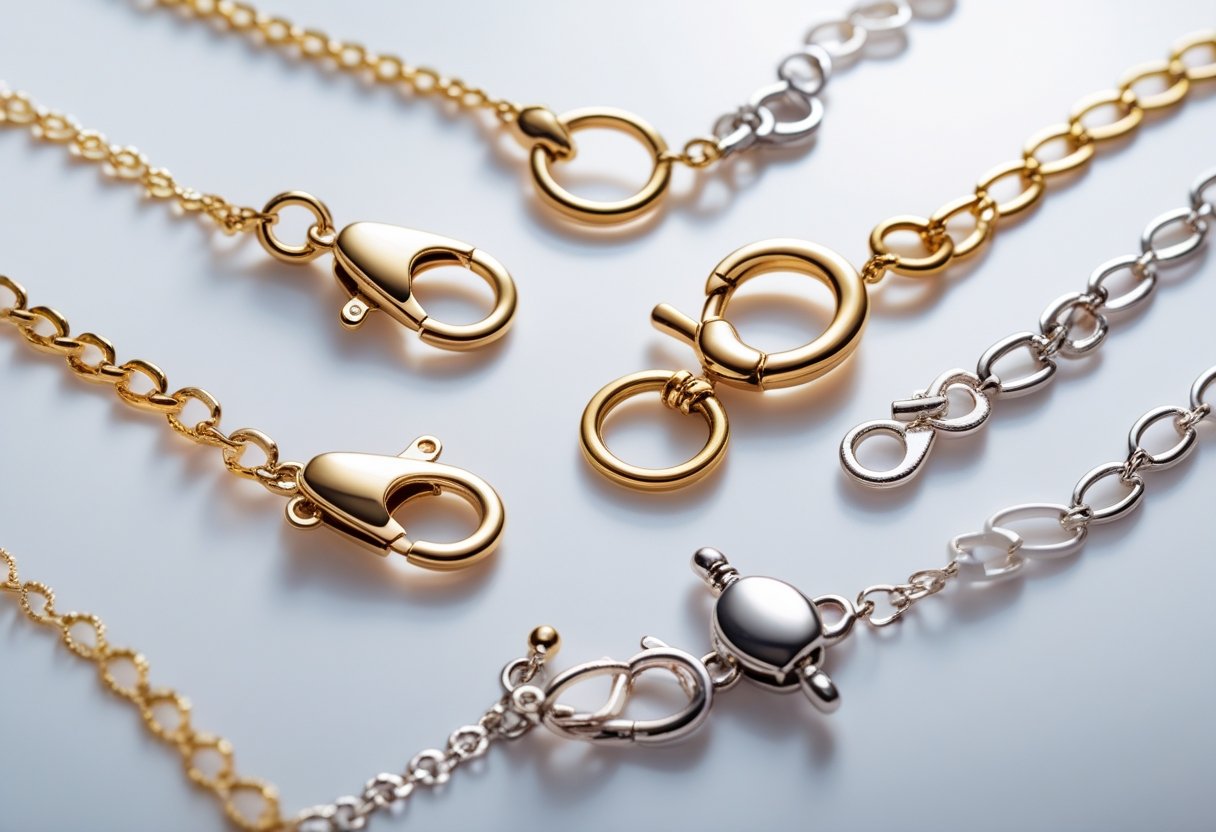
Jewelry clasps are small but crucial components that secure necklaces, bracelets, and other adornments. Their designs range from simple hooks to intricate locking mechanisms, balancing functionality with style. Understanding the types, roles, and history of these clasps helps in selecting the right closure for different pieces.
What Are Jewelry Clasps?
Jewelry clasps are fastening devices that connect the ends of a piece of jewelry, allowing it to be worn and removed safely. They come in various forms, such as lobster clasps, spring rings, toggle clasps, and magnetic clasps. Each type uses a distinct mechanism for opening and closing, such as spring-loaded levers or hooks.
Their purpose is to ensure security without compromising comfort or design. Clasps must match the jewelry's weight and style; for example, heavy chains benefit from larger, sturdier clasps like lobster claws, while delicate necklaces often use smaller spring rings or fishhook clasps.
Role of Clasps in Jewelry Design
Clasps do more than just secure; they often contribute to the piece’s aesthetics and practicality. Some, like toggle and bolo clasps, are designed to be visually prominent and part of the overall look. Others, such as magnetic clasps, prioritize ease of use, especially for those with limited dexterity.
Designers select clasps based on balance, comfort, and security. For example, box clasps with gemstone embellishments add elegance to expensive necklaces. Meanwhile, slide lock clasps help distribute weight across multi-strand bracelets for comfort and functionality.
Evolution of Jewelry Closures
Jewelry clasps have evolved significantly from simple hooks and pins used in ancient times. Early clasps, such as those in ancient Egypt, often doubled as decorative symbols. Roman and Greek designs introduced more elaborate and functional fastenings like the fibula, a precursor to modern safety pins.
The Industrial Revolution enabled mass production and innovation, introducing popular clasps like the spring ring. The 20th century saw a surge in clasp diversity, reflecting advances in materials and fashion trends, giving rise to modern staples like lobster clasps, toggle clasps, and magnetic clasps.
Over time, clasps went from purely functional elements to integrated design features, with technology and style influencing their complexity and aesthetic role.
Types of Clasps for Jewelry
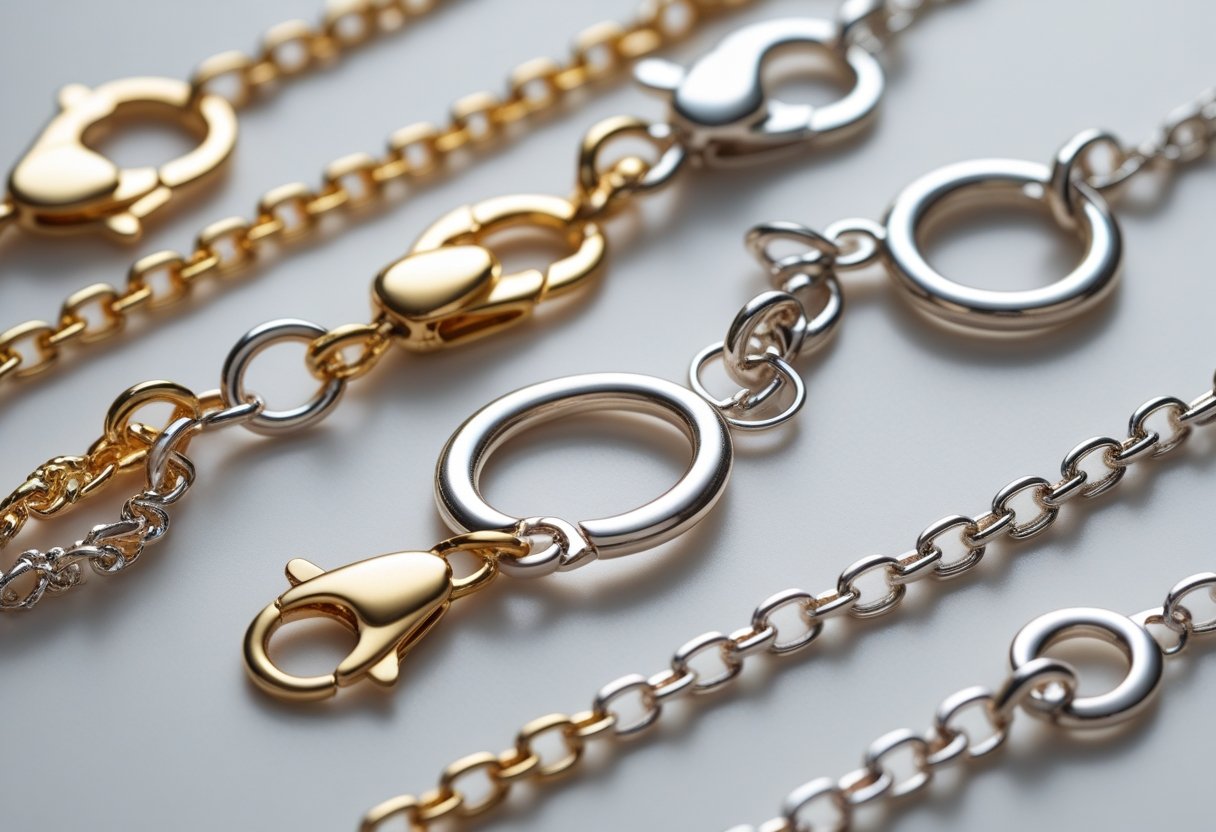
Jewelry clasps serve the purpose of securely fastening pieces while accommodating different styles and ease of use. Selecting the clasp involves balancing security, aesthetic appeal, and user convenience based on the type of jewelry and wearer needs.
Spring Ring Clasp
The spring ring clasp features a small circular ring with an internal spring mechanism. To open it, the wearer pulls back on a tiny lever that compresses the spring, creating a gap to attach or detach the jewelry. This clasp type is best suited for lightweight and delicate pieces, such as thin necklaces or anklets.
Its compact size makes it discreet, blending into fine jewelry without altering the design’s appearance. However, the small lever can be difficult for individuals with limited dexterity to operate. Spring rings are less secure than some other clasps and may not hold heavy or valuable jewelry as reliably. Regular inspection is necessary to ensure the spring and lever function properly.
Lobster Clasp
The lobster clasp is recognized by its robust, spring-loaded mechanism shaped somewhat like a lobster claw. It opens when the wearer presses a lever and closes tightly when released, offering better security than a spring ring clasp. This makes it suitable for heavier necklaces and bracelets.
Lobster clasps are generally easier to operate one-handed, even for users with some dexterity challenges, due to their larger size and ergonomic design. They come in various sizes and finishes, fitting well with both casual and formal jewelry. While slightly bulkier than spring rings, they provide a more reliable fastening method for daily wear and withstand more frequent use.
Toggle Clasp
A toggle clasp consists of two parts: a bar and a loop. To fasten, the wearer inserts the bar through the loop and turns it perpendicularly to prevent slipping. This mechanism relies on gravity and weight, making it secure for certain jewelry types, especially bracelets.
Toggle clasps are valued for their decorative appeal and ease of use since they can often be fastened with one hand. They work well on chunkier or statement pieces but are generally less suitable for very fine or delicate chains. Security depends on correct sizing; if the bar is too short or loop too large, accidental opening may occur. Regular checks for wear are recommended to maintain clasp reliability.
Magnetic Clasp
Magnetic clasps involve two magnetized ends that attract to join the jewelry securely. They offer quick fastening, which benefits those with limited hand strength or dexterity issues. These clasps are typically used on lightweight to moderate-weight pieces.
While magnetic clasps provide ease of use, they can be less secure under tension or with heavier jewelry. Some include screw-on features or safety chains to mitigate accidental openings. However, magnets may weaken over time, especially if exposed to wear or chemicals. Magnetic clasps also require careful cleaning to maintain their hold and are less common on high-value or robust designs due to potential failure risks.
Specialty and Decorative Jewelry Clasps
These clasps combine secure fastening with unique mechanisms or designs, often enhancing the piece's aesthetic while providing reliable closure. Each type suits different jewelry styles and levels of security, catering to both vintage and modern preferences.
Box Clasp
The box clasp uses a tab that slides into a decorative box-shaped housing and locks in place. It often includes a safety latch or figure-eight safety for extra security, making it popular on heavier necklaces and bracelets.
Known for its durability, the box clasp works well with fine jewelry, especially pearl strands and tennis bracelets. Its mechanism is easy to operate but provides a very firm hold, reducing accidental openings during wear.
Visually, box clasps can be ornate, featuring engravings or gemstone settings that add an elegant touch. This clasp combines function and decoration, often serving as a design focal point.
Fish Hook Clasp
The fish hook clasp consists of a hook that fits into an oval or similarly shaped hollow piece, resembling a fish’s shape. It is favored for its simplicity and steady hold on necklaces and bracelets.
This clasp type allows for one-handed operation but requires proper sizing to avoid slipping. Its slender design suits delicate chains and vintage-inspired jewelry.
Fish hook clasps often come with added safety catches. They balance ease of use with subtle security, suitable for jewelry that demands a refined, unobtrusive closure.
S Hook Clasp
The S hook clasp uses a simple S-shaped hook that attaches to a ring or loop at the other end of the piece. It is one of the oldest clasp designs, appreciated for its straightforward functionality.
This clasp is easy to use and can be adjusted slightly for tension, but it relies on the wearer’s care to ensure it stays closed securely. It suits handmade and artisan jewelry well.
S hook clasps add a rustic or vintage charm due to their open shape and handmade appearance. They often appear in bohemian or natural-inspired designs, lending a unique decorative element.
Screw Clasp
A screw clasp uses threaded components that twist together to close securely. It provides a very tight hold and is less likely to come undone accidentally than many other types.
This clasp is ideal for heavier or high-value necklaces and bracelets where security is critical. It requires both hands to fasten and unfasten, which can be less convenient.
Screw clasps are generally understated but known for strength. They are commonly made from metals like gold or silver and used in fine or heirloom jewelry where durability is a priority.
Lobster Clasp vs Spring Ring: Key Differences
Lobster clasps and spring ring clasps are two of the most common closures in jewelry. They differ significantly in design, mechanism, usability, and suitability for various types of jewelry. Understanding their characteristics helps in selecting the right clasp for a specific piece.
Design and Mechanism Comparison
A spring ring clasp is circular and features a small spring-loaded lever that opens a gap to hook onto the opposite loop. It is typically lightweight and minimalistic, often made in simple metals.
The lobster clasp, named for its claw-like shape, has a spring-loaded lever on the side but a heavier, bulkier body. Its mechanism involves opening a hinged arm that snaps closed. This design allows for more style variations and generally adds weight to jewelry.
Because of its shape and construction, the lobster clasp is sturdier and more durable than the spring ring clasp.
Ease of Use and Security
Spring ring clasps are smaller and sometimes difficult to operate, especially for individuals with limited dexterity. Their delicate size limits how much weight they can bear, making them less reliable for heavier or frequently worn pieces.
Lobster clasps offer a stronger grip and are easier to open and close, although some may still find operating the lever tricky with one hand. They rarely come undone unintentionally, enhancing overall security.
Both clasps rely on spring-loaded mechanisms for automatic closure, but the lobster clasp’s design generally provides a more secure hold.
Best Applications and Suitability
Spring ring clasps are best suited for lightweight jewelry with smaller chains, such as delicate necklaces or bracelets. Their simple shape is unobtrusive and cost-effective but limited in load capacity.
Lobster clasps work well for medium to heavy jewelry pieces due to their durability and stronger hold. They are common in everyday necklaces and bracelets and can support larger chains or beads.
Lobster clasps also have stylistic versatility, available in various shapes and finishes. Spring rings are better when the goal is minimal visual impact and lightweight comfort.
Toggle Clasp Jewelry: Features and Uses
Toggle clasps consist of two parts that work together to fasten jewelry securely while adding a decorative element. Their design allows for easy handling, making them popular in necklaces, bracelets, and anklets. Toggle clasps also provide versatility in styling, often positioned as part of the visible design rather than hidden.
How Toggle Clasps Work
A toggle clasp includes a bar, known as the T-bar, and a ring or open shape with an opening. The wearer inserts the T-bar through the opening and then lets it rest perpendicular, which prevents it from slipping back out. This simple mechanism relies on the size and shape of the opening and the T-bar’s length to keep the jewelry secure.
Typically, the ring’s shape varies – round, oval, or square – with oval or square openings providing easier use and better security compared to round ones. The design requires enough clearance at the clasp ends, meaning beads near the toggle should not obstruct the bar’s movement through the opening.
Styling Jewelry with Toggles
Toggle clasps serve dual purposes: functionality and aesthetic appeal. They are often designed to be visible and can act as focal points on a piece. For necklaces, toggles may be placed toward the front or side, complementing pendants or decorative elements.
Many artisans incorporate toggles into bracelet and anklet designs as a stylish yet practical closure. Unique or ornate toggle shapes create an attractive detail that blends with the overall jewelry style rather than appearing purely utilitarian.
Toggle Clasp Pros and Cons
Pros:
- Easy to fasten and unfasten without tools or help.
- Can be designed to complement and enhance the jewelry’s appearance.
- Generally sturdy and reliable when sized correctly.
- Suitable for heavier or chunkier jewelry pieces.
Cons:
- Less secure than some locking clasps, especially on very lightweight or slippery chains.
- Requires precise matching of the T-bar and ring size; mismatched sets can slip.
- May need extra chain or bead length near the clasp to function properly, affecting design constraints.
Choosing the Right Jewelry Clasp
Selecting a jewelry clasp involves evaluating security, ease of use, and the style of the piece. Different clasp types suit different jewelry designs and wearer needs, making thoughtful choice essential for functionality and appearance.
Factors to Consider
Security is the primary factor when choosing a jewelry clasp. Clasps like lobster clasps provide strong locking mechanisms that prevent accidental openings, while magnetic clasps may be less secure but easier to fasten.
The size and weight of the jewelry also matter. Heavier pieces require stronger clasps that can support the weight without strain or damage. Material durability, such as sterling silver or stainless steel, impacts the clasp’s lifespan.
Aesthetic compatibility is another consideration. Clasps should complement the jewelry’s design—toggle clasps offer decorative appeal, while spring ring clasps remain discreet on finer pieces. Comfort and user dexterity round out these factors to ensure the clasp suits the wearer’s daily use.
Clasp Selection for Bracelets
Bracelets often require clasps that balance security with ease of operation, given their location on the wrist. Lobster clasps are widely used because they lock securely and can be operated with one hand, which is practical for wrist jewelry.
Toggle clasps add style and are convenient for chunkier or statement bracelets but need proper sizing to avoid accidental opening. Magnetic clasps offer quick release functionality, ideal for lightweight or casual bracelets, but might lack the strength for valuable pieces.
In short, durability and user access guide clasp choice for bracelets. Often a secure but manageable mechanism is preferred to accommodate frequent wear and removal without risking loss.
Clasp Selection for Necklaces
Necklaces usually emphasize security due to the risk of loss if the clasp fails. Lobster clasps are a top choice because of their robust spring mechanism and versatility across chain styles and weights.
Smaller pieces often use spring ring clasps, which are fairly secure but less convenient for those with limited dexterity. Box clasps and hook clasps may be found on heavier or vintage necklaces, offering solid locking and design integration.
Choosing a clasp for necklaces involves balancing strength with the discreetness or prominence desired. The clasp must hold firmly during movement and support the necklace’s design intention.
Clasp Selection Based on Dexterity
User dexterity significantly influences clasp selection. Magnetic clasps excel for users with limited hand strength or arthritis, as they connect quickly without fine manipulation.
Toggle clasps also provide ease of use because they fasten by sliding a bar through a loop, which can be simpler than tiny levers or tabs. Conversely, spring ring clasps and smaller lobster clasps may present challenges due to their size and required finger strength.
Jewelry clasp choice accommodating dexterity ensures the wearer can manage their jewelry independently and comfortably, enhancing overall usability without compromising security or style.
Jewelry-Making Supplies for Clasps
Selecting the right clasps and accessories is essential in jewelry making to ensure both functionality and aesthetic appeal. It involves finding reliable clasps, using the appropriate tools, and skillfully incorporating these components into custom designs.
Finding Quality Clasps
High-quality clasps are crucial for durability and security in jewelry pieces. Common options include lobster clasps, known for their strong spring mechanism; spring ring clasps, favored for delicate jewelry; toggle clasps for ease of use and style; box clasps which offer robust locking; magnetic clasps for convenience; and less common types like fish hook, S hook, and screw clasps.
Materials matter. Clasps made of sterling silver, gold, or stainless steel provide corrosion resistance and strength. Plated pieces may wear over time and require more care. It’s important to choose clasps that match the weight and style of the jewelry to maintain balance and security.
Tools and Materials Needed
Essential tools for working with clasps include round-nose pliers, flat-nose pliers, and wire cutters. These facilitate opening and closing jump rings, bending wires, and attaching clasps securely. Tweezers and magnifiers can also help when working with smaller clasps like spring rings.
Materials such as jump rings, split rings, and crimp beads aid in connecting clasps cleanly to chains, cords, or beaded strands. Using the right-sized jump rings is vital to prevent movement or accidental release. Lubricating mechanisms in lobster and spring ring clasps can extend their lifespan and ease operation.
Integrating Clasps into Custom Designs
When adding clasps to custom jewelry, consideration of both function and style guides placement. For example, toggle clasps often become a design focal point due to their decorative nature and are popular on bracelets and chunkier necklaces. Lobster clasps suit heavier necklaces or pieces that require extra security.
Balancing clasp size and weight with the jewelry piece ensures comfort and durability. For delicate chains, spring ring clasps offer subtle closures without drawing attention. Magnetic clasps provide easy fastening for wearers with limited dexterity but may need additional security features when used on valuable or heavy pieces.
Proper installation with quality jump rings or connectors reduces wear and accidental opening. Soldering jump rings after clasp attachment improves safety, particularly for magnetic and toggle clasps.