


Types of Jewelry Findings: Complete Guide & Chart Explained
Jewelry findings are the small, essential components that connect and complete a jewelry piece. They include clasps, jump rings, ear wires, headpins, eyepins, and other metal parts that provide both structure and functionality. Understanding the different types of findings and their specific uses is key to creating professional and durable jewelry designs.
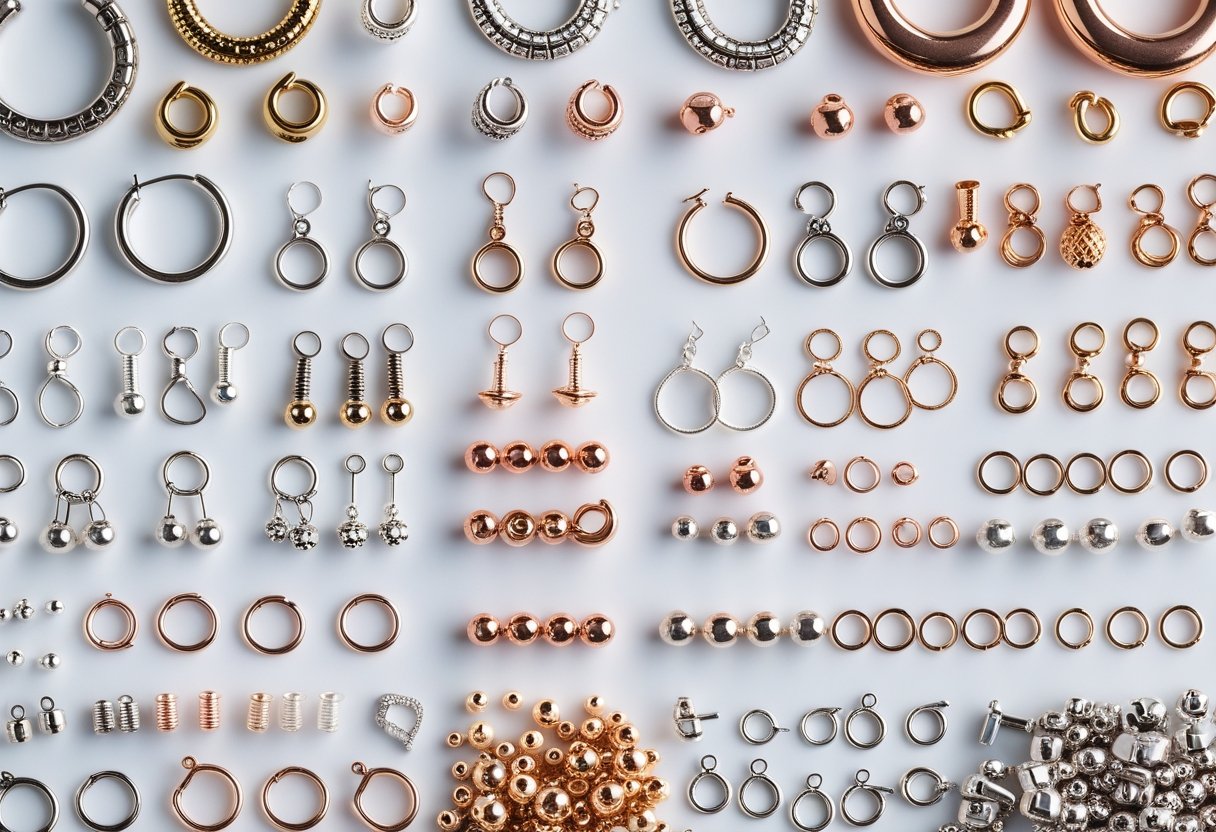
A jewelry findings chart can help identify and organize these components by type and purpose, making it easier for designers to choose the right supplies. Earring findings, for example, come in various forms like hooks, posts, and lever-backs, each suited to different styles and levels of comfort. The differences between headpins and eyepins—both metal pins used to hold beads—also influence how pieces are assembled and finished.
Metal findings form the backbone of jewelry making supplies, offering options in materials like sterling silver, gold-filled, and base metals. Knowing the types of ear wires and other findings allows designers to enhance both the look and functionality of their creations while ensuring that jewelry is secure and wearable.
What Are Findings in Jewelry?
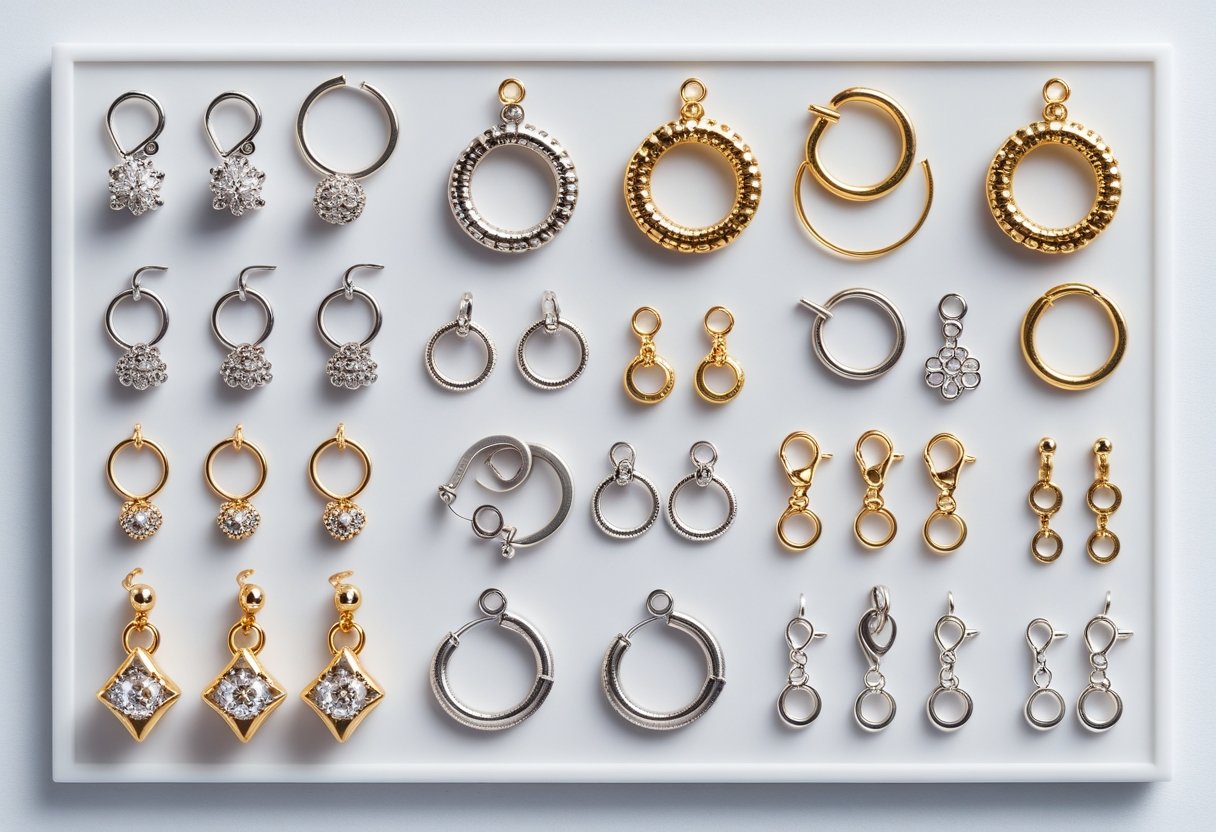
Findings are the small components used in jewelry making to connect, secure, and complete pieces. They are essential for both the structure and function of jewelry, ensuring parts stay together and wear properly.
These components are not decorative but serve practical purposes. Examples include clasps, jump rings, earring backs, crimps, and pins.
Findings come in various materials, with metal being the most common. Metal findings provide durability and compatibility with different jewelry styles.
Common finding types include:
- Clasps: Secure necklaces and bracelets.
- Jump Rings: Connect various components.
- Ear Wires: Form the base of earrings.
- Headpins & Eyepins: Hold beads and create dangles.
- Crimps: Secure stringing material on beaded jewelry.
Each has a specific role in assembling and finishing a jewelry piece. Without findings, jewelry would lack stability and wearability. They enable the designer to add functionality and flexibility to their creations.
Types of Jewelry Findings
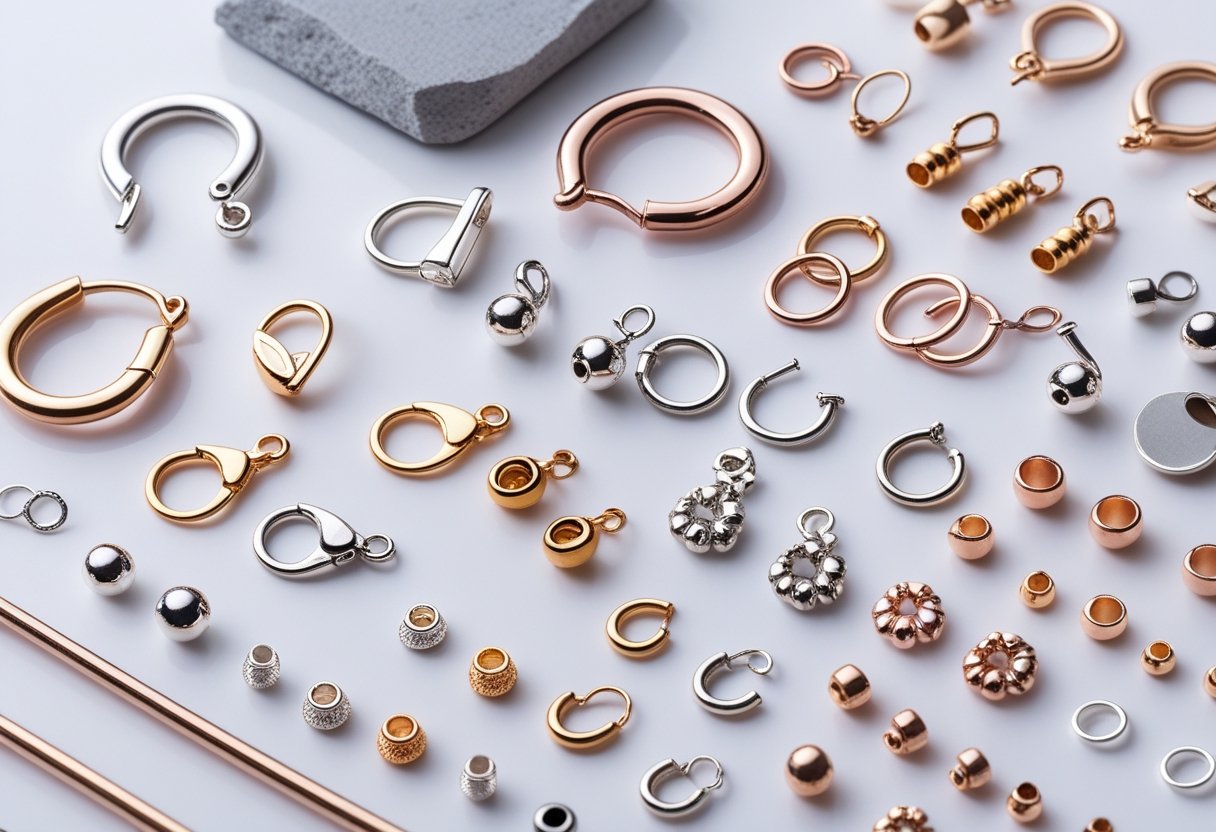
Jewelry findings are essential components that join, secure, or enhance a piece. They vary by function, from fastening mechanisms to decorative mounts, and are crafted from metal or other durable materials. Each type serves a specific role, affecting both the durability and appearance of the finished jewelry.
Clasps and Closures
Clasps secure necklaces, bracelets, and anklets. Popular types include lobster claw, known for its strong hold and ease of use, and spring ring, which is smaller and suited to delicate pieces.
Toggle clasps add decorative appeal mainly to bracelets but work on chunky necklaces too. Magnetic clasps offer convenience for lightweight items but need safety chains for heavier weights.
Others like barrel clasps use screw mechanisms, offering moderate security. Simple options such as hook and eye or S-hook clasps work well for heavier chains but do not fully lock closed.
Connectors and Links
Connectors and links join different parts or segments. The most common are jump rings, which come in open, closed, oval, or split varieties. Open jump rings require careful closing to avoid gaps.
Split rings resemble key rings and are used when a stronger hold is necessary. Connectors may also include chain links, which form the core of chain necklaces and bracelets.
These components often attach clasps, dangles, and pendants, playing a structural role while allowing flexibility in jewelry design.
Bails and Pendant Mounts
Bails attach pendants or charms to chains or cords. They come in several types: pendant bails slide onto a chain and may use jump rings to connect charms; pinch bails clasp around donut-shaped beads.
Glue-on bails are adhesive-backed for attaching to cabochons or handmade components, creating pendants without the need for wire wrapping.
Bails not only hold pendants but also influence how pendants hang and move on the necklace, impacting the overall wearability and style.
Jewelry Findings Chart
Jewelry findings include small, functional components that connect or finish pieces. Understanding the common types and their shorthand symbols helps in selecting the right parts for any project.
Most Common Jewelry Findings
The most frequently used findings include clasps, jump rings, earwires, headpins, and eyepins. Clasps secure necklaces and bracelets, with options like lobster or toggle clasps.
Jump rings connect pieces, often linking chains or attaching charms. Earwires are used in earrings, available as hooks or hoops, to hold decorative elements.
Headpins are straight wires with a flat end to hold beads in place, while eyepins have a loop on one end, useful for creating dangles or links. Crimp beads and bails also appear often for securing and attaching stones or pendants.
Finding Symbols and Abbreviations
Findings are sometimes abbreviated for quick reference in patterns or supply lists. Common abbreviations include:
| Abbreviation | Meaning |
|---|---|
| JR | Jump Ring |
| HP | Headpin |
| EP | Eyepin |
| EW | Earwire |
| CL | Clasp |
| CR | Crimp Bead |
These symbols streamline communication among jewelry makers. Recognizing abbreviations helps quickly identify parts in kits, tutorials, or charts, making the crafting process more efficient.
Earring Findings Explained
Earring findings are essential components that attach decorative elements to the ear. Different styles offer varying levels of security, comfort, and design versatility, influencing the type of earrings they complement.
Post and Clutch Styles
Post and clutch findings consist of a straight post that goes through the earlobe and a clutch or butterfly back that secures it in place. This style is common for stud earrings and provides a secure fit suitable for everyday wear.
The post is usually a thin metal rod, often made from hypoallergenic metals for sensitive ears. The clutch backs are small, lightweight, and easy to handle, offering firm retention by gripping the post tightly.
These findings allow for easy attachment of decorative components. They are ideal for simple designs like gemstones or small charms, providing a minimalist profile with reliable security.
Leverbacks
Leverback findings feature a hinged, curved wire that snaps shut behind the earlobe. This design offers enhanced security compared to posts, reducing the risk of earrings falling out.
They are favored for dangle earrings due to their reliable closure and comfort during extended wear. The lever mechanism is sturdy yet smooth, allowing for one-handed operation without pinching the earlobe.
Leverbacks accommodate various earring styles, including those with heavier or larger decorative elements. They often come in metals like gold, silver, or alloys, supporting both casual and formal designs.
Hoop Mechanisms
Hoop earring findings include a circular or semi-circular wire that fastens via a hinge, latch back, or continuous hoop closure. This creates a seamless look when worn and is popular for its style and ease.
Latch back hoops have a hinged post that locks into a catch, while continuous hoops have a thin wire that threads into the opposite end. Both methods ensure a secure fit and prevent accidental loss.
Hoop findings come in various sizes and thicknesses, suitable for simple metallic hoops or more intricate designs with beads or charms. They balance style with functional reliability, allowing for a wide range of creative options.
Types of Ear Wires
Ear wires come in several designs, each offering different levels of security, comfort, and style. They are usually made from metals ranging from base metals to precious metals, affecting durability and wearability.
French Wires
French wires, often called fishhook wires, are the most common earring finding. They have a curved shape that slides easily through the earlobe and hangs freely without a backing. This style allows for movement and showcases decorative elements of the earring.
They are simple to use and can be made from wire or pre-formed metal. Comfort is generally high, but because they lack a locking mechanism, there is a moderate risk of the earring slipping out. Some variations include a small coil or ball near the curve to add stability and decoration.
Kidney Ear Wires
Kidney ear wires are shaped like elongated loops that fasten securely through the ear. The wire hooks into a catch, forming a closed loop, which reduces the chance of losing the earring.
These wires work well for heavier or dangle earrings due to their secure closure. Their design is slightly thicker and may feel more substantial than French wires. They offer durability and are less likely to irritate the ear because they stay firmly in place.
Omega Backs
Omega backs combine a post and a hinged wire closure. The post goes through the ear piercing like a stud, and the omega-shaped wire flips up behind the earlobe to lock the earring securely.
This design provides extra security and support, making it a good choice for heavier or valuable earrings. It feels stable on the ear and prevents the earring from drooping. Omega backs are common in fine jewelry due to their professional finish and trusted hold.
Headpins vs Eyepins
Headpins and eyepins are both essential wire components in jewelry making but serve distinct functions and shapes. Understanding their differences helps jewelers decide which to use for securing beads, creating links, or adding decorative elements.
Headpin Functions
A headpin is a straight wire with a flat or shaped stopper at one end, known as the "head." This head prevents beads from sliding off.
They are primarily used to string beads and create dangles or charms by forming loops at the open end after beads are added. This makes headpins ideal for earrings, pendants, and drop-style designs.
Headpins often come in various lengths and wire gauges, matching different bead sizes and weights. The flat head provides a clean finish and anchors beads securely during wire wrapping.
Eyepin Uses
An eyepin is similar to a headpin but instead features a closed loop, or "eye," at one end rather than a flat head.
Jewelry makers use eyepins to link beads together by connecting the looped end with jump rings or other components. This allows the creation of chains, bracelets, or intricate bead links.
The looped end facilitates easy attachment and connection, making eyepins versatile for assembling multi-bead designs without worrying about beads sliding off.
Eyepins are also available in different gauges and lengths, adapted to various jewelry styles and bead sizes.
Choosing Between Headpins and Eyepins
The choice depends on the intended use. Headpins are preferred when a bead or group of beads needs securing as a single unit with a looped end for hanging.
Eyepins are better suited for linking beads in a chain or series, offering continuous connection points on both ends for attaching components.
In summary:
| Feature | Headpin | Eyepin |
|---|---|---|
| End Type | Flat or shaped head stopper | Closed loop (eye) |
| Primary Use | Dangling beads, charms, earrings | Connecting beads in chains, links |
| Attachment | Loop created on open end | Loop pre-formed for easy connection |
| Use Case Focus | Secure beads on a single wire | Link multiple components together |
Choosing correctly enhances durability and design quality in jewelry projects.
Metal Findings for Jewelry
Metal findings serve as the structural and functional elements in jewelry, linking components while providing durability and aesthetic value. Choosing the right metal affects the appearance, strength, and wearability of the piece.
Popular Metals Used
Common metals for jewelry findings include sterling silver, gold, brass, copper, and stainless steel. Sterling silver is favored for its bright finish and workability but requires regular cleaning to prevent tarnish. Gold findings vary in karat and plating, offering options from solid gold to gold-filled.
Brass and copper are inexpensive alternatives that offer warm tones; however, they may oxidize or cause skin reactions if not sealed. Stainless steel is valued for its strength, corrosion resistance, and hypoallergenic properties, making it suitable for sensitive skin.
Each metal has distinct qualities that affect cost, durability, and maintenance, so crafters select metals based on the piece's purpose and target wearer.
Plated vs Solid Metal
Plated findings consist of a base metal coated with a thin layer of precious metal, such as gold or silver. This method provides an affordable way to achieve the desired appearance but the plating can wear off over time, exposing the base metal underneath.
Solid metal findings are made entirely from one metal, offering greater durability and longevity. They resist tarnishing and corrosion better than plated options but come at a higher price point.
Gold-filled findings fall between plated and solid metals; they have a thicker layer of gold mechanically bonded to a base metal, improving wear resistance compared to plating. Selecting between these depends on budget, intended use, and desired lifespan of the jewelry.
Jewelry Making Supplies
Jewelry making requires specific tools and quality materials to work with findings effectively. Proper equipment ensures precise assembly and durability of finished pieces. Access to reliable sources for findings supports consistent craftsmanship.
Essential Tools for Findings
Basic tools essential for handling jewelry findings include:
- Round-nose pliers: For making loops and curves in wire.
- Flat-nose pliers: To hold components securely and open/close jump rings.
- Wire cutters: To trim wires, headpins, and eyepins accurately.
- Crimping pliers: Used to secure crimp beads tightly.
These tools help manipulate small components like clasps, earwires, and connectors with precision. Using appropriate pliers reduces the risk of damaging metal findings. Beginners and professionals alike benefit from investing in ergonomic and rust-resistant tools.
Where to Buy Quality Findings
Quality findings influence the strength and appearance of jewelry pieces. Reliable sources include:
- Specialty bead and jewelry supply stores: Offer a wide range of metals and styles, often with knowledgeable staff.
- Online retailers: Provide extensive selections and reviews, useful for comparing brands and materials.
- Wholesale suppliers: Ideal for bulk purchases, ensuring cost savings on metals like sterling silver, gold-filled, or base metal findings.
When selecting findings, buyers should verify metal type, finish, and hypoallergenic properties. Trusted brands maintain consistent quality across batches, which is crucial for professional work or resale.