


How to Price Handmade Jewelry: Essential Formulas, Business Tips, and Wholesale Supply Sources
Figuring out how to price handmade jewelry isn’t always straightforward. You’ve got to balance material costs, labor, and what people are actually willing to pay—otherwise, it’s tough to keep your business afloat.
One of the more practical approaches is to tally up your total production cost and then tack on a profit margin, either by using a cost-plus formula or multiplying your material costs by a set factor.
This way, your retail price should cover your expenses and actually leave you with some profit—without selling yourself short.

Tools like a jewelry cost calculator can take the headache out of estimating labor, materials, packaging, and overhead. If you’re starting a handmade jewelry business, knowing where to buy wholesale jewelry supplies is huge for keeping costs under control.
Want to get a quick estimate for your next project? Try this cost calculator for jewelry—it’s honestly a time saver.
Key Pricing Principles for Handmade Jewelry
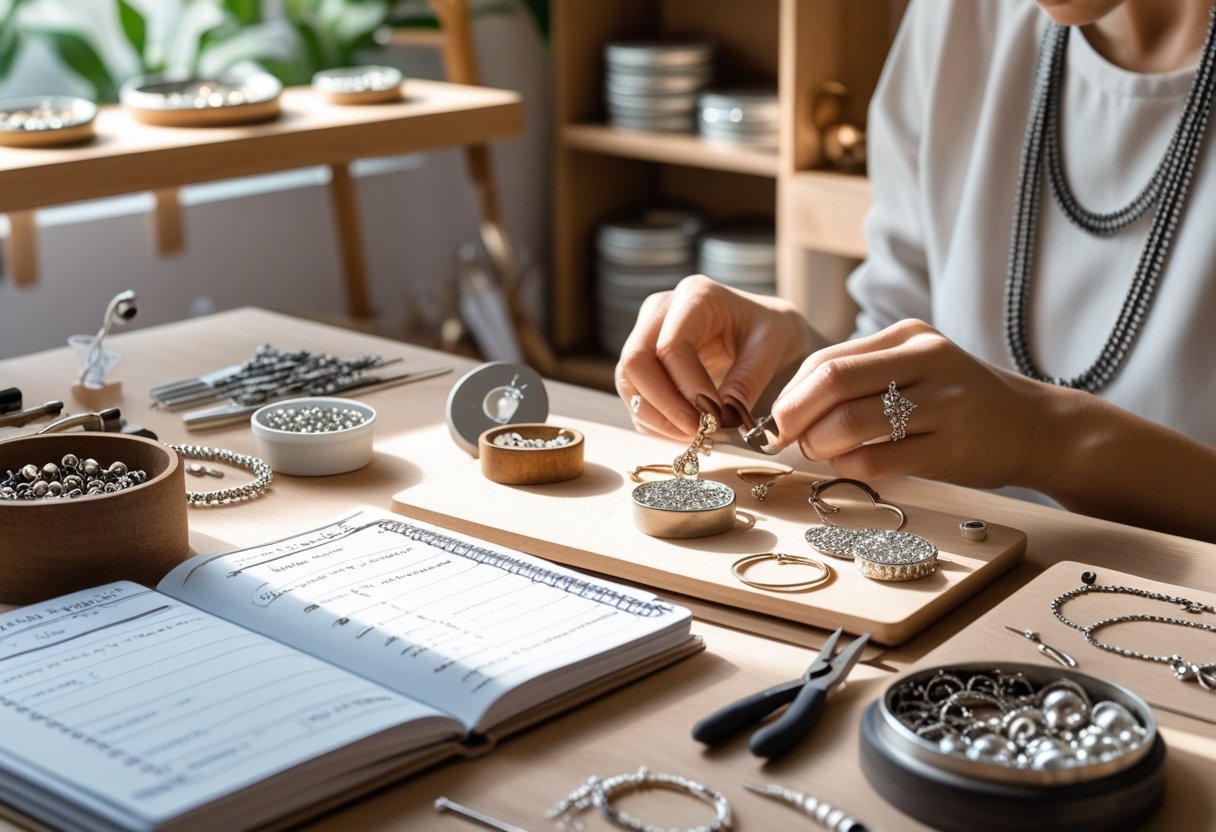
Getting your prices right means juggling costs, market demand, and the special qualities of your pieces. There’s no magic bullet, but a good jewelry pricing formula can at least give you a solid starting point.
Understanding the Value of Handmade Jewelry
Handmade jewelry isn’t just about beads and wire. Each piece is a little chunk of your skill, time, and creativity—don’t forget to include that in your price.
Sure, the basics are materials, packaging, and labor. But if you only charge for those, you’re missing the point. The craftsmanship and uniqueness are what set your work apart.
People care about the story and the brand behind the jewelry, too. If they see the care and artistry, they’ll see the value.
Market Positioning and Perceived Value
Who’s your customer? That’s going to shape your price more than you might think. Figure out what your market is willing to pay and lean into that.
Boutique shops? Higher prices. Mass retail? Not so much. Sometimes, what’s trending on social media can let you nudge your prices up, at least for a while.
Dig around and see what competitors are charging. Adjust your prices as trends shift or as your brand grows—don’t be afraid to experiment a little.
Common Pricing Mistakes to Avoid
It’s way too easy to underprice your work if you’re just looking at material costs. Labor, overhead, and what’s happening in the market all matter.
Don’t let your own attachment to a piece get in the way of setting a fair price. Professional pricing beats hobbyist discounts every time.
Rigid pricing formulas can backfire if your costs or the market shifts. Stay flexible, and watch out for pricing too low—it can hurt your brand and even make customers suspicious.
- Need new chains, findings, or beads? Check out our jewelry-making supplies collection.
Essential Jewelry Pricing Formulas
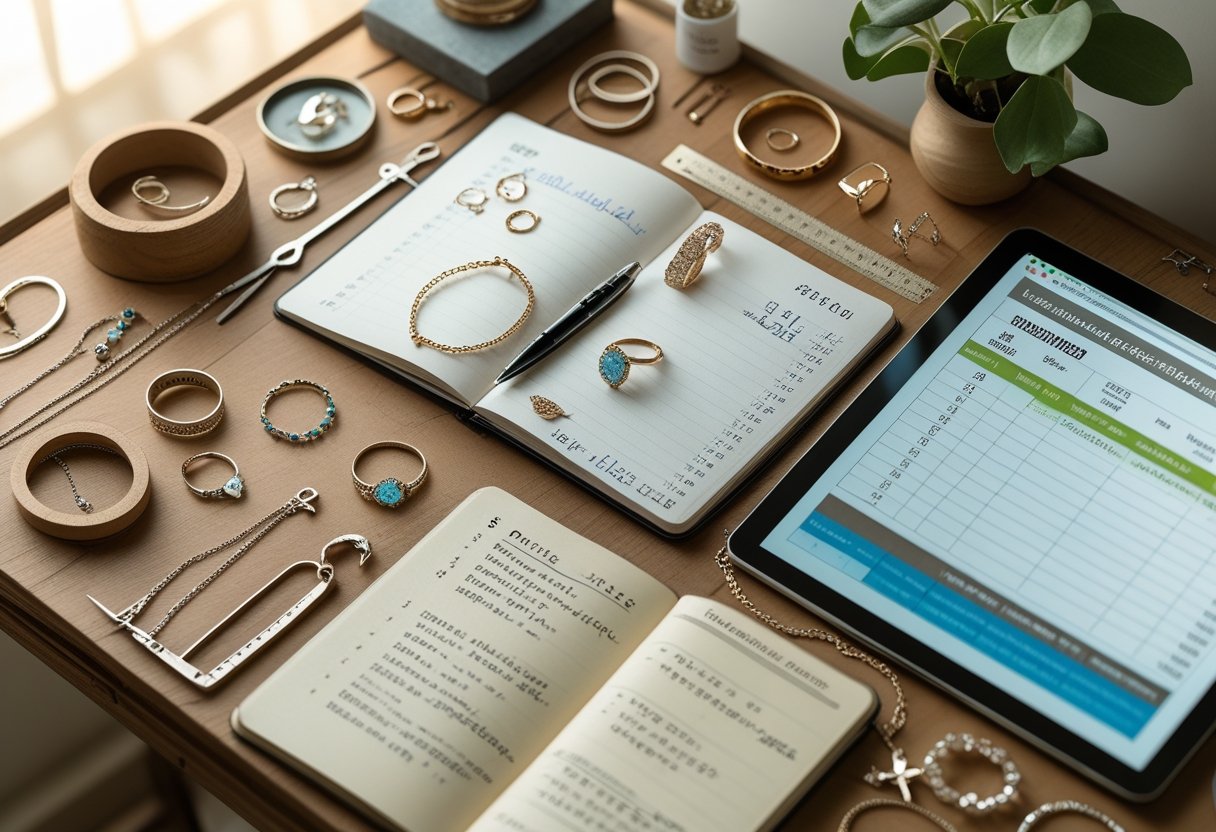
Getting the numbers right means you have to know your costs down to the last jump ring. That means materials, labor, and all those little business expenses you forget about until tax season rolls around.
Standard Pricing Equation Explained
Here’s the basic jewelry pricing formula you’ll see everywhere:
Retail Price = (Material Cost + Labor Cost + Overhead) × Markup
This covers all your bases. Materials are everything you physically use. Labor is your time—don’t shortchange yourself.
Overhead is the sneaky stuff: tools, rent, website fees, and the like. Track these costs, or you’ll end up working for free.
Markup and Multiplier Methods
Most folks use a markup—just a percentage you add on top of your total costs. A 100% markup? That’s doubling what it costs you to make the piece.
Some prefer a multiplier—like 2.5 or 3 times the cost. Adjust this depending on your niche, competition, and how intricate your work is.
Honestly, there’s no one-size-fits-all. Try a few methods and see what feels right for your brand and your customers.
Labor, Materials, and Overhead in Formulas
Labor can be a big chunk—sometimes 20-30% or more, especially for detailed work. If you’re not tracking your time, you’re probably underpricing.
Buying supplies wholesale in bulk can cut your material costs. Reliable suppliers are a must for keeping quality up and expenses down.
Don’t ignore overhead. Divide your monthly expenses by how many pieces you make to get a per-piece overhead cost. It’s not glamorous, but it’ll keep your business sustainable.
- Want to run the numbers? The Jewelry Cost Calculator is worth a bookmark.
Calculating Costs: Materials, Labor, and Overhead
To price handmade jewelry right, you need to know exactly what goes into each piece—materials, your time, and all the ongoing costs of running your business.
Tracking Material Costs Accurately
Start by knowing what every bead, clasp, and bit of packaging costs you. Keep those receipts and invoices, especially when you’re buying wholesale jewelry supplies—it adds up.
Spreadsheets or a cost calculator for jewelry make it easier to track every component, even the tiny stuff like solder or scraps of wire. Don’t let those get lost in the shuffle.
Calculating Labor and Production Time
Your time matters. Figure out how long you spend on design, assembly, finishing, and fixing mistakes. Set an hourly wage for yourself—don’t be shy about it.
If a bracelet takes 2 hours and you value your time at $25/hour, that’s $50 in labor. Include time for troubleshooting, too. The more consistently you track, the more accurate your prices will be.
Incorporating Overhead Expenses
Overhead is everything that keeps your business humming: rent, utilities, tool maintenance, marketing, website fees, and extra packaging. It’s easy to overlook, but you shouldn’t.
Add up your total monthly overhead and divide it by the number of pieces you expect to sell. That’s your per-piece overhead cost. Here’s a quick example:
| Overhead Type | Monthly Cost | Pieces Sold | Cost per Piece |
|---|---|---|---|
| Studio Rent | $300 | 30 | $10 |
| Utilities | $50 | 30 | $1.67 |
| Packaging Supplies | $30 | 30 | $1 |
| Marketing & Fees | $120 | 30 | $4 |
| Total Overhead | $500 | 30 | $16.67 |
Don’t skip this step—otherwise, you’ll be covering business costs out of your own pocket, and nobody wants that.
- Curious about how dropshipping could fit into your jewelry business? Check out our dropshipping program for makers.
Practical Jewelry Cost Calculator Tools
Let’s be honest: pricing by hand gets old fast. There are some handy tools out there to help you get it right—whether you want a quick estimate or a super-detailed breakdown.
Online Jewelry Cost Calculation Resources
Online calculators are a lifesaver. Plug in your metal type, gemstone weight, labor hours, and they spit out retail and wholesale prices—markup included. It’s hard to mess up the math this way.
Some calculators let you save your designs, track profit margins, and export everything to Excel or Google Sheets. If your material or labor costs change, just update the numbers and get a new price instantly.
These tools are especially helpful if you’re moving from hobbyist to business owner. Consistent pricing is key—and saves you from second-guessing yourself.
Using Worksheets and Digital Pricing Tools
If you like more control, Excel worksheets for jewelry pricing let you plug in every little detail—hours, materials, overhead, you name it. Some even come with preset scenarios for common jewelry types.
With a good worksheet, you can see cost price, wholesale, and retail prices side by side. It’s a great way to keep things transparent and accurate, especially if your designs are complicated.
Digital tools can automate the boring stuff and store your pricing history. That way, you have a record of what worked and what didn’t. Want to get granular? Try this cost calculator for a detailed breakdown.
- Ready to stock up? Browse our wholesale jewelry supplies and see what’s new.
Determining Wholesale and Retail Prices
Setting your prices for wholesale and retail can make or break your business. You need to hit that sweet spot where you’re covering costs, meeting market expectations, and actually making a profit.
Setting Effective Wholesale Prices
Wholesale pricing is usually about covering all your costs—materials, packaging, labor—and leaving enough margin for yourself. A common approach is to multiply your materials-plus-packaging by four, but don’t forget to add labor separately.
Retailers need room to mark up your jewelry and still make it appealing to their customers. Take a look at market rates and what competitors are doing before you finalize your wholesale price.
- Interested in selling wholesale? Apply for our wholesale program and get exclusive pricing.
Calculating Retail Markups
Retail prices for handmade jewelry usually start with a markup on your wholesale cost or total production cost. Most folks in the industry go for a retail markup that's two to three times the wholesale price, but honestly, it depends on your brand, the market, and how unique your work is.
This markup isn't just about profit—it covers marketing, retail overhead, and all those little extras that add up. Let's say your wholesale price is $50; you'd probably land somewhere between $100 and $150 for retail, but it’s never one-size-fits-all.
Think about what makes your jewelry special and what your customers are willing to pay. Pricing tools and a solid jewelry pricing formula can help you crunch those numbers fast, using your material, labor, and wholesale costs as a base.
Transitioning from Wholesale to Retail
Switching gears from wholesale to retail means rethinking your pricing strategy. Suddenly, you’re dealing with direct customer sales, extra packaging, displays, and maybe even shipping headaches.
To nail your retail price, check out what your competitors are doing and listen to what your customers say. Some sellers experiment with tiered pricing, special editions, or limited-time promos to test the waters.
Keep an eye on your sales data. If something’s not selling, tweak the price or the offer. This isn't set-it-and-forget-it stuff; your pricing should grow with your business.
Maximizing Profit in Your Handmade Jewelry Business
Profit in a handmade jewelry business? It’s all about setting clear targets, staying flexible with your pricing, and paying attention to the market. It might sound obvious, but each piece of the puzzle matters if you want steady revenue and sustainable growth.
Establishing Profit Goals
Before you even think about profit, get real with your numbers. Add up every cost—materials, labor, packaging, shipping, and overhead. Only then should you decide on your markup and price for actual earnings.
Plenty of jewelry makers use a multiplier—sometimes 3x, sometimes 4x the total cost. That way, even if you sell wholesale or on consignment, you’re not in the red. Here’s a quick example:
| Item | Cost (USD) | Multiplier | Price (USD) |
|---|---|---|---|
| Materials + Packaging | $10 | ×4 | $40 |
Stay on top of your sales targets and expenses. It’s not glamorous, but tracking everything keeps your pricing in line with your business needs—and your own income goals.
Adjusting Pricing for Growth
As your jewelry business grows, so should your pricing strategy. If your skills and reputation are on the rise, don’t be afraid to reflect that in your pricing—people pay for perceived value.
Consider adding value with unique designs or better packaging. Adjust your prices for different markets, too; what works at a craft show might not fly online (or vice versa).
Keep profit margins steady, but play with your price points depending on where you’re selling. Use a cost calculator for jewelry to make sure your numbers still make sense as things change.
And if you notice customers reacting differently to new prices? Take note. Sometimes a small tweak can make a big difference.
Evaluating Competitive and Market Trends
Don’t price your jewelry in a vacuum. Regularly check out what similar handmade jewelry sellers are charging and see what’s trending in the market.
Look at the costs of materials, new design ideas, and what customers are actually buying. If you’re not paying attention, you might end up undervaluing your work—or pricing yourself out of the game.
Mix a solid jewelry pricing formula with real market research. That’s how you find a sweet spot that covers your costs and keeps the business rolling.
- Curious about your profit margins? Try this Jewelry Cost Calculator.
- Stock up on wholesale jewelry supplies—chains, findings, beads, you name it.
Starting and Scaling a Jewelry Business Successfully
Getting your jewelry business off the ground takes a mix of planning, smart financial moves, and a clear sense of direction. You want growth and profit, not just a hobby that eats up your weekends.
Planning Your Handmade Jewelry Venture
Start with the basics: who’s your customer, and what makes your jewelry stand out? Knowing your audience shapes your designs and your prices.
Get real about your costs—materials, tools, workspace, marketing, shipping. Add up both fixed and variable expenses so you’re not guessing.
Break down your costs per piece with a handy cost calculator for jewelry. Don’t forget to include labor, packaging, and those annoying little fees. The more accurate you are, the more confident you’ll feel about your prices.
Branding and Positioning Strategies
Branding isn’t just a logo. It’s your vibe, your story, your style. Decide what you stand for and let that guide your packaging, your website, and your social posts.
Are you aiming for affordable, luxury, or maybe eco-friendly? This choice shapes your pricing and who you’re trying to reach.
Great photos and honest product descriptions go a long way. If you’re not connecting with customers—at shows or online—you’re missing out. A recognizable brand can justify higher prices, too.
Maintaining Financial Sustainability
Track your income and expenses, even if it’s just a spreadsheet. Know what’s coming in and what’s going out—rent, supplies, shipping, all of it.
Your prices should always cover materials, labor, overhead, and a reasonable profit margin. If your costs change, don’t wait—adjust your prices.
Put some profits back into the business. That could mean buying wholesale jewelry supplies at better rates or investing in new marketing ideas.
- Ready to grow? Check out our wholesale program.
- New to the scene? Here’s a guide on starting a handmade jewelry business.
Sourcing Quality Wholesale Jewelry Supplies
Your jewelry is only as good as your supplies. Finding reliable wholesale jewelry suppliers keeps your quality high and costs in check.
Researching and Comparing Suppliers
Start by hunting down suppliers who specialize in what you need—metals, beads, clasps, packaging, whatever your style calls for. Compare prices, but don’t just chase the lowest number.
Always check reviews and ask for samples. You want consistency and quality, not surprises. Shipping times and policies matter, too—delays can throw off your whole schedule.
If you’re juggling options, use a spreadsheet or chart to keep track of prices, minimum orders, and lead times. It’s easier than trying to remember everything off the top of your head.
Managing Supply Chain Costs
Remember, your real cost per unit is more than just the sticker price. Add in shipping, import fees, and packaging to get the full picture.
Buying in bigger batches can save you money per piece, but you’ll need the cash—and the space—to store it. Don’t overdo it and end up with a mountain of unsold beads.
Material costs go up and down, so stay flexible with your jewelry pricing. Set reorder points and know your lead times to avoid running out (or overstocking).
- Want to sell jewelry online without holding inventory? Learn about our dropshipping program.
- Browse our full range of jewelry-making supplies—it’s kind of addicting.
Building Long-Term Supplier Relationships
Let’s be real—solid relationships with your suppliers can make or break your jewelry business. Better terms, faster shipping, and first dibs on new materials? That’s the dream.
Keep the communication flowing. Share order forecasts, give honest feedback on quality, and don’t ghost them when it comes to payments. Trust builds slowly, but it’s worth it.
Paying invoices on time and being upfront about your production needs goes a long way. Suppliers appreciate professionalism, and that’s usually when they start offering you those sweet personalized deals.
If you ever get the chance, visit your suppliers or catch up with them at trade shows. It’s not just about business—it’s about showing you care enough to show up.
- Long-term supplier relationships can lower your risk and make sourcing less of a headache.
- Sometimes, you’ll even get to collaborate on custom or exclusive jewelry components—pretty cool, right?
Curious about how to price handmade jewelry with all these factors in mind? Check out our Jewelry Cost Calculator—it’ll help you nail your jewelry pricing formula and boost those handmade jewelry profit margins.
Need reliable wholesale jewelry supplies for your next collection? We’ve got chains, findings, beads, and more.
Thinking about starting a handmade jewelry business or want to expand? Explore our dropshipping program and apply for wholesale pricing here.