


Types of Jewelry Clasps: The Ultimate Jewelry Clasp Guide
Choosing the right jewelry clasp is essential for both style and functionality. Different clasp types, such as lobster clasps, spring rings, magnetic clasps, and toggle clasps, offer varying levels of security, ease of use, and suitability depending on the jewelry piece. Lobster clasps are widely favored for their strong hold and user-friendly spring mechanism, making them ideal for secure necklace and bracelet closures.
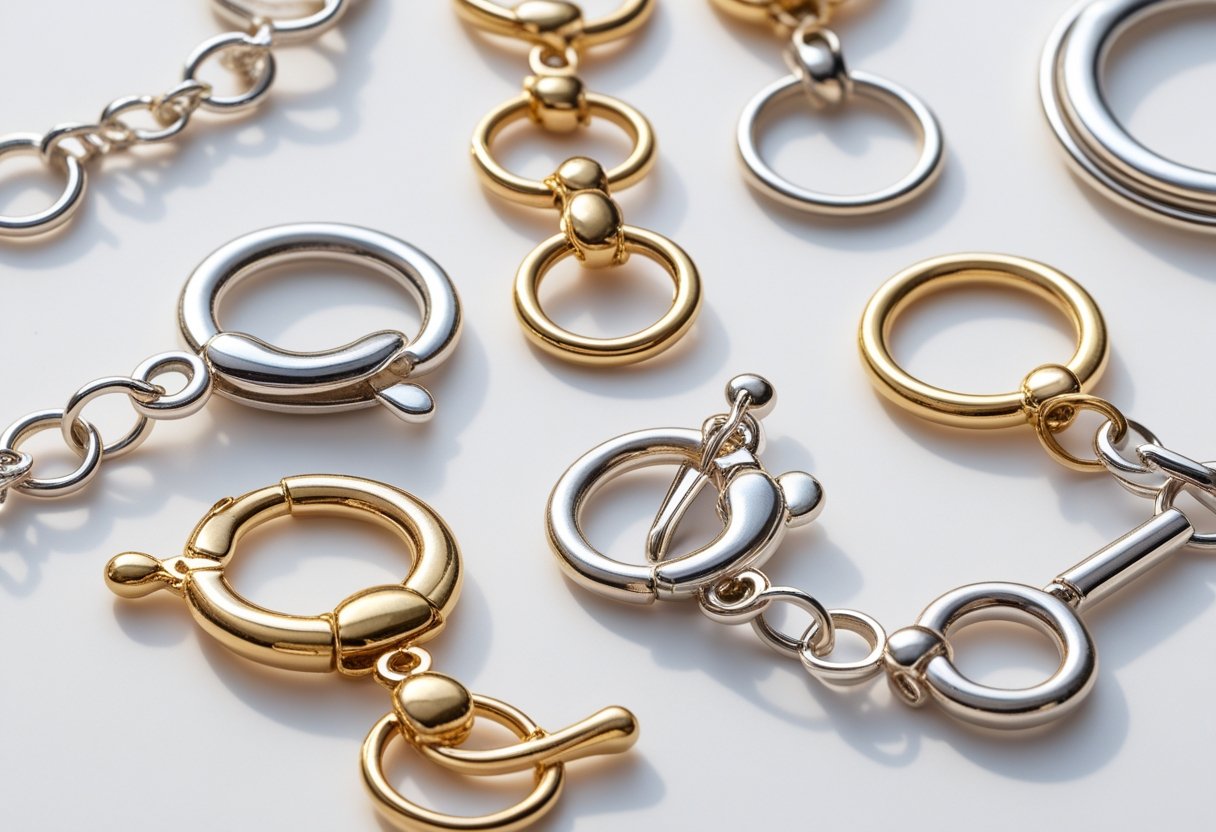
Spring ring clasps are smaller and often used on lighter pieces but can be harder to operate one-handed. Magnetic clasps provide convenience and speed but may lack the same level of security as lobster or toggle clasps. Toggle clasps, on the other hand, offer a stylish look and are easy to fasten, especially on bracelets, but they rely on weight and movement to stay closed.
Understanding the benefits and drawbacks of each clasp type helps jewelry makers and wearers choose the best clasp for their needs. Whether focusing on security for necklaces or ease of use for bracelets, selecting the correct clasp enhances both the durability and appearance of the jewelry.
Understanding Jewelry Clasps
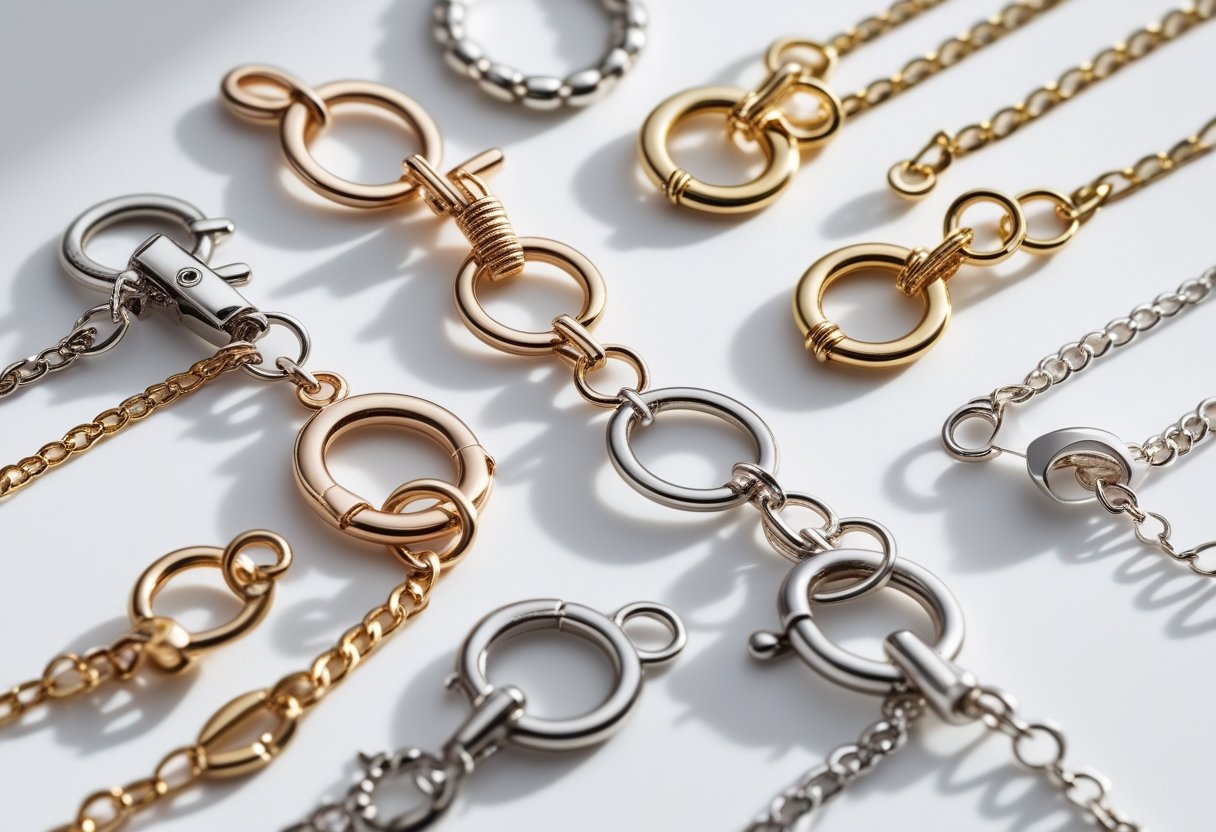
Jewelry clasps are essential components that connect the ends of necklaces, bracelets, and other adornments. Their design and construction affect both how secure the jewelry is and how comfortable it is to wear. Materials and mechanisms vary to suit different styles and functions, influencing durability and ease of use.
What Are Clasps and Why Are They Important
Clasps are fastening devices that close the ends of jewelry pieces to keep them worn securely. Without clasps, necklaces or bracelets would slip off and be easily lost. Clasps enable the jewelry to be removed and worn repeatedly without damaging the chain or beads.
Different types of clasps provide varied advantages, such as ease of opening, security, or aesthetic appeal. For example, lobster clasps use a spring-loaded lever for reliable locking, while spring ring clasps also close via a small lever but tend to be smaller and less robust.
The choice of clasp affects the user experience and the longevity of the jewelry, making it a critical consideration in jewelry design and manufacturing.
How Clasps Impact Jewelry Security and Design
The security of a clasp determines how safely jewelry stays in place during wear. Lobster clasps and box clasps are known for their strong locking mechanisms that resist accidental opening. Conversely, hook clasps and some toggle clasps rely more on weight or tension and can be less secure for light chains.
Design-wise, clasps can be functional or decorative. Ball clasps, for instance, add a bead-like element to the jewelry while securing it. Magnetic clasps offer convenience and are easier for those with limited dexterity but need careful consideration due to potential demagnetization and strain limitations.
Selecting the right clasp balances security needs, jewelry weight, and the intended look, ensuring the piece performs well in daily use.
Common Materials Used in Clasps
Classy and durable jewelry clasps commonly use metals such as sterling silver, gold, stainless steel, and brass. These materials resist corrosion and provide strength required for reliable fastening.
Sterling silver offers a good balance of durability and appearance, often used in mid-range jewelry. Gold clasps, available in various karats, provide luxury and resistance to tarnish but are softer and can wear down faster under stress.
Stainless steel is popular for its toughness and affordability, especially in fashion jewelry. Some clasps incorporate plated metals or alloys to achieve desired color or finish, but plating may wear off over time, affecting function and look.
Choosing materials compatible with the wearer’s skin and jewelry type helps ensure both comfort and clasp longevity.
Popular Types of Jewelry Clasps
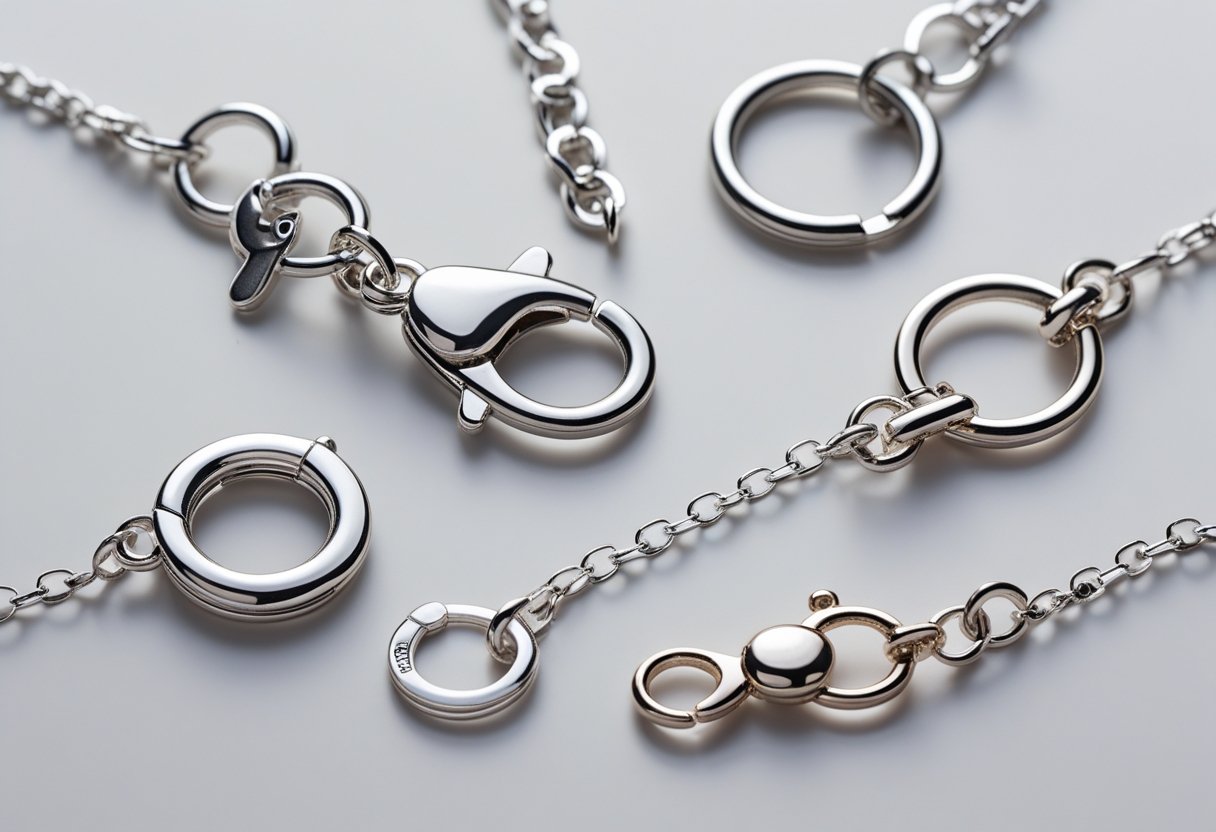
Jewelry clasps come in various designs, each with specific features that affect security, ease of use, and suitability for different types of pieces. Understanding these factors helps in selecting the right clasp for necklaces, bracelets, or customized jewelry making.
Overview of Major Clasp Types
The lobster clasp is known for its secure hold and spring-loaded mechanism shaped like a claw. It works well on necklaces and bracelets but can be difficult to open for those with limited hand mobility.
The spring ring clasp is smaller and commonly found on delicate jewelry. It uses a spring mechanism inside a small ring but is less secure than the lobster clasp and may come undone under pressure.
Toggle clasps feature a bar and loop system. They are easy to operate with one hand and add a decorative element but can be too bulky for fine jewelry.
Magnetic clasps use magnets to attach both ends and offer convenience, especially for those with dexterity challenges. However, they are less secure for heavier pieces.
Other types like box clasps and hook and eye clasps each balance security and style in different ways suitable for heavier or delicate pieces.
Choosing the Right Clasp for Your Jewelry
When selecting a clasp, the primary considerations are security, ease of use, and jewelry weight.
For secure necklace clasps, the lobster clasp is preferred due to its locking strength. However, for delicate chains, spring ring clasps offer a more discreet option.
Bracelets often benefit from toggle clasps, combining style and one-handed operation, ideal for those who may struggle with smaller clasps.
Magnetic clasps are best for casual or lightweight jewelry and for wearers with hand mobility issues. They should be avoided on heavy or valuable pieces where failure could cause loss.
For jewelry making, compatibility of size and clasp weight with the design is critical to ensure balance and wearer comfort.
Caring for Different Clasp Types
Proper maintenance preserves clasp functionality and extends jewelry life.
Spring ring and lobster clasps require occasional lubrication of the spring mechanism to prevent stiffness.
Toggle clasps need regular checks to ensure the bar fits securely in the loop without excessive wear.
Magnetic clasps should be cleaned to avoid debris weakening the magnetic pull.
All clasps benefit from gentle cleaning and avoiding excessive force when opening or closing to prevent damage or deformation.
Regular inspection can catch early signs of wear, helping avoid accidental loss of jewelry.
Lobster Clasps vs Spring Rings
Lobster clasps and spring rings are two of the most common types of jewelry clasps. Their differences lie mainly in size, security, ease of use, and suitability for various jewelry pieces. Each has its benefits and drawbacks, influencing which one is best for specific applications.
Key Differences Between Lobster Clasps and Spring Rings
Lobster clasps feature a larger, spring-loaded mechanism shaped like a lobster's claw. This design makes them easier to open and close with one hand. They are generally sturdier and better suited to heavier chains or bracelets.
Spring ring clasps are smaller, circular, and open by pulling back a tiny lever. They tend to be more compact but can be harder to fasten quickly, especially for those with limited dexterity. Spring rings are usually lighter and less noticeable on delicate jewelry.
Lobster clasps offer greater security because their mechanism closes tightly, reducing the risk of accidental openings. Spring rings, while secure, may not hold as firmly on heavier pieces.
Advantages and Disadvantages of Each Clasp
Lobster Clasps
Advantages: Stronger construction, easy to operate one-handed, highly secure, versatile in size and finish, ideal for daily wear including heavier pieces.
Disadvantages: Slightly bulkier, may affect the look of very delicate jewelry.
Spring Ring Clasps
Advantages: Small and discreet, suitable for light, delicate necklaces and bracelets, offers a clean look, generally lightweight.
Disadvantages: Smaller opening can be difficult to manipulate, less secure on heavier jewelry, not ideal for those with limited dexterity.
While lobster clasps typically have more durable materials like stainless steel or gold, spring rings are often used where a subtle closure is preferred.
Best Use Cases for Lobster Clasps and Spring Rings
Lobster clasps are best for heavier necklaces and bracelets, where security and ease of use are priorities. They suit fine and fashion jewelry requiring a more robust clasp. Their design allows quick fastening, making them functional for everyday wear.
Spring ring clasps work well with lightweight chains or delicate jewelry pieces that benefit from a small, unobtrusive fastener. They are commonly used on thin necklaces or anklets where subtlety is desired.
For others interested in alternatives, toggle clasps provide stylish and secure options, particularly for bracelets, but they’re less effective for necklaces needing close security.
| Clasp Type | Best For | Key Trait |
|---|---|---|
| Lobster | Heavy chains, bracelets | Secure, easy use |
| Spring Ring | Light, delicate necklaces | Compact, discreet |
| Toggle | Bracelets, statement pieces | Stylish, secure |
Magnetic Clasps for Jewelry
Magnetic clasps use magnets to securely connect jewelry ends, offering an alternative to traditional clasps like lobster or spring rings. They vary in strength, style, and security levels, making them suitable for specific jewelry types and users.
How Magnetic Clasps Work
Magnetic clasps consist of two magnetic ends that attract each other, holding the jewelry in place. They are typically attached near the ends of chains, replacing metal clasps like lobster or spring rings.
The strength of the magnet is critical; larger or heavier pieces require stronger magnets. Some magnetic clasps include additional features such as screw-on mechanisms or safety chains to enhance security.
They allow for easy fastening and unfastening by simply pulling apart or sliding the magnetic ends, which benefits users with limited dexterity or when dealing with fine motor challenges.
Pros and Cons of Magnetic Closures
Pros:
-
Ease of Use: Magnetic clasps are simple to open and close, especially for those with arthritis or long nails.
-
Speed: They connect quickly with minimal effort.
-
Non-Damaging: Unlike clasps that require pulling or twisting, magnetic clasps reduce wear on jewelry.
Cons:
-
Strength Variation: Weaker magnets might not hold heavy pieces securely, risking loss.
-
Wear Over Time: Some plated magnetic clasps can lose finish or magnetism.
-
Accidental Opening: Button-style magnetic clasps can sometimes come undone if caught or pulled improperly.
-
Not Always Suitable: Certain bracelets or heavy necklaces may need more secure clasp types.
When to Choose Magnetic Clasps
Magnetic clasps are ideal for lightweight to moderately heavy necklaces, anklets, or bracelets where ease of use is a priority.
They work well for those with limited hand strength or dexterity challenges aiming to avoid frustration with traditional clasps.
If the jewelry is valuable or heavy, opting for screw-on magnetic clasps or additional safety features ensures better security.
For antique or delicate pieces, magnetic clasps can be attached without altering original designs, but the jewelry should be handled carefully to avoid damage.
Soldering jump rings after installation is recommended to prevent accidental detachment during wear.
Toggle Clasp Benefits
Toggle clasps offer a blend of functionality and style that appeals to many jewelry wearers. Their simple mechanism ensures ease of use, while their design can enhance the appearance of the jewelry piece. They also provide a reliable level of security suitable for various jewelry types.
How Toggle Clasps Function
A toggle clasp operates using two main parts: a bar and a loop. The wearer slides the bar through the loop, then positions it so the bar rests perpendicular to the loop, preventing it from slipping out. This mechanism relies on gravity and tension to remain fastened.
Toggle clasps are often favored because they can be fastened and unfastened with one hand. This convenience is useful for those with limited dexterity. However, the effectiveness of the clasp depends on size, weight, and how well the bar fits inside the loop.
Design Appeal of Toggle Clasps
Toggle clasps are visually distinctive and can contribute to the overall aesthetic of the jewelry. They often feature decorative elements on both the bar and loop, allowing them to act as a focal point rather than just a functional part.
Due to their size and shape, toggle clasps suit bold, statement pieces better than delicate designs. They come in various finishes and materials, complementing everything from casual to formal wear. This versatility adds an element of style without compromising performance.
Security Considerations for Toggle Clasps
While toggle clasps are generally secure, their stability depends on how well the bar fits the loop. If the bar is too short or the loop too large, the clasp may unintentionally open when tugged or twisted.
They are more secure than spring ring or lobster claw clasps in certain cases, but less so for very active wear or heavy jewelry. Users should evaluate the piece’s weight and intended activity level before choosing a toggle clasp for security reasons.
Clasp Types for Jewelry Making
Choosing the right clasp affects both the functionality and style of jewelry. Factors like ease of use, security, and compatibility with material play key roles in clasp selection. Different clasps serve specific purposes depending on whether the piece is a bracelet or necklace, or a DIY project.
Best Clasps for Bracelets
Lobster claw clasps are highly favored for bracelets due to their durability and secure locking mechanism. They are easier to operate with one hand, which suits wrist-worn pieces.
Magnetic clasps offer convenience and quick release, making them attractive for those preferring hassle-free fastening. However, they may be less secure for heavier or valuable bracelets.
Toggle clasps are popular for their decorative appeal and ease of use. They work well for chunkier styles but require correct sizing to prevent accidental opening.
| Clasp Type | Strength | Ease of Use | Suitability |
|---|---|---|---|
| Lobster Claw | High | Moderate | Most bracelets |
| Magnetic | Moderate | High | Lightweight or casual |
| Toggle | Moderate-High | Moderate | Chunkier, decorative |
Secure Necklace Clasp Options
For necklaces, lobster claw clasps provide strong security and resist accidental opening. They accommodate various chain sizes and are durable over time.
Spring ring clasps are smaller and more delicate. Preferred on finer chains, they offer reasonable security but can be challenging to operate for some wearers.
Box clasps combine security with a sleek look, often used on higher-end designs. They provide a firm lock but involve a more complex mechanism.
In choosing a secure clasp, considering the necklace’s weight and wear frequency is crucial.
Incorporating Clasps in DIY Projects
When selecting clasps for DIY jewelry, versatility and ease of installation matter. Lobster claw and spring ring clasps are common choices due to their simple attachment methods.
Magnetic clasps simplify projects by removing the need for precise alignment during closure, ideal for beginners or quick designs.
Toggle clasps add visual interest and are easy to incorporate into customized pieces. They often serve as design elements as well as functional parts.
Using appropriate tools and findings, such as jump rings and crimp beads, ensures a professional finish when attaching clasps.