


Safety Chain to Zamak Jewelry Components Glossary for Designers and Makers
Jewelry making and design come alive through a wide range of materials, tools, and techniques. From metals and gemstones to cords and clasps, each element plays a role in shaping both function and style. Understanding the purpose and qualities of these components helps create pieces that are both durable and visually appealing.
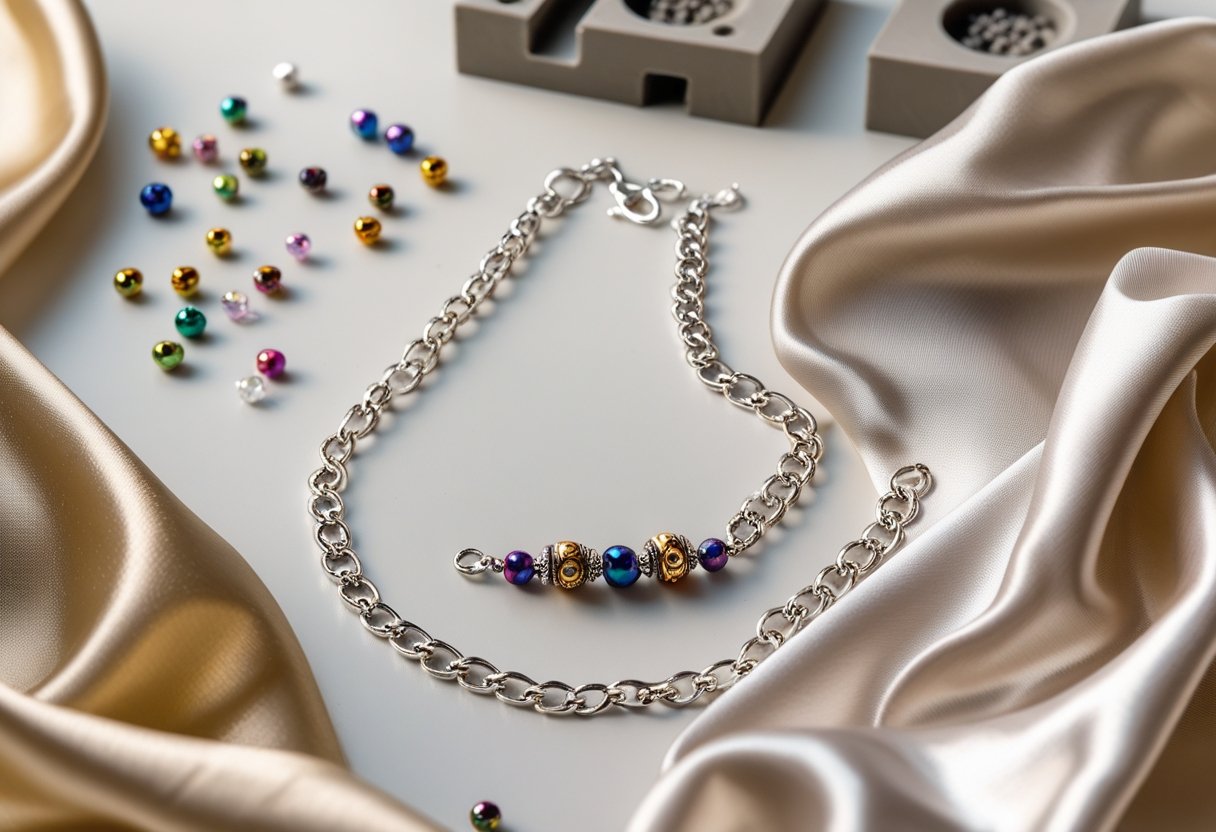
This guide explores jewelry terms and materials alphabetically, focusing on practical use and design impact. It covers essentials such as safety chains for security, silk cords for flexibility, and spacer beads for structure, while also highlighting materials like tourmaline, Venetian glass, and vermeil that add distinct character.
By moving through sections from S to Z, it becomes clear how each item contributes to craftsmanship. Whether it is the durability of stainless steel in waterproof gold, the brilliance of a Xilion cut crystal, or the tradition behind Victorian jewelry, these details provide insight into making informed choices in jewelry design.
S
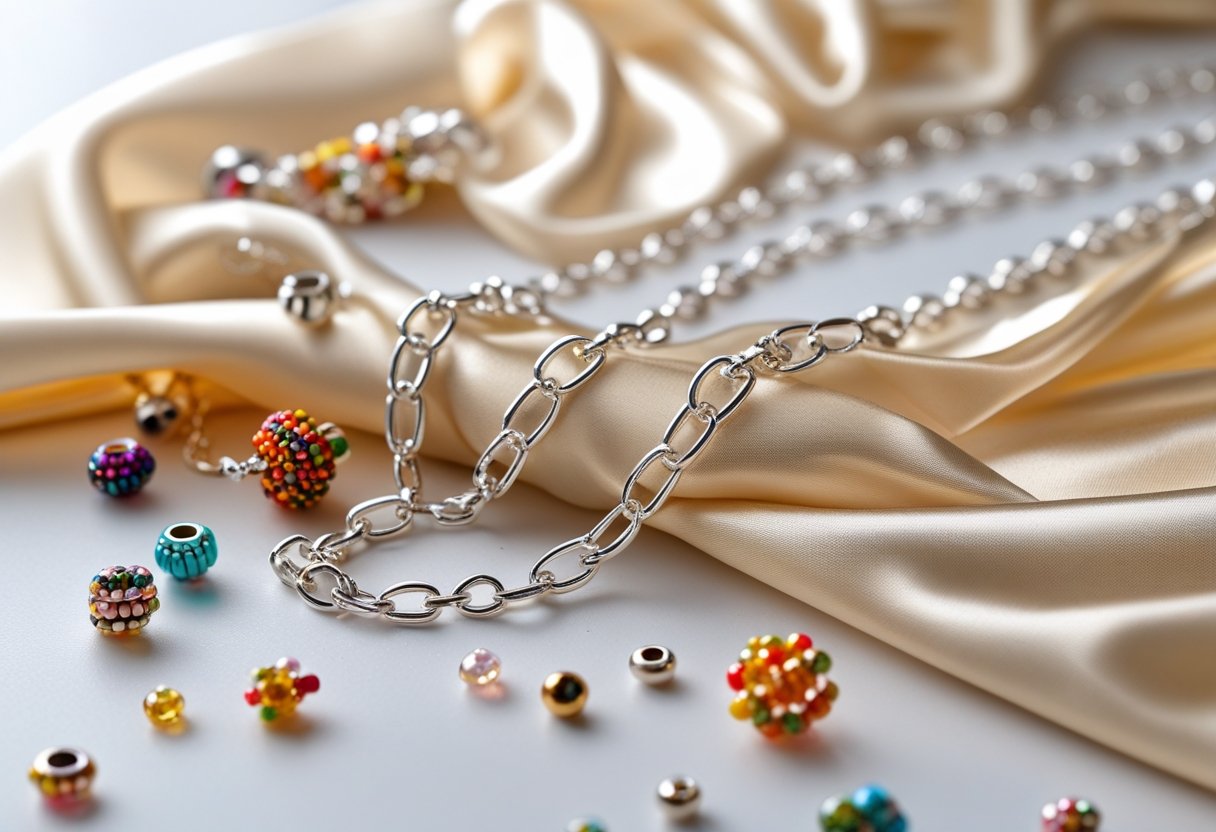
This section focuses on jewelry-making components, materials, and techniques that influence both design and durability. Each entry explains how the item is used, what it is made of, and why it matters for both hobbyists and professional jewelers.
Safety Chain
A safety chain adds an extra layer of protection to bracelets and watches. It connects both ends of a clasped piece, preventing the jewelry from falling off if the clasp opens unexpectedly.
These chains are usually made from precious metals like sterling silver or gold, but plated options are also common. Jewelers often attach them to high-value or sentimental pieces where security is essential.
Lengths vary, but most measure between 1–3 inches. They are typically soldered or clipped into place. Some designs include decorative links, while others remain plain for a discreet appearance.
Sand Casting
Sand casting is a traditional metalworking process used to create jewelry components and small sculptures. It involves pressing a model into fine sand to form a mold, then pouring molten metal into the cavity.
The process allows jewelers to reproduce detailed textures, making it useful for organic and rustic designs. Unlike lost-wax casting, sand casting is more affordable and requires less specialized equipment.
Common metals used include silver, brass, and bronze. After cooling, the piece is removed, cleaned, and polished. While surface finishing is necessary, many artisans leave subtle textures from the sand for a natural look.
Satin Hamilton Gold
Satin Hamilton Gold refers to a type of gold plating with a soft, matte finish. It is typically applied over brass, creating a warm golden tone without the high cost of solid gold.
This finish differs from high-polish gold because it reduces glare and provides a subtle, satin-like sheen. Jewelry makers use it for chains, findings, and connectors.
Popular chain styles include oval link, paperclip, and beading chain. Many suppliers offer it nickel-free, making it suitable for sensitive skin. It is often sold by the foot or in bulk, appealing to both hobbyists and manufacturers.
| Feature | Details |
|---|---|
| Base Metal | Brass (nickel-free) |
| Finish | Matte, satin gold plating |
| Uses | Chains, findings, connectors |
| Appearance | Warm gold with soft sheen |
Seed Beads
Seed beads are small, uniformly shaped glass beads used in weaving, embroidery, and stringing. They range in size from under 1 millimeter to several millimeters.
The most recognized manufacturers are from Japan and the Czech Republic, known for consistent sizing and color variety. Common finishes include opaque, transparent, matte, metallic, and color-lined.
They are sold by weight or tube and are essential for techniques such as peyote stitch, loom work, and bead embroidery. Their versatility makes them a staple in both traditional and contemporary jewelry.
Shamballa Beads
Shamballa beads are decorative beads often associated with macramé-style bracelets. They are typically round and encrusted with crystals, rhinestones, or gems.
Originating from Tibetan Buddhist symbolism, these beads were later adapted into fashion jewelry. They are usually strung on nylon or silk cord and secured with sliding knots.
Modern versions include resin, clay, or metal bases with embedded stones. They remain popular for both unisex and statement jewelry pieces. Their sparkling surface makes them suitable for bracelets, necklaces, and even earrings.
Silver Plated
Silver-plated jewelry consists of a thin layer of silver applied to a base metal, such as brass or copper. This offers the look of sterling silver at a lower cost.
The plating thickness can vary and directly impacts durability. Over time, the silver layer may wear off, exposing the base metal. Proper care, such as avoiding chemicals and polishing with a soft cloth, extends its lifespan.
Silver-plated findings, chains, and beads are widely available. They are often used in fashion jewelry where affordability is a priority.
Silk Cord
Silk cord is a traditional stringing material used for pearls, gemstones, and fine beads. Its smooth texture prevents abrasion and enhances the drape of necklaces and bracelets.
It is commonly sold in pre-threaded cards with attached needles for easy stringing. Knotting between beads is a common technique to protect fragile stones and add flexibility.
Silk cord comes in multiple thicknesses and colors, allowing jewelers to match it with different bead sizes and designs. While elegant, it is less durable than synthetic alternatives and can weaken if exposed to moisture.
Slider Beads
Slider beads are designed with larger or adjustable holes that allow them to move freely along a cord or chain. They are often used in adjustable bracelets and necklaces.
Many slider beads include internal silicone or rubber inserts that grip the cord, enabling length adjustment without knots or clasps. This makes them practical for unisex and customizable jewelry.
Materials range from metal alloys and sterling silver to gold-plated finishes. Decorative options include gemstone inlays, enamel, and textured surfaces. Their functionality and versatility make them a common choice in modern jewelry designs.
Soldered Rings
Soldered rings are closed metal rings that have been permanently fused at the joint. They provide strength and reliability compared to open jump rings, which can separate under stress.
They are often used to connect clasps, pendants, or charms to chains. Jewelers prefer soldered rings for high-value pieces where security is critical.
Available in various sizes and metals, they can be plain or textured. They are also used in chainmaille and other link-based jewelry techniques where durability is required.
Spacer Beads
Spacer beads are small beads placed between larger beads to create separation and balance in a design. They enhance the overall appearance by preventing overcrowding and adding rhythm to the layout.
They come in a wide variety of materials, including metal, wood, glass, and plastic. Shapes range from simple rounds and tubes to ornate filigree designs.
Spacer beads are essential in both stringing and bead weaving. They can be subtle or decorative, depending on the design. By controlling spacing, they contribute to both durability and visual appeal.
T
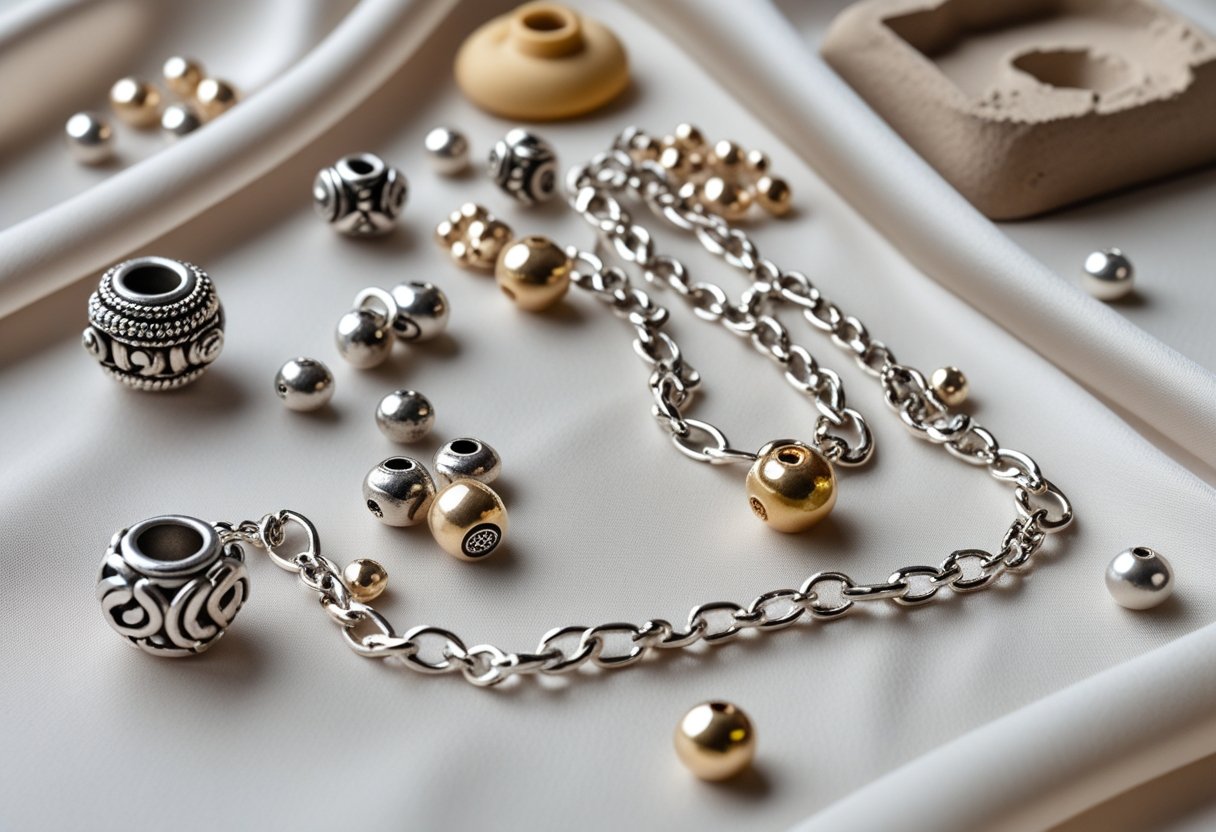
This section covers materials, gemstones, and jewelry-making components that range from specialized beads and natural stones to tools and clasps. Each item serves a distinct purpose, whether for design, durability, or finishing techniques.
Table Cut Beads
Table cut beads are glass beads with flat surfaces created by grinding or polishing one or more sides. This process highlights the bead’s internal color layers and creates a sharp, clean appearance.
They often come in geometric shapes like rectangles, ovals, or squares. The flat surface provides a reflective quality that contrasts with the textured or faceted sides.
Designers use table cut beads in necklaces, bracelets, and earrings where symmetry and precision are desired. Their uniformity makes them ideal for structured patterns or focal accents.
Tassels
Tassels are decorative elements made by gathering threads, cords, or chains at one end and allowing them to hang freely. They are commonly used as pendants, earring drops, or embellishments for bracelets.
Materials include silk, cotton, leather, and metal chains. Each material creates a different texture, from soft drape to structured movement.
In jewelry, tassels add length and movement. They can be monochrome for minimal designs or multicolored for a more playful style.
Textured Beads
Textured beads feature raised or recessed designs on their surface. Common techniques include stamping, etching, hammering, or casting.
These beads add visual depth and tactile interest to jewelry. They are often used as spacers or accents to break up smooth or polished components.
Materials range from metals like brass and silver to ceramic and glass. The choice of material impacts both weight and durability.
Tiger’s Eye
Tiger’s eye is a quartz gemstone known for its chatoyancy, a reflective effect resembling a moving band of light. Its most common colors are golden brown, red, and blue.
This stone is cut into cabochons, beads, and carvings. The orientation of the fibers during cutting determines the strength of the optical effect.
Tiger’s eye is used in both men’s and women’s jewelry, often in bracelets, rings, and pendants. It pairs well with silver or leather for a balanced design.
Toggle Clasp
A toggle clasp consists of a bar and a ring. The bar is inserted through the ring to secure the jewelry.
Toggle clasps are valued for their ease of use, especially in bracelets where one-handed fastening is needed. They also serve as decorative design elements.
They come in many styles, from plain metal to ornate cast designs. Larger toggles provide both security and visual emphasis in statement pieces.
Topaz
Topaz is a silicate mineral available in a wide range of colors, including blue, yellow, pink, and clear. Blue topaz is especially popular in modern jewelry due to its availability and affordability.
It ranks 8 on the Mohs hardness scale, making it durable for daily wear. However, it can cleave under sharp impact, so settings should provide protection.
Topaz is cut into faceted stones for rings, earrings, and pendants. Larger stones are often used as centerpieces in fine jewelry.
Tourmaline
Tourmaline is a complex boron silicate mineral that occurs in a wide spectrum of colors. Multicolored crystals, such as watermelon tourmaline, display distinct color zones within a single stone.
Its hardness ranges from 7 to 7.5, making it suitable for most jewelry applications. Transparent varieties are faceted, while opaque forms are cut into cabochons or beads.
Tourmaline is valued for its variety and is often used in mixed-color strand necklaces or as accent stones in fine jewelry.
Torsade Necklace
A torsade necklace is made by twisting multiple strands of beads or pearls together. The twisting creates a rope-like effect that adds volume and texture.
Strands may be uniform in size and color or mixed for contrast. Common materials include seed beads, pearls, and gemstone chips.
Clasp choice is important, as torsade necklaces require secure fastenings to hold the twisted strands in place. Box clasps and slide clasps are frequently used.
Tube Beads
Tube beads are cylindrical in shape and can be smooth, textured, or decorated with patterns. They are available in metals, glass, ceramic, and gemstones.
These beads are often used as spacers or focal elements in necklaces and bracelets. Their elongated shape helps create linear designs.
Some tube beads are hollow, making them lightweight, while others are solid for more substantial designs. Sizes range from small accent beads to long statement tubes.
Tumbler
A tumbler is a tool used to polish and finish jewelry components. It works by rotating or vibrating a container filled with media such as steel shot, ceramic, or plastic.
Jewelry pieces placed in the tumbler become smoother and shinier as the media contacts their surfaces. This process reduces rough edges and enhances durability.
Two main types exist: rotary tumblers, which roll the contents, and vibratory tumblers, which shake them. The choice depends on the desired finish and material being polished.
U
This section examines tools, materials, and jewelry components that begin with the letter U. Each item plays a role in jewelry making, from cleaning equipment and raw materials to design elements and functional findings.
Ultrasonic Cleaner
An ultrasonic cleaner uses high-frequency sound waves in a liquid solution to remove dirt, oils, and polishing compounds from jewelry. The vibrations create microscopic bubbles that dislodge debris from hard-to-reach areas.
Jewelers often use these machines to clean intricate pieces such as chains, rings, and settings with multiple stones. The process is efficient and reduces the risk of damaging delicate components compared to manual scrubbing.
Not all stones and materials are safe for ultrasonic cleaning. Soft or porous gems like opal, turquoise, or pearls can be harmed. A jeweler should always check gemstone compatibility before use.
For best results, many professionals add a specialized cleaning solution to the tank. This enhances the removal of residue and helps restore the shine of metals and stones.
Unakite
Unakite is a metamorphic rock composed mainly of pink orthoclase feldspar, green epidote, and clear quartz. Its mottled green and pink appearance makes it a distinctive choice for beads and cabochons.
It is commonly cut into round beads, tumbled stones, and pendants. Jewelry makers use unakite for bracelets, necklaces, and earrings due to its earthy tones that complement natural and rustic designs.
The stone is relatively durable, with a hardness of 6 to 7 on the Mohs scale, making it suitable for everyday jewelry. However, it should be kept away from harsh chemicals that may dull its polish.
Unakite is widely available and affordable, making it a practical material for both beginner and professional jewelers.
Unfinished Blanks
Unfinished blanks are flat, pre-cut metal shapes that serve as the foundation for custom jewelry. They are typically made from brass, copper, aluminum, or sterling silver.
Designers use these blanks for stamping, engraving, enameling, or soldering. Their smooth surfaces allow for personalization with initials, patterns, or textures.
They come in various shapes, including discs, rectangles, and hearts. Thickness and metal type determine how easily they can be shaped or stamped.
Unfinished blanks are sold in bulk for cost efficiency, giving makers flexibility to experiment with different designs before finalizing a piece.
Unisex Jewelry
Unisex jewelry refers to designs intended to appeal to both men and women. The focus is on neutral styles, versatile materials, and simple forms.
Common examples include leather bracelets, stainless steel chains, and minimalist rings. These pieces avoid overly gendered motifs, making them suitable for a wide audience.
Materials such as titanium, silver, and stainless steel are popular for their durability and understated appearance. Adjustable sizing is often used to ensure a comfortable fit across different wearers.
Unisex jewelry has gained popularity in modern fashion due to its practicality and inclusive design approach.
Universal Bail
A universal bail is a jewelry finding that allows pendants to be attached to different types of chains or cords. It provides flexibility since it can accommodate various thicknesses and styles.
Most universal bails feature a hinged or clip mechanism. This makes it easy to attach or remove pendants without soldering or permanent alterations.
They are available in metals such as sterling silver, gold-filled, and stainless steel. Some designs include decorative elements, while others remain plain for a discreet look.
Universal bails are especially useful for interchangeable pendants, giving wearers the option to switch looks quickly.
Upcycled Jewelry
Upcycled jewelry uses repurposed materials to create new designs. This often includes vintage beads, broken jewelry parts, or nontraditional items like watch gears and fabric scraps.
The process reduces waste and gives new life to discarded objects. Each piece tends to be unique, as the materials often vary from one item to another.
Designers may combine traditional metals with unconventional elements. For example, a necklace might feature recycled glass beads paired with sterling silver findings.
Upcycled jewelry appeals to customers interested in sustainability and originality. It also allows artisans to experiment creatively with diverse textures and forms.
U-Shape Clasp
A U-shape clasp is a simple connector shaped like the letter "U." It is often used for attaching pendants, charms, or other components to chains.
This clasp style is practical because it can be opened and closed without complex tools. Some versions rely on tension, while others use a small screw or hinge for added security.
They are commonly found in gold, silver, or plated metals. Their minimalist design makes them suitable for both modern and traditional jewelry pieces.
The U-shape clasp is valued for its ease of use and discreet appearance, which does not distract from the main design.
Untreated Gemstone
An untreated gemstone is one that has not undergone enhancements such as heat treatment, irradiation, or dyeing. Its color and clarity remain in their natural state.
Collectors and jewelers often value untreated stones for their rarity and authenticity. Documentation or certification may be required to confirm that a gem is untreated.
Examples include sapphires, rubies, and emeralds that display natural color variations. These stones often command higher prices compared to treated counterparts.
Untreated gems require careful handling, as inclusions or natural flaws may make them more delicate. Jewelers must consider setting styles that protect the stone while showcasing its natural beauty.
Urn Pendant
An urn pendant is a small container designed to hold a symbolic amount of cremation ashes, dried flowers, or other keepsakes. It serves as memorial jewelry.
These pendants are available in stainless steel, sterling silver, gold, and titanium. Many designs feature secure screw-top or threaded closures to keep contents safe.
Some urn pendants are shaped like hearts, crosses, or cylinders. Others are plain and discreet, allowing for a more personal and private keepsake.
They are often engraved with names, dates, or short messages, making them highly personal pieces of remembrance jewelry.
Utility Shears
Utility shears are heavy-duty cutting tools used in jewelry making and metalworking. They are designed to cut through sheet metal, wire, and other tough materials.
Unlike standard scissors, utility shears feature reinforced blades and ergonomic handles for controlled cutting. This makes them suitable for brass, copper, and aluminum sheets.
Some shears are straight-bladed, while others are curved to allow for more precise shaping. The choice depends on the type of cut needed for the project.
Proper maintenance, including cleaning and sharpening, ensures long-lasting performance. Jewelers rely on utility shears for efficient preparation of metal components before forming or soldering.
V
This group includes materials, finishes, and techniques that influence both the function and style of jewelry. They range from traditional glasswork and historical styles to modern finishes, natural stones, and textile-based components.
Venetian Glass
Venetian glass originates from Murano, Italy, where artisans developed advanced glassmaking techniques as early as the 13th century. It is known for clarity, vibrant colors, and intricate patterns.
Common methods include lampworking and millefiori, where rods of colored glass are fused and cut to create floral or geometric designs. Gold leaf and silver foil are often embedded for decorative effects.
Collectors and jewelers value Venetian glass for its craftsmanship and variation. Each bead or pendant is handmade, which means no two pieces are identical.
Vermeil
Vermeil is a combination of precious metals, consisting of a sterling silver base coated with a thick layer of gold. Regulations in many countries require a minimum of 2.5 microns of gold plating to qualify as vermeil.
This material provides the appearance of solid gold at a lower cost, while maintaining durability and quality. Unlike standard gold-plated items, vermeil uses sterling silver instead of base metals like brass.
It is often used in earrings, pendants, and rings where skin contact is frequent, as it is hypoallergenic compared to nickel-based plating.
Vintage Jewelry
Vintage jewelry refers to pieces that are at least 20 years old but less than 100 years old. Items older than 100 years are typically classified as antique.
Styles vary depending on the era, such as Art Deco, Retro, or Mid-Century Modern. Materials include gold, platinum, silver, and costume alloys, often set with gemstones or glass.
Collectors look for craftsmanship, maker’s marks, and condition. Jewelry from well-known designers or brands tends to hold higher value on the resale market.
Vitrail Finish
Vitrail refers to a special coating applied to crystals and glass beads. The finish creates reflective, rainbow-like surfaces that shift color depending on the angle of the light.
This effect is achieved through metallic coatings, often applied to the back of transparent stones. Popular examples include Swarovski crystals with Vitrail Medium or Vitrail Light finishes.
Designers use vitrail-coated beads in earrings, necklaces, and bracelets to add depth and changing color tones without altering the base material.
Velvet Cord
Velvet cord is a textile material used as a base for pendants, charms, or chokers. It is made from woven fabric with a soft pile surface, giving it a smooth texture.
The cord is usually backed with cotton or polyester for strength. It comes in widths ranging from narrow strands to wide ribbon-like strips.
Jewelry makers often pair velvet cord with slide clasps or ribbon ends. Its soft surface makes it comfortable to wear, particularly in necklaces and bracelets.
Vial Pendant
A vial pendant is a small container, usually made of glass, metal, or acrylic, designed to be worn as jewelry. It can hold liquids, powders, or tiny objects.
Common uses include essential oils, sand, dried flowers, or memorial keepsakes. Some designs feature screw tops or cork closures to secure the contents.
They are popular in personalized jewelry, as the wearer can choose what to store inside. Metal frames or cages often reinforce the glass vials for durability.
Viking Knit
Viking knit, also known as trichinopoly chain, is an ancient wire weaving technique used to create flexible, tubular chains. It dates back to the Viking Age and has been found in archaeological sites across Scandinavia.
The process involves looping wire around a dowel or mandrel, then drawing the woven tube through a draw plate to tighten and refine the weave.
Modern jewelers use Viking knit for necklaces, bracelets, and chain segments. It works well with sterling silver, copper, or gold-filled wire.
Vertical Drill Hole
A vertical drill hole refers to the orientation of a bead’s stringing hole. The hole runs from top to bottom, allowing the bead to hang vertically when strung.
This drilling style is common in teardrop, briolette, and pendant-shaped beads. It creates a natural dangling effect in earrings and necklace drops.
Jewelers select vertical drill holes when they want beads to face forward rather than sideways on a strand. This orientation affects how the piece moves and catches light.
Victorian Jewelry
Victorian jewelry covers the period from 1837 to 1901, during Queen Victoria’s reign. The era is divided into Early, Mid, and Late Victorian styles, each with distinct motifs.
Early Victorian pieces often featured romantic themes like hearts, flowers, and serpents. Mid-Victorian jewelry reflected mourning traditions, with jet, onyx, and hairwork being common. Late Victorian designs shifted toward lighter, more playful motifs and the use of diamonds.
Materials included gold, silver, enamel, and colored gemstones. Symbolism played a major role, with designs often representing love, remembrance, or status.
Volcanic Rock Beads
Volcanic rock beads, often called lava beads, are made from cooled and solidified volcanic lava. They are lightweight, porous, and naturally textured.
The porous surface makes them suitable for absorbing essential oils, which has led to their use in aromatherapy jewelry. Their matte finish and earthy tones give them a natural appearance.
They are often dyed or coated to expand color options. Due to their light weight, they are frequently used in bracelets, necklaces, and men’s jewelry.
W
This section covers materials, tools, and techniques that support jewelry making and metalwork. Each topic focuses on durability, functionality, or design applications, providing practical knowledge for both beginners and experienced artisans.
Waterproof Gold (Non-Tarnish Gold Stainless Steel)
Waterproof gold, often made from stainless steel with a gold-colored coating, is designed to resist tarnish, fading, and corrosion. Unlike plated brass or copper, stainless steel provides a strong base that withstands daily wear.
This material is widely used for chains, pendants, and everyday jewelry. It is especially valued for its low maintenance since it does not require frequent polishing.
Key benefits include:
- Hypoallergenic properties
- Resistance to water, sweat, and chemicals
- Cost-effective alternative to solid gold
Designers often choose waterproof gold for long-lasting jewelry that maintains its appearance without special care.
Waxed Linen Cord
Waxed linen cord is a durable stringing material coated with wax for added strength and flexibility. The wax coating makes it resistant to fraying and easier to thread through beads.
It is commonly used in knotting techniques, macramé, and rustic-style jewelry. The cord is available in multiple thicknesses and colors, making it versatile for different designs.
Common uses:
- Stringing seed beads and wooden beads
- Creating braided or woven bracelets
- Making adjustable closures
Because of its strength, waxed linen cord is suitable for both lightweight and heavier beads. Its natural look appeals to artisans who prefer organic and traditional materials.
Wire Guardian
A wire guardian is a small finding that protects beading wire from wear at connection points. It resembles a horseshoe-shaped tube with channels for the wire to pass through.
By using a wire guardian, the jewelry maker prevents the wire from rubbing directly against clasps or jump rings. This reduces the risk of fraying or breakage.
Advantages include:
- Extends the life of the jewelry
- Provides a professional finish
- Improves strength at stress points
They are typically made from plated metals, sterling silver, or gold-filled materials. Wire guardians are essential in beaded necklaces and bracelets that rely on flexible beading wire.
Wire Wrapping
Wire wrapping is a technique where wire is used to secure stones, beads, or components without soldering. It allows the maker to create settings, links, and decorative elements with only pliers and wire.
This method is often applied to irregularly shaped gemstones that cannot be set in traditional mountings. Wrapping can range from simple loops to intricate designs.
Popular wire choices:
- Copper
- Sterling silver
- Gold-filled wire
Wire wrapping requires precision and practice, but it offers flexibility for custom, handmade designs. Many artisans use it as a signature technique in their work.
Work Hardening
Work hardening occurs when metal stiffens as it is bent, hammered, or manipulated. Jewelers often rely on this process to strengthen wire or sheet metal that would otherwise be too soft.
For example, sterling silver wire becomes firmer after repeated bending. This makes it more durable for ear wires, clasps, and structural components.
Ways to work harden metal include:
- Hammering with a mallet
- Twisting or bending
- Using a tumbler for mass hardening
Care must be taken not to overwork the metal, as excessive strain can cause cracking.
Wooden Beads
Wooden beads are lightweight components made from natural or dyed wood. They are often used in casual, bohemian, or eco-friendly jewelry.
Because of their light weight, they can be used in large sizes without making the jewelry uncomfortable. They are also easy to combine with materials like metal, glass, or natural fibers.
Features:
- Available in polished or unfinished forms
- Can be painted, stained, or carved
- Affordable and widely accessible
Wooden beads are often chosen for children’s jewelry, earthy designs, and statement necklaces. Their versatility allows for both simple and decorative applications.
Woven Chain
A woven chain is created by interlacing multiple strands of metal links or wires into a braided or textured pattern. This produces a flexible and durable chain with a distinctive appearance.
Examples include Byzantine, rope, and wheat chains. Each style has a different pattern of interwoven links, which affects both strength and visual style.
Advantages:
- Stronger than basic link chains
- Smooth and flexible drape
- Suitable for both men’s and women’s jewelry
Woven chains are often used as stand-alone necklaces or as sturdy bases for pendants. Their intricate construction makes them a popular choice for fine and fashion jewelry alike.
Welo Opal
Welo opal is a type of opal mined in Ethiopia, known for its bright play-of-color. Unlike Australian opals, Welo opals often have a translucent body that enhances their color flashes.
These opals are typically cut into cabochons or beads for use in rings, pendants, and earrings. They are valued for their affordability compared to other precious opals.
Key characteristics:
- Wide range of colors, including red, green, and blue flashes
- Hydrophane nature (absorbs water, which can affect appearance temporarily)
- Softer than quartz, requiring careful handling
Collectors and jewelers appreciate Welo opal for its vivid colors, though it must be protected from prolonged water exposure.
Watch Face Blanks
Watch face blanks are unfinished watch dials used as a base for custom designs. They provide a flat surface where artisans can add decorative elements, engravings, or miniature artwork.
These blanks are used in both functional watchmaking and jewelry projects. Some designers repurpose them into pendants, charms, or mixed-media pieces.
Common materials:
- Brass
- Stainless steel
- Aluminum
Watch face blanks allow for creative customization, making them useful for both horologists and jewelry makers who want unique, personalized components.
Wire Jig
A wire jig is a tool with a flat base and removable pegs that guide wire into specific shapes. By wrapping wire around the pegs, makers can create consistent loops, spirals, and patterns.
This tool is essential for producing repeatable designs in wire jewelry. It helps maintain accuracy and reduces the time spent shaping wire by hand.
Uses include:
- Making earring components
- Creating decorative links
- Forming clasps and connectors
Wire jigs are available in plastic, wood, or metal bases, with various peg sizes. They are especially useful for beginners learning controlled wire shaping.
X
This section covers specialized gemstone cuts, advanced jewelry-making wires, unique natural inclusions in stones, and scientific methods used to identify and test metals and gems. Each topic highlights practical details that are valuable for both jewelry makers and collectors.
Xilion Cut (Swarovski)
The Xilion Cut is a patented Swarovski design known for its precision faceting. It features a unique arrangement of facets that maximizes light reflection, creating strong brilliance and sparkle. Unlike standard round or step cuts, the Xilion Cut uses multiple symmetrical facets that enhance both depth and surface shine.
This cut is commonly found in Swarovski crystals used for jewelry, fashion, and decorative arts. It is especially popular in bead form, where the faceting creates uniform brilliance across strands. Jewelry makers often choose Xilion beads for earrings, necklaces, and embellishments because they provide consistent quality and durability.
Key points about the Xilion Cut include:
- Precision faceting: Engineered for maximum sparkle.
- Consistency: Each bead or stone is cut to exact standards.
- Applications: Used in fine costume jewelry, embroidery, and accessories.
X-Strand Beading Wire
X-Strand Beading Wire refers to multi-strand stainless steel wire coated with nylon or similar protective material. The “X” indicates the number of strands, such as 7, 19, or 49, with higher strand counts offering greater flexibility and drape.
This type of wire is valued for strength and resistance to fraying. Jewelry makers use it for stringing beads, especially heavier materials like glass, gemstones, or metal beads. The nylon coating protects against abrasion and adds smoothness when threading through beads.
A quick comparison:
| Strand Count | Flexibility | Strength | Common Use Cases |
|---|---|---|---|
| 7 | Low | High | Chunky beads, basic designs |
| 19 | Medium | High | Everyday necklaces, bracelets |
| 49 | Very High | High | Professional-quality, fluid drape |
Xenolith Beads
Xenolith beads are made from stones that contain inclusions of foreign rock material trapped during volcanic activity. These inclusions create contrasting patterns and textures, making each bead visually distinct. The term “xenolith” literally means “foreign rock.”
Because of their natural formation, xenolith beads often display unusual color mixes and irregular shapes. They are not uniform like cut gemstones but instead highlight geological processes. Designers use them to emphasize organic, natural aesthetics in jewelry.
They are commonly found in earthy tones, such as grays, blacks, and browns, with embedded fragments that may be lighter or darker. Collectors value them for their uniqueness, as no two beads are identical.
XRF Testing (for metals)
XRF (X-ray fluorescence) testing is a non-destructive method for analyzing the elemental composition of metals. It works by directing X-rays at a sample, causing the atoms to emit secondary X-rays that reveal the elements present.
In jewelry, XRF testing is used to verify the purity of gold, silver, platinum, and other alloys. It can quickly determine karat levels, detect plating, and identify base metals beneath surface layers.
Advantages of XRF testing include:
- Non-destructive: No need to cut or damage the piece.
- Fast results: Provides readings within seconds.
- Accuracy: Effective for detecting alloy mixtures.
This method is widely used by jewelers, refiners, and appraisers to ensure authenticity and compliance with industry standards.
X-Ray Fluorescence (stone ID)
X-Ray Fluorescence can also be applied to gemstone identification. Unlike visual inspection or refractive index testing, XRF reveals the elemental makeup of a stone. This helps distinguish between natural, synthetic, and treated materials.
For example, XRF can detect trace elements like iron, chromium, or titanium, which influence gemstone color. It can also identify whether a stone has been enhanced with diffusion treatments or coatings.
Limitations exist, as XRF cannot always determine crystal structure or optical properties. However, when combined with other gemological tests, it provides reliable data for accurate identification. Gemologists often rely on XRF to confirm the authenticity of stones such as sapphire, ruby, and tourmaline.
Y
This section examines materials, styles, and gemstones that start with the letter Y, covering both traditional and modern uses in jewelry. Each entry highlights how these elements are applied in design, craftsmanship, and wearability.
Yellow Gold
Yellow gold remains a widely used precious metal in fine jewelry. It is typically an alloy of pure gold mixed with copper and silver to improve hardness and durability. The resulting color depends on the ratio of these metals, with higher karat values showing a richer yellow tone.
Jewelers often use 14k and 18k yellow gold for balance between strength and purity. Lower karats, such as 10k, are more durable but lighter in color. Higher karats, like 22k, have deeper color but are softer and prone to scratches.
Yellow gold pairs well with a variety of gemstones, particularly diamonds, rubies, and emeralds. It is also preferred in traditional and cultural jewelry due to its warm hue and long-standing association with wealth and status.
Common uses of yellow gold:
- Engagement rings
- Wedding bands
- Chain necklaces and bracelets
- Religious and cultural jewelry
Y-Necklace
A Y-necklace is a jewelry style where the chain forms a Y-shape, usually with a drop pendant or dangle at the center. The design directs attention downward, making it a popular choice for pairing with V-neck or plunging necklines.
Lengths vary, but most Y-necklaces fall between 16 to 22 inches. The drop section may extend several inches further, depending on the design. This style often incorporates pendants, gemstones, or charms at the lower end of the chain.
They are produced in a range of materials, including sterling silver, yellow gold, rose gold, and stainless steel. Minimalist styles may feature a single bar or bead, while more elaborate versions include multiple drops or layered chains.
Key features of Y-necklaces:
- Creates a vertical focal point
- Works well with evening or formal wear
- Available in both delicate and bold designs
Yarn Cord
Yarn cord is a textile material used in jewelry-making and crafts. It is made from twisted or braided fibers such as cotton, wool, or synthetic blends. Compared to silk or leather cord, yarn cord is softer and provides a casual, handmade look.
Crafters often use yarn cord for macramé necklaces, friendship bracelets, and bead stringing. It works particularly well with wooden, plastic, or lightweight beads. The cord can be dyed in various colors, offering flexibility in design.
Durability depends on the fiber type. Cotton yarn cord is breathable and comfortable, but it may fray with heavy use. Synthetic yarn cords, such as polyester blends, resist wear and hold color longer.
Advantages of yarn cord:
- Affordable and widely available
- Comfortable against the skin
- Easy to knot and weave
Yoke Pendant
A yoke pendant is a jewelry piece that connects across the neckline, often shaped to resemble the curved section of a garment yoke. Unlike a single-drop pendant, it spans horizontally before suspending additional elements.
This design is frequently used in statement necklaces. The yoke portion may feature metalwork, gemstones, or enamel, and the lower section often includes drops, chains, or fringe. The structure distributes weight evenly, allowing for larger decorative elements without discomfort.
Yoke pendants are common in both fashion and fine jewelry. They are often chosen for formal events where a bold centerpiece is desired.
Design characteristics:
- Horizontal base with decorative drops
- Balanced weight distribution
- Often used in statement pieces
Yttrium Aluminum Garnet (YAG)
Yttrium Aluminum Garnet, or YAG, is a synthetic crystal originally developed for industrial and optical applications. In jewelry, YAG serves as a diamond simulant and comes in various colors depending on the dopants added during growth.
Clear YAG was once a popular substitute for diamonds before cubic zirconia became more common. Colored YAG, such as green or orange, is still valued for its brilliance and durability. Its hardness measures about 8.5 on the Mohs scale, making it suitable for daily wear.
While not a natural gemstone, YAG remains relevant in both vintage and modern jewelry. Collectors sometimes seek older YAG-set pieces, particularly from the mid-20th century.
Properties of YAG:
- Synthetic crystal
- Hardness: 8.5 Mohs
- Available in multiple colors
- Used in both jewelry and industrial optics
Z
Materials and components beginning with the letter Z include alloys, gemstones, charms, cultural beadwork, and specialized metal blends. Each plays a distinct role in jewelry-making, offering options for durability, aesthetics, symbolism, or design versatility.
Zinc Alloy
Zinc alloy is a metal blend that typically combines zinc with copper, aluminum, or magnesium. Jewelers often use it for casting beads, charms, and findings because it is inexpensive, lightweight, and easy to shape.
This alloy resists corrosion better than pure zinc, making it more suitable for daily-wear items. It also takes plating well, allowing finishes such as gold, silver, or antique bronze.
One limitation is that zinc alloy is softer than many other jewelry metals. For this reason, it is rarely used in fine jewelry but is common in costume and fashion jewelry.
Key benefits:
- Cost-effective for bulk production
- Accepts various plating finishes
- Lightweight and versatile for design
Zircon
Zircon is a natural gemstone composed of zirconium silicate. It comes in a wide range of colors, including blue, yellow, brown, and clear. Unlike cubic zirconia, which is a synthetic material, zircon is a naturally occurring mineral valued for its brilliance and fire.
It has a hardness of 6–7.5 on the Mohs scale, making it durable enough for rings, pendants, and earrings. However, it can be brittle, so protective settings are often recommended.
Zircon has been used in jewelry for centuries, with clear varieties sometimes serving as diamond substitutes. Heat treatment can enhance or alter its color, especially in blue zircon.
Properties of zircon:
- Natural origin (not lab-created)
- High refractive index for strong sparkle
- Available in multiple colors
Zipper Pull Charm
Zipper pull charms are small decorative attachments designed to be added to zippers on bags, jackets, or pouches. They serve both functional and aesthetic purposes, making zippers easier to grip while adding a personalized design element.
These charms are often made from metals like zinc alloy or stainless steel, but they can also feature enamel, resin, or gemstone accents. Some designs incorporate symbols, initials, or miniature pendants.
Jewelry makers sometimes create zipper pull charms as custom accessories or promotional items. They are lightweight, easy to attach with jump rings or lobster clasps, and appeal to both fashion and practical use.
Common uses:
- Fashion accessories for bags and jackets
- Promotional merchandise
- Personalized gifts
Zuni Fetish Beads
Zuni fetish beads are small carved figures created by the Zuni people, a Native American tribe from the Southwestern United States. Traditionally, these carvings represent animals or spiritual figures believed to hold protective or symbolic powers.
They are typically made from natural materials such as turquoise, jet, shell, or serpentine. Each carving carries a specific meaning: for example, a bear may symbolize strength, while a wolf may represent loyalty.
In jewelry, Zuni fetish beads are strung into necklaces or used as focal points in bracelets and earrings. Collectors also value them as cultural art pieces rather than just decorative elements.
Notable features:
- Hand-carved from natural stone or shell
- Deep cultural and spiritual significance
- Used in both jewelry and standalone art
Zamak (Zinc Alloy with Aluminum, Magnesium, Copper)
Zamak is a specialized family of zinc alloys that includes aluminum, magnesium, and copper. The name comes from the German words for the metals it contains: Zink, Aluminium, Magnesium, Kupfer.
This alloy is widely used in precision casting because it offers strength, durability, and resistance to corrosion. In jewelry, Zamak components are often plated with silver or gold to enhance appearance while keeping costs lower than solid precious metals.
Zamak has a smoother finish than standard zinc alloy, making it suitable for detailed designs such as clasps, pendants, and beads. It is also hypoallergenic when nickel-free plating is applied.
Advantages of Zamak:
- Stronger than regular zinc alloy
- Smooth casting quality
- Cost-effective alternative to solid silver or gold