


In This Guide:
Anchor Chain · Ball Chain · Bar Chain · Bead Chain · Beaded Chain · Bike Link Chain · Box Chain · Byzantine Chain · Cable Chain · Chevron Chain · Curb Chain · Figaro Chain · Flat Anchor Chain · Franco Chain · Herringbone Chain · Mariner Chain · Paperclip Chain · Popcorn Chain · Rhinestone Cup Chain · Rolo Chain · Rope Chain · Satellite Chain · Singapore Chain · Snake Chain · Spiga / Wheat Chain · Venetian Chain
Jewelry chains come in dozens of distinct styles, and each one creates a completely different look. Whether you're building necklaces, bracelets, anklets, or earrings, the chain you choose affects everything — from how the piece drapes and catches light to how durable it is for everyday wear. This guide covers every major chain type used in jewelry making, with photos and details to help you pick the right style for your next project.
At Continental Bead Suppliers, we carry all of the chain styles below in multiple finishes including gold, silver, antique brass, copper, gunmetal, and our waterproof PVD gold. Every chain we sell is nickel-free, lead-safe, and hypoallergenic.
Anchor Chain

The anchor chain (sometimes called a marine chain) is one of the oldest and most recognizable chain designs. It consists of uniform oval links that interlock at alternating 90-degree angles, mimicking the chains used to secure ship anchors. The construction is straightforward: each link passes through the previous one and sits perpendicular to it, which gives the chain a consistent, flat profile.
Anchor chains are a go-to for jewelry makers who need a reliable, classic-looking chain that works with almost any pendant or charm. The open link design makes it easy to attach jump rings and lobster clasps anywhere along the length. It's also one of the easiest chain styles to shorten or adjust. We carry anchor chains in brass with electro-plated finishes and in solid stainless steel for projects that need extra durability.
Ball Chain

Ball chains are made from small, hollow metal spheres connected by short rods or wire links. You'll recognize this style from military dog tags and pull chains on ceiling fans, but in jewelry making it's used for everything from casual necklaces to edgy, industrial-style bracelets. The round beads create a smooth texture that feels different from link-based chains.
One advantage of ball chain is that it pairs with a simple ball chain connector rather than a traditional clasp — just press and snap. This makes it popular for quick-assembly projects and for pieces where you want the closure to be nearly invisible. Ball chains are available in fine widths (1.5mm) for delicate layering or chunkier sizes (3mm+) for a bolder statement. Our ball chains come in brass with gold and silver finishes as well as solid stainless steel.
Bar Chain

Bar chains alternate straight metal bars (short segments of thick wire) with small connecting rings or oval links. This creates a rhythmic, architectural look that feels more modern and minimal than traditional link chains. The bar segments add a subtle geometric element without being overly flashy, which is why bar chains are popular in contemporary and minimalist jewelry design.
Because the bars sit relatively flat against the skin, this chain style drapes nicely and doesn't tangle easily — a real plus for necklaces and bracelets. Bar chains work well with small pendants or charms attached at the connecting rings, and they can be cut to length easily. They're also a great base for station necklaces where you wire-wrap beads or stones between the bar segments.
Bead Chain
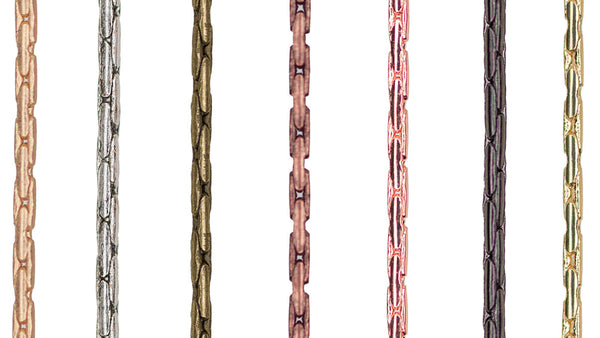
Bead chains look similar to ball chains but have an important difference: the beads are typically solid (not hollow) and are crimped or soldered onto a fine cable or wire at even intervals. This gives the chain a slightly more textured, handmade feel compared to the uniform look of a ball chain. The beads themselves are often faceted or diamond-cut to catch more light.
This chain type adds visual interest to delicate jewelry without overwhelming the design. It's a popular choice for rosary-style necklaces, layered bracelet stacks, and earring components. The fine wire between each bead is usually strong enough to support small pendants but light enough to keep the piece comfortable. We carry bead chains in multiple gauges, from ultra-fine beading chain for seed bead projects to heavier versions for standalone necklaces.
Beaded Chain

Beaded chains (also called station bead chains or rosary chains) feature small beads wire-wrapped at regular intervals — typically every inch or so — along a delicate cable or link chain. Each bead is individually wrapped with a small loop of wire on each side, giving the chain flexibility, movement, and a distinctly handcrafted appearance that mass-produced chains can't replicate.
This style is one of the most versatile chains for jewelry makers. You can use it as a finished necklace chain on its own, layer multiple strands for a bohemian look, or incorporate it into earring and bracelet designs where you want texture without bulk. The wire-wrapped construction also means beaded chains are surprisingly durable — the wraps act as individual reinforcement points along the chain. We offer beaded chains with glass, crystal, and stone beads in gold and silver finishes.
Bike Link Chain

Bike link chains (also called bicycle chains) take their design directly from actual bicycle chains — wide, flat plates connected by short cylindrical rollers. In jewelry, this translates to a bold, industrial-looking chain with a wide profile and a satisfying weight that makes a statement.
This chain style leans heavily toward men's jewelry, streetwear aesthetics, and punk or industrial-inspired designs. It's not a chain you'd pair with a delicate pendant — it IS the statement piece. Bike link chains work best as standalone necklaces or chunky bracelets, often finished with a lobster clasp or toggle. Because of the wide, flat link structure, these chains sit flat against the chest rather than rolling or twisting.
Box Chain

Box chains are constructed from small square links that interlock to form a smooth, continuous tube with a clean geometric profile. Unlike round-link chains such as cable or rolo, the square shape of each link gives the box chain a distinctly modern, architectural feel. The links sit flush against each other, creating a surface that reflects light evenly from all angles.
This is one of the strongest chain types relative to its delicate appearance. The square links distribute tension more evenly than round ones, so a thin box chain can handle heavier pendants than you might expect. That combination of strength and subtlety makes box chains a favorite for showcasing pendants — the chain provides a clean backdrop without competing for attention. Box chains are also very resistant to kinking, which makes them a good choice for everyday-wear pieces. We carry box chains in multiple widths and finishes, including our waterproof PVD gold option.
Byzantine Chain

The Byzantine chain is one of the most intricate chain weaves available. It's made by interlocking oval and round jump rings in a repeating pattern that creates a thick, textured rope-like appearance. The construction technique dates back to the Byzantine Empire, and the resulting chain has a distinctly luxurious, old-world character that sets it apart from simpler link styles.
What makes Byzantine chain special for jewelry makers is the combination of visual complexity and flexibility. Despite looking rigid, a well-made Byzantine chain drapes beautifully and has a fluid, almost liquid movement. It's heavy enough to feel substantial around the neck but not so stiff that it's uncomfortable. This chain style works best as a standalone statement necklace or bracelet — adding a pendant would cover up the intricate weave that makes it special. Byzantine chains are typically wider (3mm+), making them a great option for pieces where the chain itself is the design focus.
Cable Chain

Cable chain is the workhorse of jewelry making. It features simple, uniform oval or round links connected at alternating 90-degree angles — the same basic construction as an anchor chain, but typically in finer gauges. It's the chain most people picture when they think of a basic necklace chain, and there's a reason it's the most widely used style in the industry: it's versatile, strong, easy to work with, and goes with everything.
From a practical standpoint, cable chains are nearly impossible to kink, easy to repair if a link breaks, and simple to cut to custom lengths. They pair well with virtually any pendant, charm, or clasp type. The open link structure also makes them ideal for adding extensions, jump rings, and other findings anywhere along the length. We stock cable chains in widths from ultra-fine (1mm) for delicate layering pieces to heavy (5mm+) for chunky, unisex designs, available in all our standard finishes plus waterproof gold.
Chevron Chain

Chevron chains feature small V-shaped links nested together to create a smooth, flexible band with a subtle zigzag pattern. The links lie flat against each other, giving the chain a sleek, almost fabric-like texture that catches light along the angled edges. It's sometimes confused with herringbone chain, but chevron links are typically smaller and the resulting chain is more flexible and thinner.
This chain style excels in pieces where you want elegance without width. It's a popular choice for choker necklaces, delicate bracelets, and earring components where the chain needs to hang with a soft, fluid drape. Chevron chains are available in gold, rose gold, and silver finishes, and their thin profile makes them excellent for layering with other chain styles without creating bulk.
Curb Chain

Curb chains are made from interlocking links that have been twisted and flattened so they lie flat against the skin. Each link is identical, and the twisting process gives the chain a uniform, polished surface with a slight sheen that looks great in both fine and chunky widths. Curb chain is one of the most popular chain styles worldwide — you'll see it in everything from delicate women's necklaces to heavy men's chains.
The flat profile makes curb chains exceptionally comfortable to wear, and the uniform link pattern means they drape evenly without bunching or twisting. This chain style is strong, durable, and nearly kink-proof, which is why it's often used for permanent jewelry and everyday-wear pieces. Curb chains are also one of the best options for layering — the flat links stack neatly without tangling with other chains. We carry curb chains in every finish, including our popular stainless steel curb chain that's become a bestseller for permanent jewelry makers.
Figaro Chain

The Figaro chain originated in Italy and is characterized by a repeating pattern of alternating link sizes — typically two or three shorter links followed by one elongated link. Like curb chains, the links are twisted and flattened to lie flat, but the alternating pattern gives Figaro chains a distinctive rhythm and visual interest that a uniform curb chain doesn't have.
Figaro chains are popular in both men's and women's jewelry. The pattern creates natural "sections" along the chain, which can be used to space out charms or to create a design that looks more complex than a single-link chain. They're also a traditional choice for religious medals and ID bracelets. The Italian heritage of this chain style gives it a classic, sophisticated feel. Available in gold, silver, and stainless steel finishes in widths from 3mm to 7mm+.
Flat Anchor Chain

The flat anchor chain takes the traditional anchor chain design and compresses the links into thin, rectangular shapes that lay flat. The result is a sleek, modern chain with a wider profile but a very low-profile thickness — think of it as the contemporary cousin of the classic anchor chain. This flattened construction gives the chain an almost architectural quality.
Flat anchor chains are unisex and work for both men's and women's jewelry. The wide, flat links create a bold visual without the weight of a solid chain, making them comfortable for all-day wear. They're especially popular for modern bracelet designs and choker-length necklaces. This chain style also works well with connector links and charms attached at the flat link points.
Franco Chain

Franco chains feature a dense weave of V-shaped links that interlock to form a square or slightly rounded cross-section. Unlike most chain styles where you can see through the links, the Franco weave is so tight that it creates an almost solid-looking surface. This construction method originated in Italy and produces one of the strongest, most durable chain types available.
The key selling point of a Franco chain is its strength-to-weight ratio. The tight link structure distributes tension across multiple points simultaneously, which means a Franco chain can handle heavy pendants — including large gemstone pieces and chunky charms — without stretching or breaking. It's one of the few chain styles that's strong enough for very heavy pendants while still looking elegant rather than industrial. Franco chains resist kinking and tangling better than most other styles, making them a premium choice for pieces that need to last.
Herringbone Chain

Herringbone chains are made from flat, V-shaped links that overlap each other in an offset pattern, creating a wide, smooth, mirror-like surface. The chain lies completely flat and has a very thin profile despite its wide appearance. This gives herringbone chains a sleek, liquid-metal look that's instantly recognizable and catches light beautifully across the entire surface.
Herringbone is a statement chain — it's designed to be worn as the focal point of an outfit, not as a background for pendants. In fact, attaching pendants to a herringbone chain is generally not recommended because the flat, wide links can twist and kink if weighed down at a single point. This chain style requires a bit more care than others: store it flat (not hanging), avoid sleeping in it, and keep it away from moisture if it's plated. Despite these care requirements, herringbone chains remain one of the most popular chain styles for fashion-forward necklaces and bracelets because the visual impact is unmatched.
Mariner Chain (Gucci Chain / Pignose Chain)

The mariner chain — also called a Gucci chain or pignose chain — features identical oval links, each with a vertical bar running through the center. This center bar is the defining characteristic: it strengthens each link and gives the chain a distinctive look that sets it apart from standard anchor or cable chains. The design was inspired by the chains used to secure anchors on ships, and it retains that nautical, maritime character.
Mariner chains are equally popular in men's and women's jewelry. The center bar adds visual weight to each link without adding significant physical weight, making the chain look more substantial than it actually is. This chain style works well with pendants because the sturdy links distribute weight effectively, and it's a popular choice for layering because the distinctive link shape creates contrast when paired with simpler chain styles. Available in fine to chunky widths across all our standard finishes.
Paperclip Chain
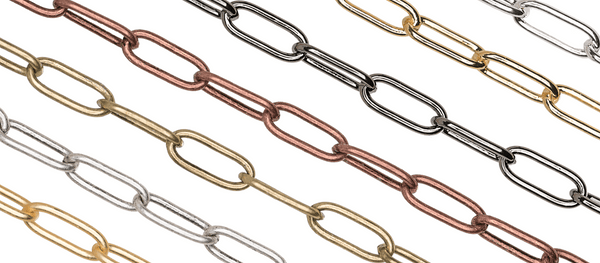
Paperclip chains (also called elongated link chains) feature long, narrow, rounded-rectangle links that resemble — you guessed it — paperclips. This chain style exploded in popularity in the early 2020s and has become a staple in modern jewelry design. The elongated links create a clean, graphic look that's minimalist and trendy without being overly delicate.
One of the reasons paperclip chains are so popular with jewelry makers is their versatility for customization. The large, open links make it easy to attach charms, pendants, and connectors anywhere along the chain without needing jump rings. They're also a natural fit for permanent jewelry because the flat links sit comfortably against the wrist or ankle. Paperclip chains look great alone, layered with other styles, or used as a base for a charm necklace or bracelet.
Popcorn Chain

Popcorn chains are made from tiny, tightly packed links that puff out slightly to create a textured, bumpy surface that resembles a string of popcorn kernels. The overall effect is a chain that sparkles and catches light from many tiny facets, almost like a diamond-cut finish but with a softer, more organic texture.
This chain style is all about surface texture and light play. Popcorn chains look more expensive than they are because the textured surface creates a lot of visual interest even at narrow widths. They're strong for their size, resistant to kinking, and comfortable to wear against the skin. Use them for necklaces where you want shimmer without adding pendants, or pair them with small, simple drops that won't compete with the chain's own texture.
Rhinestone Cup Chain

Cup chains (also called rhinestone chains or crystal chains) are unlike any other chain type on this list. Instead of metal links, they consist of a continuous row of small metal "cups" or bezels, each holding a glass crystal, rhinestone, or gemstone. The cups are connected edge-to-edge to form a flexible, sparkling strand that catches light from every angle.
This chain style is the go-to for adding sparkle and glamour to jewelry. Cup chains are used for tennis-style bracelets, choker necklaces, earring drops, and as decorative accents on multi-strand pieces. The stones are available in different sizes (measured in "ss" or stone size) and colors, from classic clear crystal to colored stones and aurora borealis finishes. Cup chains can be cut to length with wire cutters and finished with end caps or cord ends. We carry cup chains in multiple stone sizes and metal finishes.
Rolo Chain (Belcher Chain)

Rolo chains (called belcher chains in the UK and Australia) feature symmetrical round or D-shaped links that are thicker and more substantial than the links on a standard cable chain. Each link is flat on the inside and rounded on the outside, which gives the chain a weighty, chunky feel even at moderate widths. The links alternate direction, just like a cable chain, but the heavier gauge creates a noticeably different look and feel.
The rolo chain's strength is its middle-ground versatility: it's substantial enough to wear as a standalone piece but not so heavy that it overwhelms a pendant. The thick links also make it incredibly durable — this is a chain you can wear every day without worrying about breakage. Rolo chains are a popular base for charm bracelets because the large, round links provide easy attachment points for jump rings. They're also one of the most popular chain choices for children's jewelry and medical alert bracelets because of their reliability.
Rope Chain

Rope chains are made from two or more strands of metal links twisted together in a spiral pattern that looks just like a textile rope. The intertwining strands create a complex surface of tiny facets that catch and reflect light from every direction, giving rope chains an impressive shimmer that gets even more pronounced at wider widths.
This is one of the strongest chain constructions available. The twisted, multi-strand structure distributes tension across multiple link paths simultaneously, so if one strand gets stressed, the others compensate. That makes rope chains an excellent choice for supporting heavy pendants — especially combined with a strong lobster clasp. The trade-off is that rope chains are harder to repair than simpler styles if they do break, because of the complex weave. Rope chains are a classic in both casual and formal jewelry, and they look particularly striking in two-tone (gold and silver together) finishes.
Satellite Chain


Satellite chains (also called Saturn chains) feature small round beads or balls positioned at regular intervals along a fine cable or link chain. The beads "orbit" the main chain like satellites, which is where the name comes from. This creates a delicate, celestial-inspired look that adds visual interest to an otherwise simple chain without adding bulk.
Satellite chains are one of the most popular styles for layering because the bead accents create texture that contrasts beautifully with smooth, plain chains. They look great worn solo for a minimalist everyday necklace or stacked in multiples at different lengths. Some variations use tiny gemstone beads instead of metal balls for added color. Our satellite chains come in both standard bead and gemstone-bead versions, available in cable and link base chains across all finishes.
Singapore Chain

Singapore chains are made from flat, diamond-cut links that are twisted into a spiral pattern, creating a chain that combines the sparkle of faceted surfaces with the visual interest of a twisted design. When the chain moves, the diamond-cut facets catch light and create a shimmer that's more pronounced than what you get from a standard twisted chain.
This chain style bridges the gap between delicate and eye-catching. Singapore chains are thin enough for layering but sparkly enough to stand on their own. The twisted construction gives them a springy, fluid movement that looks beautiful in motion — especially on necklaces that hang freely against clothing. They're a great option for lightweight pendant necklaces where you want the chain to add something to the overall design rather than just serving as a functional connector.
Snake Chain

Snake chains are made from tightly fitted, curved metal plates or bands that interlock to form a smooth, round, tubular chain with no visible links. The surface looks and feels like the scales of a snake — hence the name. Running your finger along a snake chain, you'll feel a seamless, silky texture that's completely different from any link-based chain.
This is one of the sleekest chain styles available. Snake chains have a fluid, almost organic movement that drapes beautifully against the skin. They work well with slide pendants and charm beads (like those used in European-style charm bracelets) because the smooth surface allows beads to glide freely along the chain. However, like herringbone chains, snake chains require careful handling — they can kink if bent sharply, and kinks are very difficult to remove without leaving a visible mark. Store them flat or hanging straight, and avoid wearing them during activities where they might get caught or bent.
Spiga Chain / Wheat Chain


Spiga chains and wheat chains are closely related — the terms are often used interchangeably, though there are subtle differences. Both feature oval or figure-eight links that are twisted and braided together to form a dense, tube-shaped chain that resembles a stalk of wheat (spiga means "ear of wheat" in Italian). Spiga chains tend to have a slightly more open weave with visible link edges, while wheat chains are woven more tightly for a smoother, rounder profile.
Both versions produce a strong, durable chain with a sophisticated braided texture. The tight construction makes spiga/wheat chains very resistant to kinking and stretching, and the figure-eight link pattern distributes stress well — making them a solid choice for supporting larger pendants. The woven texture adds visual richness without being flashy, hitting a sweet spot between casual and dressy that works for everyday wear. These chains look particularly elegant in gold finishes where the braided pattern catches warm light.
Venetian Chain (Venetian Box Chain)

The Venetian chain (also called a Venetian box chain) is a wider, more substantial version of the standard box chain. Like its thinner cousin, it features interlocking square links, but the links are larger and more prominent, giving the chain a bolder, more visible geometric pattern. The wider link size also creates a stronger, heavier chain that makes more of a visual impact.
Venetian chains occupy the space between minimalist and statement jewelry. The square links have a clean, polished appearance that reads as both modern and classic, and the heavier construction means this chain can handle virtually any pendant without looking overwhelmed. It's a popular choice for unisex jewelry and for pieces that need to look polished and intentional without being flashy. The squared profile also stacks neatly when layering, making Venetian chains a good companion to rounder chain styles.

How to Choose the Right Jewelry Chain
With so many chain styles to choose from, picking the right one comes down to a few key factors:
What's the chain's job? If it's carrying a pendant, prioritize strength — rope, Franco, box, and curb chains handle weight best. If the chain IS the design, choose something with visual texture like Byzantine, herringbone, or popcorn.
Who's wearing it? Delicate chains (satellite, Singapore, fine cable) suit minimalist and feminine styles. Chunky chains (curb, bike link, mariner) lean toward bold and unisex looks. Figaro, rope, and paperclip chains work across the board.
How will it be worn? Everyday pieces need kink-resistant, durable chains — cable, curb, rolo, and box are your safest bets. Special occasion pieces can use more delicate styles like herringbone or snake that need careful handling.
Are you layering? Mix chain textures for the best layered look. Pair a smooth cable chain with a textured satellite chain, or stack a flat curb chain with a round rope chain. Different widths at different lengths create visual depth without tangling.
What material do you need? For permanent jewelry and daily-wear pieces that need to resist water, sweat, and tarnishing, choose our waterproof PVD gold chains or stainless steel chains. For fashion jewelry and trend pieces, our brass chains with electro-plated finishes offer the widest selection of colors and styles.
Browse All 290+ Chains in Our Collection →
Frequently Asked Questions About Jewelry Chains
What is the strongest type of jewelry chain?
Rope chains, Franco chains, and curb chains are considered the strongest chain styles because of their tightly woven or interlocking link construction. Box chains are also deceptively strong for their thin appearance. For maximum durability, choose a chain made from solid stainless steel or solid brass — avoid hollow-link chains if strength is a priority.
What type of chain is best for a pendant?
Cable chains, box chains, rope chains, and curb chains are all excellent pendant chains. The right choice depends on the pendant's weight and style: lightweight pendants work on any chain, but heavier pendants need something sturdy like a rope or Franco chain. Avoid using herringbone or snake chains with pendants, as the weight can cause kinking.
What chain style is best for layering?
Satellite chains, paperclip chains, cable chains, and curb chains are the most popular for layering. The key to a good layered look is mixing different chain textures and widths at varying lengths. Flat-profile chains (curb, paperclip) layer well because they don't tangle with round chains (cable, rope).
What is the difference between a cable chain and a rolo chain?
Both use the same basic interlocking-link construction, but rolo chains have thicker, wider links that are flat on the inside and rounded on the outside. Cable chains use thinner, more uniform oval links. The result is that rolo chains look and feel more substantial, while cable chains are more delicate and versatile.
What chains are best for permanent jewelry?
The most popular chains for permanent jewelry (welded-on bracelets and necklaces) are cable chains, curb chains, paperclip chains, figaro chains, and satellite chains. Since permanent jewelry stays on 24/7, the chain must be waterproof, tarnish-resistant, and strong — which is why most permanent jewelry makers use stainless steel or PVD-coated waterproof gold chains.
Do you sell chains by the foot?
Yes — many of our chains are available by the foot as well as in pre-cut lengths. This lets you cut exactly the amount you need for custom projects. Wholesale customers can order chain in bulk spools at discounted pricing.
At Continental Bead Suppliers, we carry every chain style on this list in multiple finishes, widths, and materials — all nickel-free, lead-safe, and hypoallergenic. Whether you're building permanent jewelry, designing fashion pieces, or stocking your supply shop, we have the chain you need with fast shipping from our Las Vegas warehouse.