


Jewelry-Making Dictionary: Essential Terms, Tools & Techniques
Jewelry design and collecting involve a wide range of terms, techniques, and materials that shape both the craft and the final piece. From ancient stones like agate, used for thousands of years, to modern finishes such as anodized metal, each element carries history, function, and artistry. Understanding these terms provides the foundation for recognizing quality, identifying styles, and appreciating the skill behind each creation.
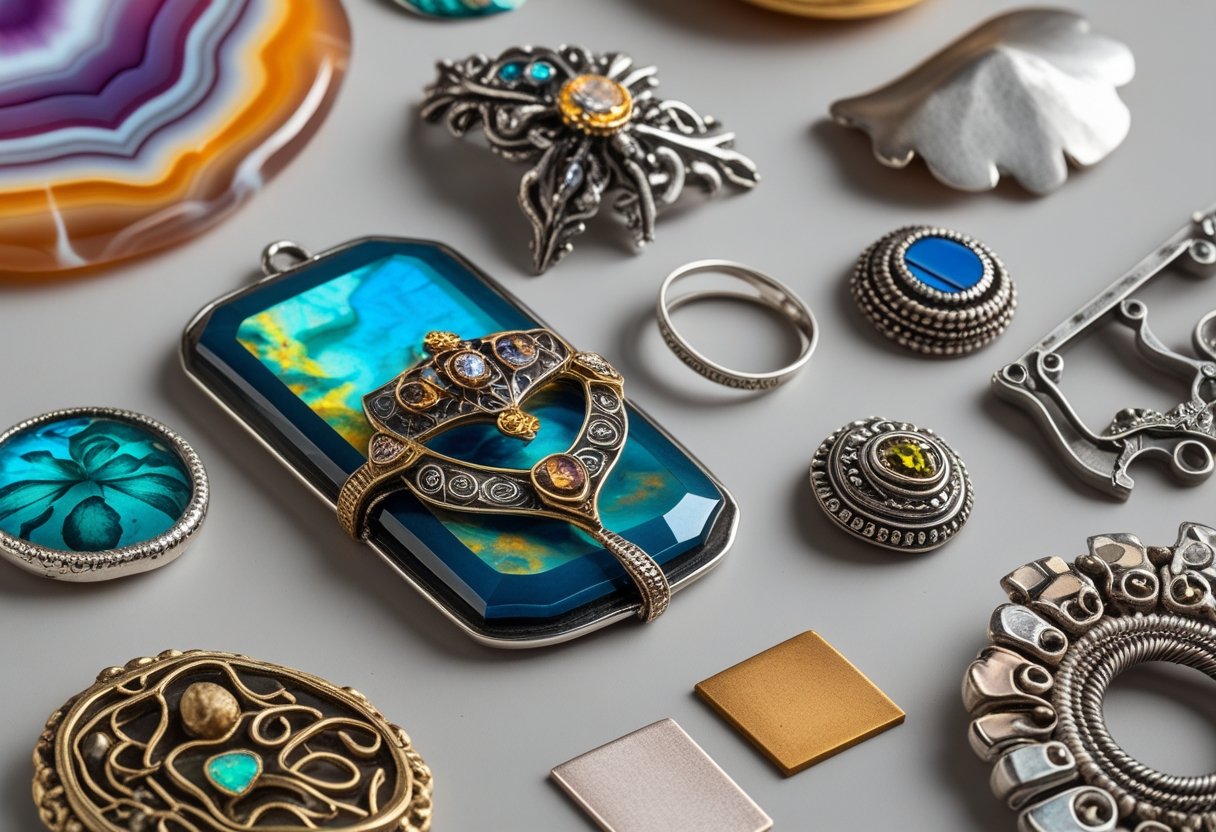
This guide explores essential jewelry vocabulary from A to H, covering gemstones, metals, tools, and techniques. Whether it is the precision of an assay, the elegance of Austrian crystal, or the craftsmanship behind an antique finish, each concept adds clarity to how jewelry is made and valued.
By learning about settings, clasps, beads, and finishes, anyone can better evaluate jewelry—whether purchasing, crafting, or studying antique and artisan pieces. These terms not only describe materials and methods but also reveal the traditions and innovations that continue to shape jewelry today.
A
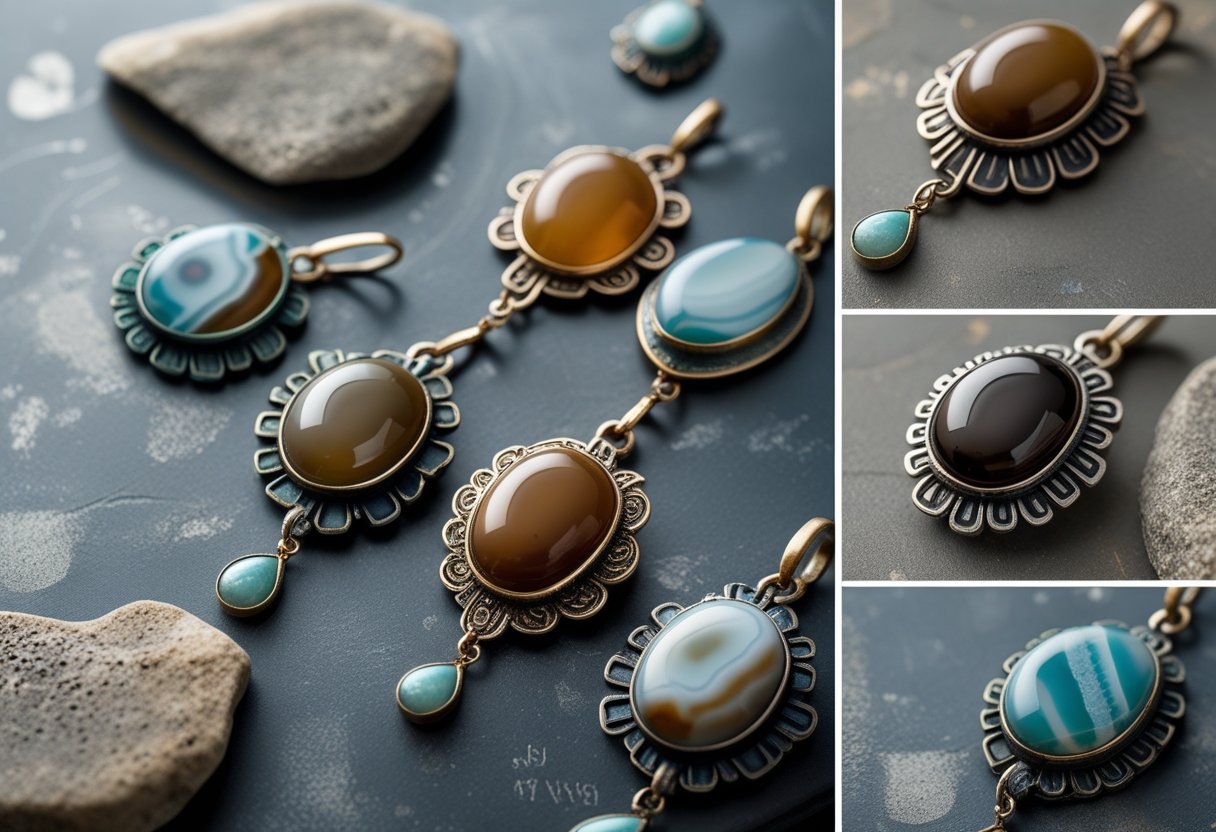
Materials and techniques beginning with the letter A play a central role in jewelry making. They include natural gemstones, metalworking methods, decorative finishes, and historical styles that continue to influence modern design. Each term has specific applications that affect durability, appearance, and value.
Agate
Agate is a variety of chalcedony known for its banded appearance and wide range of natural colors. Its durability, with a hardness of about 6.5 on the Mohs scale, makes it suitable for rings, pendants, beads, and cameos.
Historically, agate has been used for thousands of years. Neolithic beads dating back 9,000 years have been discovered in Anatolia. During the Roman period, gem-cutting centers in Idar-Oberstein, Germany, specialized in agate carving, a tradition that continued into the 19th century with imported Brazilian stones.
Collectors often value Scottish agate jewelry from the Victorian era, which became fashionable under Queen Victoria. Agate is also popular in Art Nouveau and Arts and Crafts jewelry due to its natural patterns.
Care requires caution: ultrasonic and steam cleaning are unsafe. Warm, soapy water is recommended to preserve the stone’s polish.
Alloy
An alloy is a combination of two or more metals designed to improve strength, durability, or color. Jewelry commonly uses alloys such as sterling silver (silver and copper) and various gold alloys mixed with copper, nickel, zinc, or palladium.
The choice of alloy affects both appearance and wearability. For example, 18k gold contains 75% pure gold, while 14k gold has 58.3% pure gold, making the latter harder and more resistant to scratching. White gold alloys often require rhodium plating to achieve a bright white finish.
Nickel-containing alloys may cause skin irritation, so hypoallergenic alternatives are often preferred. Platinum alloys, typically mixed with iridium or ruthenium, provide exceptional durability for fine jewelry.
Annealing
Annealing is a heat treatment process used in metalworking to restore ductility. Jewelers heat metal to a specific temperature and then allow it to cool slowly, reducing brittleness caused by repeated hammering, bending, or rolling.
The process is essential for shaping metals such as silver, gold, and copper. Without annealing, these metals can crack or break under stress. Proper temperature control is critical, as overheating can cause oxidation or melting.
In practice, jewelers often use a torch to anneal small pieces, followed by quenching in water or a pickle solution to remove oxides. This cycle of work-hardening and annealing allows artisans to create complex designs without compromising structural integrity.
Anodized Metal
Anodizing is an electrochemical process that enhances the surface of metals, most commonly aluminum and titanium. It increases corrosion resistance and provides a porous surface that can absorb dyes for decorative coloration.
In jewelry, anodized titanium and niobium are popular for their vibrant, iridescent colors achieved without coatings. The hues result from interference effects created by oxide layers of varying thickness.
Unlike plating, anodizing does not add material to the surface but alters the existing metal. This makes the finish durable and resistant to peeling. However, anodized surfaces can still scratch and require careful handling to maintain their appearance.
Antique Finish
An antique finish is a surface treatment that gives jewelry a darker, aged look. Jewelers typically achieve this by applying patinas or darkening agents to recesses, then polishing raised areas to create contrast.
Sterling silver often receives an oxidized finish using liver of sulfur. Brass and copper can also be treated to achieve similar effects. This technique highlights textures, engravings, and patterns, making details more visible.
The finish does not affect metal strength but does require gentle cleaning. Harsh polishing can remove the darkened areas, reducing the intended contrast. Many artisans use this finish in designs that seek a vintage or rustic aesthetic.
Art Deco Jewelry
Art Deco jewelry, popular from the 1920s to the 1930s, is defined by geometric shapes, symmetry, and bold contrasts. Platinum, white gold, and diamonds dominated the style, often paired with onyx, jade, coral, and colored gemstones.
Designers frequently used techniques such as calibré-cut stones set in precise patterns. Motifs included chevrons, sunbursts, and stepped forms inspired by modern architecture and industrial design.
This period also saw advances in gemstone cutting and the widespread use of synthetic stones. Art Deco remains highly collectible, with original pieces commanding strong interest at auctions and in antique jewelry markets.
Artisan Jewelry
Artisan jewelry is handcrafted by skilled makers who design, fabricate, and finish each piece individually. Unlike mass-produced items, artisan work emphasizes craftsmanship, originality, and small-scale production.
Materials often include sterling silver, gold, natural gemstones, and alternative materials such as wood or glass. Techniques may involve hand-forging, soldering, wire wrapping, and stone setting.
Artisan jewelry appeals to buyers seeking unique designs and personal expression. Many pieces reflect cultural traditions or contemporary artistic influences, making them distinct from factory-made jewelry.
Assay
An assay is a test that measures the purity of a metal, particularly precious metals like gold, silver, and platinum. Assay offices in many countries provide official hallmarks that certify metal content.
Methods include fire assay, X-ray fluorescence, and touchstone testing. Fire assay remains the most accurate for gold, though it is destructive to small samples.
Hallmarks typically indicate metal type, purity, and sometimes the location of the assay office. For example, sterling silver is often marked “925,” meaning 92.5% pure silver. These marks provide assurance of authenticity and protect buyers from fraud.
Austrian Crystal
Austrian crystal refers to high-quality, precision-cut glass crystals produced in Austria, most famously by Swarovski. These crystals are known for their brilliance, clarity, and uniformity.
The manufacturing process involves cutting glass with advanced machinery to achieve sharp facets that mimic the sparkle of gemstones. Coatings such as Aurora Borealis (AB) enhance light reflection and create iridescent effects.
Designers use Austrian crystals in fashion jewelry, costume pieces, and decorative applications. While not natural gemstones, their precision and beauty make them a popular alternative for affordable luxury.
Aventurine
Aventurine is a variety of quartz characterized by inclusions that give it a shimmering effect called aventurescence. The most common color is green, caused by fuchsite inclusions, though it also occurs in orange, brown, and blue.
This stone is often cut into cabochons, beads, and carvings. Its hardness, around 6.5 to 7 on the Mohs scale, makes it durable enough for jewelry but softer than materials like sapphire.
Aventurine has been used historically in talismans and decorative objects. Today, it remains popular in both fine and costume jewelry for its attractive sparkle and affordability. Care involves avoiding harsh chemicals and cleaning with mild soap and water.
B
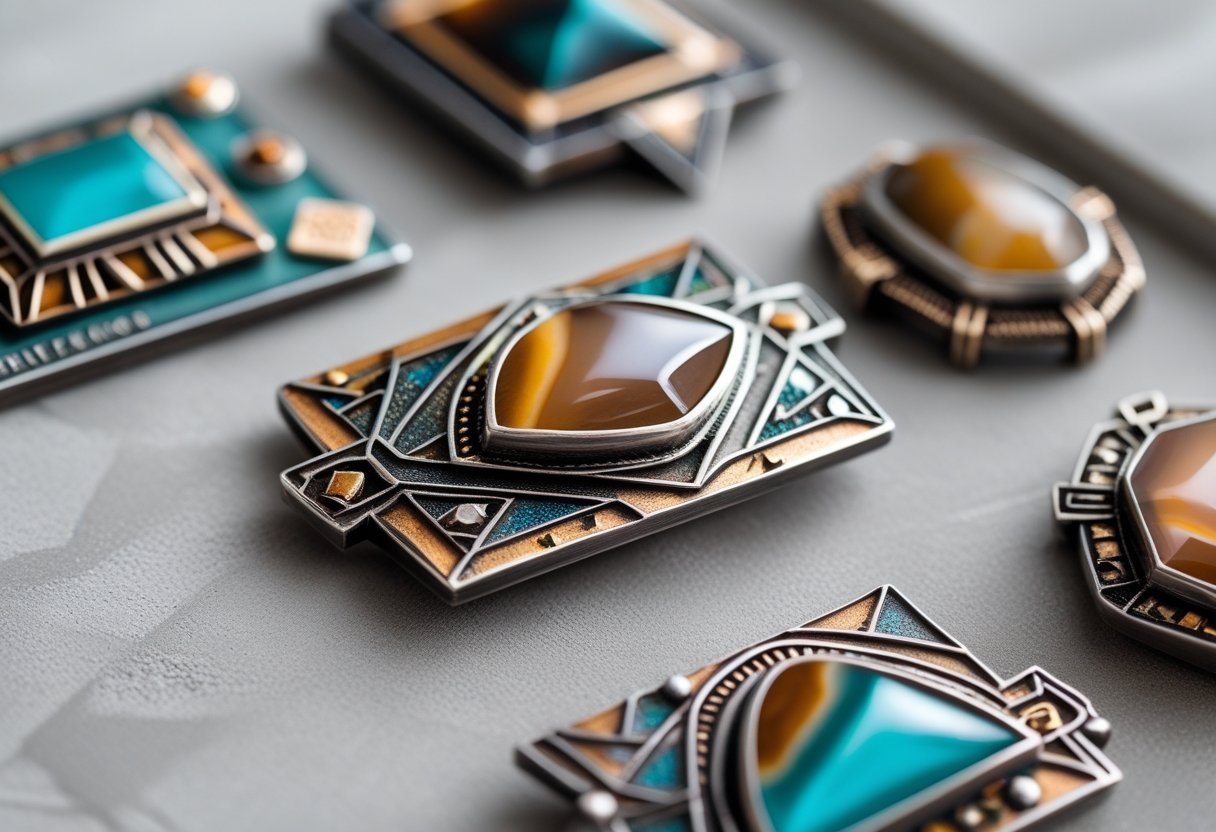
Jewelry making relies on both decorative and functional components that determine durability, comfort, and style. Different parts such as clasps, wires, beads, and settings each play a role in how a piece is constructed, worn, and maintained.
Bail
A bail connects a pendant or charm to a necklace chain. It allows the pendant to hang freely and move naturally, improving both appearance and comfort.
Bails come in several types, including pinch bails, tube bails, and hidden bails. Pinch bails grip the pendant with prongs, while hidden bails are designed to conceal the connection for a seamless look.
Jewelers select bails based on pendant weight, chain thickness, and design style. Properly sized bails ensure secure attachment without limiting movement.
Barrel Clasp
A barrel clasp secures two ends of a necklace or bracelet by screwing them together. Its cylindrical shape resembles a barrel, giving it both strength and a discreet profile.
These clasps are often used in lightweight to medium-weight jewelry. They provide a secure closure but can be difficult for some wearers to operate due to the twisting motion required.
Sterling silver, gold-filled, and plated versions are common. Jewelers often choose barrel clasps for continuous designs where a hidden closure is preferred.
Base Metal
Base metal refers to inexpensive metals such as copper, brass, or zinc that serve as a foundation for plating or alloying. They are widely used in costume jewelry and findings.
While less valuable than precious metals, base metals offer strength and affordability. They are often plated with gold, silver, or rhodium to improve appearance and resistance to tarnish.
Nickel, a common base metal, may cause allergic reactions in some wearers. Jewelers often use nickel-free alloys to ensure hypoallergenic properties.
Bead Board
A bead board assists in jewelry design and layout. It typically features grooves and measurements that help arrange beads before stringing.
The recessed channels prevent beads from rolling away and allow for accurate length planning. Many boards include marked rulers for precise measurement of necklaces and bracelets.
Flocked surfaces reduce slipping and improve visibility. Bead boards are essential for symmetrical designs and multi-strand projects.
Bead Cap
A bead cap is a decorative finding placed at one or both ends of a bead. It enhances the bead’s appearance and can create a finished, professional look.
Bead caps come in a variety of materials, including sterling silver, brass, and plated metals. Designs range from simple domes to ornate filigree patterns.
They also serve a functional purpose by protecting bead edges and stabilizing larger beads on stringing materials.
Bead Loom
A bead loom is a tool used to weave beads into patterns or fabric-like strips. It holds threads under tension, allowing consistent alignment of beads.
Loom beading produces flat, even designs suitable for bracelets, belts, and decorative panels. The technique differs from off-loom weaving, which relies on needle and thread alone.
Modern bead looms vary in size, from compact portable versions to large adjustable frames. They are widely used for intricate geometric or pictorial designs.
Bead Reamer
A bead reamer is a hand tool used to enlarge or smooth bead holes. It typically has a diamond-coated or abrasive tip.
This tool is essential when bead holes are too small for stringing materials or when sharp edges risk cutting thread or wire.
Bead reamers come in manual and rotary versions. Careful use prevents cracking delicate beads such as glass, pearls, or gemstones.
Bead Stopper
A bead stopper prevents beads from sliding off stringing material during design work. It usually consists of a coiled spring that grips the cord or wire.
Unlike temporary knots or tape, bead stoppers are reusable and easy to reposition. They save time during layout adjustments and reduce waste.
Bead stoppers are available in different sizes to accommodate various stringing materials, from fine beading wire to thicker cords.
Beading Awl
A beading awl is a pointed tool used for knotting and adjusting beads. It helps create consistent knots in pearl or bead stringing.
The sharp tip can also be used to clear small holes or reposition beads during intricate designs. Many awls feature cushioned handles for comfort during extended use.
This tool is particularly valuable in traditional pearl knotting, where evenly spaced knots protect delicate beads from rubbing against one another.
Beading Cord
Beading cord is a flexible stringing material made from silk, nylon, or synthetic fibers. It is commonly used for knotting between pearls and beads.
Silk cord offers a traditional look and smooth drape, while nylon provides greater durability and resistance to fraying. Some cords come pre-threaded with needles for convenience.
Cord thickness must match bead hole size for proper fit. Waxed versions improve handling and knot security.
Beading Needles
Beading needles are thin, flexible needles designed to pass through small bead holes multiple times. They are longer and finer than standard sewing needles.
Sizes range from 10 to 15, with higher numbers indicating thinner needles. The choice depends on bead size and thread type.
English and Japanese needles are the most common varieties. Japanese needles are prized for their strength and smooth finish, reducing thread wear.
Beading Wire
Beading wire is a strong, flexible wire coated with nylon for durability. It is widely used in stringing necklaces and bracelets.
It consists of multiple strands of stainless steel twisted together for flexibility. Wire diameters vary, with thinner gauges suited for small beads and thicker gauges for heavier designs.
Beading wire is secured with crimp beads rather than knots, making it ideal for long-lasting jewelry. Popular brands include Soft Flex and Beadalon.
Bezel
A bezel is a metal rim that encircles a gemstone or cabochon to hold it securely in place. It provides excellent protection compared to prong settings.
Bezels can be full, wrapping entirely around the stone, or partial, leaving parts of the stone exposed. They are often used for cabochons, cameos, and softer gemstones.
The smooth edge of a bezel reduces snagging and creates a sleek profile. Jewelers often prefer this setting for durability and modern design aesthetics.
Bicones (Beads)
Bicone beads are shaped with two conical ends joined at the center, creating a symmetrical diamond-like profile. This shape enhances light reflection.
They are commonly made from crystal, glass, or acrylic. Swarovski bicones are especially valued for their precision cut and brilliance.
Bicone beads are widely used in bead weaving, stringing, and embellishment. Their angular shape makes them versatile for both subtle accents and focal points.
Birthstone
A birthstone is a gemstone traditionally associated with each month of the year. These stones are often used in personalized jewelry.
For example, garnet represents January, amethyst February, and emerald May. Birthstone jewelry is popular for gifts and commemorative pieces.
Modern birthstone lists may differ from traditional ones, reflecting gemstone availability and cultural variations. Jewelers often offer both options to customers.
Box Clasp
A box clasp secures jewelry by inserting a tab into a decorative box-shaped housing. A spring mechanism locks it in place.
This clasp is often used on higher-end necklaces and bracelets due to its secure hold and decorative potential. Many are embellished with gemstones or filigree.
Box clasps are easier to operate than barrel clasps, making them suitable for wearers who prefer simple closures.
Bracelet Blank
A bracelet blank is a pre-formed metal base used as a foundation for custom designs. It allows jewelers to add embellishments such as stones, enamels, or stamping.
They are available in cuff, bangle, or flat strip styles. Materials include brass, copper, sterling silver, and plated metals.
Bracelet blanks save time in fabrication while giving artisans flexibility to personalize each piece.
Brass
Brass is an alloy of copper and zinc commonly used in jewelry. It has a warm golden color that resembles gold at a lower cost.
Brass is strong, workable, and widely used for findings, chains, and decorative elements. However, it can tarnish or darken over time due to oxidation.
Protective coatings or lacquers are often applied to reduce tarnish. Brass is also frequently used as a base metal for gold plating.
Briolettes
A briolette is a gemstone cut into an elongated, faceted teardrop shape. It is drilled at the top for stringing or wire wrapping.
This cut maximizes sparkle by covering the surface with triangular facets. Briolettes are often used in earrings and pendants for their dangling movement.
They are commonly cut from quartz, topaz, and amethyst. The briolette style dates back to the 17th century and remains popular in fine jewelry.
Bugle Beads
Bugle beads are long, tubular glass beads available in various lengths and finishes. They are typically cut from glass rods and polished for smooth edges.
They are used in embroidery, bead weaving, and fringe designs. Their elongated shape creates texture and movement in jewelry and textiles.
Bugle beads can be straight, twisted, or hex-cut for added sparkle. Careful handling is necessary, as sharp edges may cut thread if not reinforced.
C
Jewelry making and design often rely on specialized materials, tools, and techniques that shape both the function and aesthetic of a piece. From stone cutting styles to fastening methods and decorative finishes, each element plays a critical role in craftsmanship and durability.
Cabochon
A cabochon is a gemstone cut with a smooth, rounded surface rather than facets. This style highlights the natural color, pattern, or inclusions of stones such as agate, turquoise, and moonstone.
Cabochons are often oval or round, though other shapes exist. They are typically mounted in bezel settings, which secure the stone with a thin strip of metal wrapped around its edge.
This cut is favored for opaque or translucent stones where brilliance is less important than surface detail. Cabochons are also used in cameos, intaglios, and inlay work.
Cameo
A cameo is a carved piece, usually featuring a raised relief image on a contrasting background. Traditional cameos are made from shell, agate, or onyx, where layers of color provide depth to the design.
They often depict portraits, mythological scenes, or floral motifs. The carving process requires precision to expose the lighter layer for the figure while leaving the darker layer as the background.
Cameos are commonly set in brooches, pendants, and rings. Antique examples from the Victorian and Art Nouveau periods remain highly collectible.
Canning Tongs (for tumbling)
Canning tongs, adapted from kitchen use, serve a role in jewelry tumbling. They allow the safe handling of metal pieces placed in or removed from a tumbler barrel.
The rubber-coated grips prevent scratches while providing firm control. This tool helps reduce contact with polishing media and protects the jeweler from cleaning compounds.
Using tongs also minimizes contamination between metals, which is important when polishing different alloys in the same workspace.
Chain (Cable, Rolo, Box, Paperclip, etc.)
Chains are essential in jewelry for both structure and decoration. Common types include:
- Cable chain: simple oval or round links.
- Rolo chain: round, uniform links with a heavier look.
- Box chain: square links forming a smooth profile.
- Paperclip chain: elongated links with a modern style.
Each chain type offers different strength and visual appeal. Designers select chain styles based on pendant weight, durability needs, and aesthetic preference.
Chain Nose Pliers
Chain nose pliers feature tapered jaws with flat inner surfaces. They allow precise gripping, bending, and opening of jump rings or wire loops.
Unlike round nose pliers, they provide a flat hold that prevents slipping. Many jewelers use them for closing crimps, tucking wire ends, and creating sharp bends.
Smooth, polished jaws reduce the risk of marring metal. Some versions include a spring return for ease of repetitive use.
Chandelier Findings
Chandelier findings are multi-loop components used to create tiered earring designs. They provide a base structure from which beads, chains, or charms can hang.
These findings are often decorative themselves, available in filigree, geometric, or ornate patterns. The multiple loops allow balance and symmetry in complex earring arrangements.
They are typically made of plated brass, sterling silver, or gold-filled metal, depending on the jewelry’s quality level.
Channel Setting
A channel setting secures gemstones between two parallel strips of metal. The stones sit flush with the surface and are held in place without prongs.
This technique is common in wedding bands and eternity rings. It provides a smooth surface that resists snagging and protects stone edges.
Channel settings work best with stones of uniform size, such as diamonds, sapphires, or cubic zirconia. Precision cutting ensures a tight, continuous row.
Charms
Charms are small decorative elements added to bracelets, necklaces, or earrings. They can be symbolic, commemorative, or purely ornamental.
Materials range from precious metals and gemstones to enamel, glass, or resin. Charms may be cast, stamped, or engraved with intricate designs.
Charm bracelets remain a popular format, allowing wearers to collect and display personal symbols over time.
Chasing Hammer
A chasing hammer is a jeweler’s tool with a rounded face on one side and a ball-peen on the other. It is used for texturing, flattening, and shaping metal.
The slightly convex face minimizes marks when striking metal sheets. The ball end creates dimples or decorative patterns.
Chasing hammers are also used in repoussé work, where designs are formed by hammering from the reverse side of the metal.
Choker
A choker is a necklace designed to fit closely around the neck. Standard lengths range from 14 to 16 inches.
Chokers can be made of ribbon, leather, metal, or beads. They may feature pendants, cameos, or gemstone settings as focal points.
The style has been popular in different eras, including the Victorian period, the 1920s, and modern fashion.
Clasps (Lobster, Toggle, Magnetic, etc.)
Clasps secure jewelry pieces such as necklaces and bracelets. Common types include:
- Lobster clasp: spring-loaded, durable, widely used.
- Toggle clasp: bar-and-loop mechanism, easy to fasten.
- Magnetic clasp: uses magnets for convenience, suited for lightweight jewelry.
Choice of clasp depends on security, ease of use, and design style. Stronger clasps are recommended for heavy chains or gemstone pieces.
Cloisonné
Cloisonné is an enameling technique where thin metal wires form compartments on a metal base. These compartments are filled with enamel paste and fired to create colorful designs.
The process produces intricate patterns with defined borders. Traditional cloisonné often features floral, animal, or geometric motifs.
This technique is common in pendants, beads, and decorative objects. Cloisonné jewelry requires multiple firings and polishing for a smooth finish.
Crimp Beads
Crimp beads are small metal tubes used to secure beading wire. They are flattened with pliers to lock the wire in place, often at the ends of necklaces or bracelets.
They are essential for attaching clasps when using flexible beading wire. Proper crimping ensures durability and prevents strands from slipping.
Crimp beads are usually made of brass, sterling silver, or gold-filled metal.
Crimp Covers
Crimp covers are hollow metal findings shaped like open beads. They are placed over crimped beads to create a polished, rounded appearance.
They also protect the crimp from wear and add a decorative finish. Crimp covers are available in various sizes to match different bead diameters.
They are applied with pliers, gently closed around the crimp without flattening.
Crystal Beads
Crystal beads are precision-cut glass beads known for their brilliance and clarity. High-quality versions, such as Swarovski or Czech crystals, are widely used in fine and fashion jewelry.
They come in a wide range of shapes, including bicones, rondelles, and rounds. The facets enhance light reflection, giving the beads a sparkling effect.
Crystal beads are available in many colors and coatings, including iridescent and metallic finishes.
Cubic Zirconia (CZ)
Cubic zirconia is a synthetic gemstone created to mimic the appearance of diamonds. It is optically flawless and available in a variety of colors.
CZ is harder than most natural gems but softer than diamonds, ranking about 8–8.5 on the Mohs scale. It is commonly used in rings, earrings, and pendants as a cost-effective alternative.
Unlike diamonds, CZ has a higher dispersion, giving it strong sparkle under light.
Cuff Bracelet
A cuff bracelet is a rigid, open-ended bracelet that slips over the wrist without a clasp. It can be plain metal, engraved, or adorned with stones.
Cuffs vary in width from delicate bands to bold statement pieces. They are often adjustable by gently squeezing or widening the opening.
Sterling silver, brass, and gold are common materials, though cuffs are also made from resin, wood, or leather.
Cutters (Flush, Side, End)
Cutters are tools used to trim wire, chain, or pins in jewelry making. Types include:
- Flush cutters: leave a smooth, flat cut on one side.
- Side cutters: general-purpose, angled blades.
- End cutters: cut close to surfaces, useful for trimming prongs.
High-quality cutters reduce hand fatigue and produce cleaner results. They are essential for wirework, chain assembly, and stone setting.
Czech Glass Beads
Czech glass beads are manufactured in the Czech Republic, known for centuries of glassmaking expertise. They are valued for consistency, wide color ranges, and precise shapes.
Popular types include fire-polished rounds, pressed glass beads, and seed beads. Their affordability and quality make them common in both fashion and artisan jewelry.
Czech beads often feature coatings such as metallic, matte, or iridescent finishes.
Cylinder Beads (Delica)
Cylinder beads, often referred to as Delica beads, are precision-cut glass seed beads with a uniform cylindrical shape. They are produced primarily in Japan.
Their consistent size and shape make them ideal for bead weaving, loom work, and peyote stitch. The uniformity results in smooth, even patterns.
Cylinder beads are available in thousands of colors and finishes, including opaque, transparent, matte, and metallic coatings.
D
Tools and materials beginning with the letter D play a vital role in shaping, forming, and embellishing jewelry. They range from specialized equipment for metalwork to decorative stones and beads valued for their unique textures and cultural significance.
Dapping Block
A dapping block is a hardened steel or wood tool with hemispherical indentations in various sizes. Jewelers use it to shape sheet metal into domes, curves, or other rounded forms. By placing the metal over an indentation and striking it with a punch, the sheet gradually takes on a smooth, concave shape.
Steel dapping blocks are the most durable and allow for precise shaping of harder metals like silver, copper, or brass. Wooden or plastic versions are lighter and better suited for softer metals or practice work.
Proper use requires placing the metal in progressively smaller cavities while striking with a matching punch. This step-by-step method prevents cracking or uneven shaping. Jewelers often use annealed metal to make the forming process easier and reduce stress on the material.
Dapping Punches
Dapping punches are cylindrical steel tools with rounded ends that correspond to the cavities in a dapping block. They are used in combination with the block to form domes, beads, and other curved shapes from sheet metal.
Punches come in graduated sizes, allowing the jeweler to work gradually from large to small curves. A well-matched punch and cavity ensure smooth shaping without leaving marks on the metal surface.
Polished punches are preferred because they minimize scratches. Some jewelers lubricate the punch lightly to reduce friction and extend the life of the tool. A full set of punches paired with a quality dapping block is an essential investment for metalsmithing.
Diamond Cut Beads
Diamond cut beads are metal or gemstone beads that have been faceted with precision tools to create reflective surfaces. These facets catch and reflect light, giving the beads a sparkling appearance similar to diamond brilliance.
They are often used as spacers in necklaces, bracelets, or earrings to add subtle shine. Common materials include sterling silver, gold-filled, brass, and hematite.
The cutting process requires specialized machinery to achieve sharp, uniform facets. The result is a bead that enhances jewelry designs without overpowering other elements. Diamond cut beads are durable and versatile, making them popular in both fine and fashion jewelry.
Disk Cutter
A disk cutter is a tool used to punch out perfectly round disks from sheet metal. It consists of a steel block with circular openings and matching punches. The jeweler places the metal sheet between the block and punch, then strikes with a hammer to cut out the disk.
Disk cutters are available in sets with multiple sizes. They provide a quick and accurate method for producing blanks used in pendants, earrings, and charms.
To achieve clean cuts, jewelers often use annealed metal and apply lubrication to the punch. Proper care, such as cleaning and storing the punches with rust protection, helps maintain cutting precision.
Doming Block
A doming block, also called a forming block, is used for shaping sheet metal into hemispherical forms. It is similar to a dapping block but often has deeper and more uniform hemispheres.
The block is typically made of hardened steel and used in conjunction with doming punches. Jewelers utilize it for making beads, hollow forms, and rounded settings.
Working in stages, the metal is gradually shaped and hardened with each strike. Annealing between steps may be required to prevent cracking. Doming blocks are essential in techniques such as bead making and hollow form construction.
Donut Pendants
Donut pendants are circular gemstone or glass pendants with a central hole. The design resembles a ring or disk and is often used in necklaces or as focal points in jewelry.
These pendants are versatile because they can be strung directly on a cord, wire-wrapped, or suspended with a bail. Popular materials include jade, agate, quartz, and obsidian.
The central hole provides both function and aesthetic appeal, allowing multiple design options. Depending on the stone, donut pendants may feature natural patterns, translucency, or polished finishes that highlight the material’s unique qualities.
Doublet Stone
A doublet stone is a composite gem created by bonding two layers together. Typically, a thin slice of a precious gemstone is fused to a backing of less expensive material, such as quartz or glass.
This technique allows jewelers to use smaller amounts of valuable material while still achieving the appearance of a larger or higher-quality gemstone. Opal doublets are among the most common, combining a thin opal layer with a dark backing to enhance color play.
Proper care is important, as doublets are more vulnerable to moisture and heat damage than solid stones. They should not be exposed to ultrasonic cleaning or prolonged water contact.
Drop Earrings
Drop earrings are a style of earring that hangs below the earlobe, often featuring a gemstone, bead, or metal element suspended by a chain, wire, or setting. They differ from studs by their movement and length.
Designs range from simple single-stone drops to elaborate multi-tiered arrangements. Common materials include pearls, crystals, faceted gemstones, and precious metals.
The style is popular because it balances elegance with versatility. Drop earrings can be worn for casual or formal occasions, and their movement highlights the materials used. Lightweight construction is important to ensure comfort during wear.
Druzy
Druzy refers to the tiny crystals that form on the surface of a mineral cavity. These sparkling surfaces occur naturally when water deposits minerals over time inside a rock or geode.
Common druzy varieties include quartz, agate, and calcite. The crystals are often cut into cabochons or freeform shapes for use in rings, pendants, and earrings.
Druzy stones are valued for their glittering texture and affordability compared to faceted gemstones. They are sometimes dyed or coated to enhance color, though natural druzy remains popular for its organic appearance. Care should be taken to avoid harsh cleaning methods that may damage the delicate crystal surface.
Dzi Beads
Dzi beads are patterned agate beads traditionally associated with Tibetan culture. They often feature etched or natural designs such as eyes, stripes, or geometric motifs.
These beads are believed to have protective and spiritual significance, making them highly valued in Himalayan regions. Authentic ancient Dzi beads are rare and collectible, while modern reproductions are widely available.
They are typically cylindrical or tubular in shape and used in malas, necklaces, and bracelets. The patterns are created through treatments such as etching or heating. Dzi beads combine cultural heritage with distinctive visual appeal, making them an enduring element in jewelry design.
E
This section examines essential jewelry components, gemstones, and techniques that influence both function and design. It covers fastening systems, decorative materials, and methods used in both traditional and modern jewelry making.
Ear Clutch (Earring Back)
An ear clutch, often called an earring back, secures stud earrings in place. It slides onto the post behind the earlobe, preventing the earring from slipping out.
The most common types are butterfly backs, friction backs, and screw backs. Butterfly backs use small metal loops that grip the post, while friction backs rely on tension. Screw backs twist onto threaded posts, offering extra security.
Materials vary from sterling silver and gold to silicone for hypoallergenic options. Jewelers often recommend replacing worn clutches, as loose fittings can lead to lost earrings.
Ear Post
An ear post is the straight metal wire that passes through a pierced earlobe. It forms the foundation of stud earrings.
Posts are typically made from surgical steel, gold, platinum, or titanium to reduce irritation. Standard lengths measure about 10–12 mm, while gauges usually range from 20 to 22.
Some posts include a groove near the end to hold the ear clutch securely. Others may be threaded for screw-back systems, increasing stability. Proper material selection ensures comfort and durability for daily wear.
Ear Wire (Fish Hook, Leverback, Kidney)
Ear wires are curved findings used for dangling earrings. Unlike posts, they hang freely and allow movement.
The fish hook style is a simple curved wire that slips through the ear. Leverback wires include a hinged closure for added security. Kidney wires are elongated with a latch that locks the wire in place.
They are commonly made from sterling silver, gold-filled wire, or stainless steel. Designers often choose ear wires for lightweight earrings that require flexibility without sacrificing comfort.
Electroplating
Electroplating is a process that deposits a thin layer of metal onto a base material using an electric current. It is widely used to enhance appearance and prevent tarnish.
Common plating metals include gold, rhodium, silver, and nickel. For example, rhodium plating on white gold creates a bright, reflective finish. Gold plating can provide the look of solid gold at a lower cost.
The thickness of plating, often measured in microns, determines durability. Over time, plating may wear off, requiring reapplication. Jewelers use electroplating both for decorative purposes and to improve metal resistance.
Emerald
Emerald is a green variety of beryl, colored by trace amounts of chromium or vanadium. It is one of the traditional precious gemstones, valued for its vivid hue.
Most emeralds contain inclusions, often called “jardin.” These internal features are accepted as part of the stone’s character. Clarity enhancement with oils or resins is common to improve appearance.
On the Mohs scale, emerald ranks 7.5–8, making it durable but still prone to chipping. It has long been associated with fine jewelry, including rings, pendants, and historical regalia.
End Caps
End caps finish the ends of cords, ropes, or multi-strand designs in jewelry. They provide a neat closure and connect the strand to a clasp.
Styles include cone end caps, barrel end caps, and fold-over crimps. Cone caps are often used with braided cords, while barrel caps suit round leather or silk strands.
They are available in metals such as brass, sterling silver, and plated alloys. Proper sizing ensures a secure fit, as the cap must match the diameter of the cord or strand.
Engraving
Engraving is the technique of cutting or carving designs into metal or gemstones. It is used for personalization, decoration, or adding fine details.
Traditional hand engraving employs sharp tools called burins or gravers. Modern methods include laser engraving, which allows precise and repeatable patterns.
Common applications include monograms, dates, and ornamental motifs. Engraving can also create texturing effects that catch light and enhance the overall appearance of a piece.
Epoxy Resin
Epoxy resin is a two-part adhesive and casting material used in jewelry making. When mixed, the resin and hardener cure into a clear, solid surface.
It is often used to embed objects, coat surfaces, or create domed finishes. Pigments, glitter, or dyes can be added for color effects.
Epoxy resin adheres well to metal, wood, and fabric, making it versatile. However, it requires careful mixing and curing in dust-free conditions to avoid bubbles or clouding.
Eye Pin
An eye pin is a straight wire with a small loop, or “eye,” at one end. It is commonly used to connect beads in a chain-like sequence.
Designers thread beads onto the pin, then form another loop at the opposite end using round-nose pliers. This creates links that can be joined together.
Eye pins are available in various lengths, gauges, and finishes, including gold-filled, sterling silver, and plated metals. They are essential for making dangles, charms, and bead connectors.
Earring Jackets
Earring jackets are decorative components that slide onto a stud earring to change its appearance. They add versatility by allowing one pair of studs to create multiple looks.
Common designs include halo frames, dangling drops, and geometric shapes. Some jackets sit behind the earlobe, creating a layered effect, while others surround the stud.
They are often crafted from precious metals, cubic zirconia, or gemstones. Earring jackets provide a cost-effective way to expand jewelry options without purchasing multiple pairs of earrings.
F
This section covers a range of jewelry-making materials, tools, and techniques that are widely used in both traditional and contemporary designs. Each entry focuses on practical details such as structure, function, and use in crafting or wearability.
Faceted Beads
Faceted beads are cut with multiple flat surfaces, known as facets, that reflect light. This cutting style enhances brilliance and sparkle, making them popular in fine jewelry as well as costume pieces.
They can be made from gemstones, glass, or crystal. Gemstone faceted beads, such as amethyst or garnet, are valued for both their optical qualities and natural color. Glass and crystal versions, including Austrian crystal, provide consistent clarity and shine.
Faceted beads are available in shapes like round, oval, and rondelle. Jewelers often use them in necklaces, bracelets, and earrings where light reflection adds visual interest.
Findings
Findings are the small components that connect, secure, or finish jewelry designs. They include clasps, jump rings, ear wires, and crimps. Without findings, beads and decorative elements could not be assembled into wearable pieces.
These parts are generally made from metals such as sterling silver, brass, or plated alloys. The choice of metal affects both durability and appearance. For example, sterling silver findings offer longevity, while plated options provide affordability.
Organizing findings by type helps jewelers work efficiently. Common categories include connectors, fasteners, and finishing elements. Each serves a specific structural role in the final piece.
Filigree
Filigree is a decorative metalwork technique that uses fine wires twisted, curled, and soldered into intricate patterns. It is often seen in vintage and antique jewelry, especially from the Victorian and Edwardian eras.
Silver and gold are the most common metals for filigree, though brass and copper are also used. The delicate openwork creates lightweight designs while maintaining structural integrity.
Filigree appears in pendants, rings, and earrings. Jewelers may combine it with gemstones or enamel to add contrast. The technique requires precision and patience, as the fine wires must be carefully shaped and secured.
Fire Polished Beads
Fire polished beads are glass beads that undergo a heating process to smooth their surfaces. This technique creates a glossy finish without the need for additional coatings.
They are typically produced in the Czech Republic, a region known for glass bead craftsmanship. The beads often feature facets that enhance their reflective quality, though the fire polishing gives them a softer shine compared to machine-cut crystals.
Fire polished beads are durable and versatile. They are commonly used in bead weaving, stringing, and embroidery because they combine sparkle with smooth edges that do not damage thread.
Flush Cutters
Flush cutters are hand tools used to trim wire cleanly and evenly. Unlike standard cutters, they create a flat cut on one side, reducing sharp edges that could scratch skin or snag clothing.
They are essential when working with beading wire, headpins, or jump rings. Jewelers often keep multiple sizes to handle different gauges of wire.
Proper care extends the life of flush cutters. They should not be used on hardened steel or memory wire, as this can damage the cutting edges. Storing them in a dry place helps prevent rust.
Fluorite
Fluorite is a mineral valued for its wide range of colors, including purple, green, blue, yellow, and clear. It often displays banding, which makes it visually distinctive.
With a hardness of 4 on the Mohs scale, fluorite is softer than many gemstones. This means it requires careful handling in jewelry to avoid scratches or chips. It is more common in pendants and earrings than in rings or bracelets.
Fluorite is sometimes cut into cabochons, beads, or carvings. Its transparency and color zoning make it attractive for collectors and artisans seeking unique natural patterns.
French Wire (Bullion)
French wire, also known as bullion, is a fine, coiled metal wire used to protect beading thread where it attaches to clasps. It prevents fraying and adds a professional finish.
It is typically made from sterling silver, gold-filled, or plated metals. The coil structure allows flexibility while maintaining durability.
To use French wire, jewelers cut a small section and thread it onto the cord before attaching the clasp. The clasp loop rests against the coil, shielding the thread from wear caused by metal friction.
Freshwater Pearls
Freshwater pearls form in mussels and are cultivated in lakes and rivers, primarily in China. They are known for their variety of shapes, sizes, and colors, ranging from white and pink to lavender and peach.
Unlike saltwater pearls, freshwater pearls often have thicker nacre layers, which contribute to their durability. They are also more affordable, making them accessible for a wide range of jewelry designs.
Freshwater pearls are used in strands, earrings, and mixed with gemstones. Their organic luster adds elegance, and irregular shapes such as baroque pearls are valued for their individuality.
Fringe Beads
Fringe beads are elongated or drop-shaped beads used to create decorative edging in jewelry. They add movement and texture, making them popular in bead embroidery and woven designs.
They are typically made of glass and come in a wide variety of colors and finishes. Their hole placement, usually at the top, allows them to dangle freely when stitched into patterns.
Fringe beads are often combined with seed beads to create layered effects. They are especially effective in statement necklaces, earrings, and decorative trims.
Full Drill Beads
Full drill beads have holes that run completely through the bead, allowing stringing from one side to the other. This makes them versatile for necklaces, bracelets, and other designs requiring secure threading.
They are available in materials such as gemstones, pearls, glass, and metal. In gemstone beads, drilling orientation can highlight natural patterns or banding.
Full drill beads differ from half-drilled beads, which are only bored partway and typically used for stud earrings. The complete hole in full drill beads provides durability and flexibility in multi-strand and knotted designs.
G
This section addresses essential jewelry-making terms that range from wire sizing systems to decorative surface techniques. It covers materials like gemstone and glass beads, precious metal finishes, and specialized methods that influence both aesthetics and durability.
Gauge (Wire)
Gauge measures the thickness of wire used in jewelry making. The most common system is the American Wire Gauge (AWG), where higher numbers indicate thinner wire. For example, 24-gauge wire is much finer than 14-gauge wire.
Wire gauge determines flexibility, strength, and suitability for specific projects. Thicker gauges (12–16) are often used for structural components like bangles, while thinner gauges (26–30) are used for delicate wire wrapping or bead stringing.
Jewelry makers often keep multiple gauges on hand. This allows them to adapt to different designs, whether creating sturdy frames, ear wires, or intricate wrapped loops.
Gemstone Beads
Gemstone beads are natural or treated stones cut into uniform shapes for stringing. They come in materials such as quartz, agate, jasper, and more valuable stones like emerald or sapphire.
These beads vary in cut, polish, and drilling style. Round and faceted beads are common, while briolettes and rondelles provide additional design options. Some beads are dyed or stabilized to enhance color and durability.
Quality depends on clarity, consistency, and craftsmanship. Jewelers often mix gemstone beads with metals or glass to balance cost and appearance. Natural inclusions are expected and often add character to the piece.
Glass Beads
Glass beads are among the oldest decorative materials, dating back thousands of years. They are affordable, versatile, and available in countless colors, shapes, and finishes.
Types include seed beads, lampwork beads, Czech pressed glass, and Murano glass. Each type offers distinct qualities, from uniform precision to handmade artistry.
Coatings such as metallic, matte, or iridescent finishes expand design possibilities. While less durable than gemstones, glass beads remain popular for both costume and artisan jewelry due to their range and accessibility.
Gold Filled
Gold filled material consists of a thick layer of gold mechanically bonded to a base metal, usually brass. Unlike gold plating, the gold layer is much thicker and more durable.
U.S. regulations require gold filled to contain at least 5% gold by weight. This makes it resistant to tarnishing and wear under normal conditions.
It is a cost-effective alternative to solid gold while maintaining a similar appearance. Many jewelers choose gold filled for pieces like earrings, chains, and bracelets where longevity is important.
Gold Plated
Gold plated jewelry has a thin layer of gold applied over a base metal through electroplating. The gold layer is usually less than 0.5 microns thick, making it more prone to wear.
This process creates affordable pieces with the look of gold but without the same durability. Over time, the plating can fade or rub off, exposing the underlying metal.
Gold plated items are best for fashion jewelry that does not require long-term wear. Proper care, such as avoiding moisture and chemicals, extends the life of the finish.
Gold Vermeil
Gold vermeil refers to sterling silver coated with a thick layer of gold through electroplating. By definition, the gold layer must be at least 2.5 microns thick and of at least 10 karats.
This creates a higher quality finish than standard gold plating. Because the base is sterling silver, vermeil is often considered more desirable and hypoallergenic compared to plated brass.
It provides an affordable alternative to solid gold with better durability than typical plated jewelry. Many artisan jewelers use vermeil for rings, pendants, and earrings.
Graduated Beads
Graduated beads are strands arranged in size order, typically from smallest to largest. This design creates a balanced, tapered look often used in necklaces.
Common materials include gemstones, pearls, and glass. The gradual change in size adds visual rhythm and sophistication to the piece.
Graduated strands require careful stringing to maintain symmetry. Jewelers often use bead boards to plan layouts before assembly, ensuring proper alignment and proportion.
Granulation
Granulation is a decorative metalworking technique that uses tiny spheres of metal fused onto a surface. This method dates back to ancient Etruscan and Greek jewelry.
The process requires precise control of heat to bond granules without melting them. Patterns may be geometric, linear, or organic, depending on the design.
Modern jewelers still employ granulation for fine gold and silver pieces. It adds texture and visual interest without requiring gemstones or additional materials.
Guilloché
Guilloché is an engraving technique that creates intricate, repetitive patterns on metal surfaces. It is often associated with fine watchmaking and decorative jewelry.
The process uses a specialized machine called a rose engine to cut precise, detailed designs. These patterns are sometimes covered with translucent enamel, producing a luminous effect.
Common in Art Deco and luxury pieces, guilloché remains a hallmark of craftsmanship. It requires both technical skill and artistic precision to execute effectively.
Gunmetal Finish
Gunmetal finish refers to a dark, gray-black coating applied to jewelry components. It mimics the look of oxidized steel and provides a modern, industrial aesthetic.
This finish is often applied to base metals through plating or chemical treatment. It resists tarnishing better than some lighter finishes and pairs well with both bright and muted colors.
Gunmetal is frequently used in fashion jewelry, chains, and findings. Its neutral tone makes it versatile for both men’s and women’s designs.
H
This section examines specific jewelry components, materials, and techniques that influence both design and functionality. Each concept highlights how artisans use different tools, metals, and stones to achieve durability, comfort, and decorative appeal.
Half-Drilled Beads
Half-drilled beads feature a hole that extends only partway into the bead rather than passing through completely. Jewelers often use them for stud earrings, pendants, or rings where the bead needs to sit flush against a flat surface.
They are commonly attached to findings such as posts or pegs with adhesive. This method provides a secure hold while maintaining a clean, polished appearance.
Pearls, gemstones, and synthetic beads are frequently produced in half-drilled form. Their use allows for minimal metal visibility, which keeps the focus on the bead itself.
Hammered Finish
A hammered finish describes a surface texture created by striking metal repeatedly with a rounded hammer. The result is a pattern of small indentations that reflect light in multiple directions.
This finish is valued for its ability to disguise scratches and wear. It also adds dimension and visual interest to plain metal surfaces.
Designers apply hammered textures to rings, cuffs, pendants, and earrings. The technique works well on silver, gold, brass, and copper, giving each metal a distinctive character.
Headpin
A headpin is a thin metal wire with a flat or decorative stop at one end. Jewelers use it to thread beads, which are then secured with a loop or wrapped wire at the opposite end.
Headpins are essential for creating dangles in earrings, pendants, and charms. They come in various lengths and gauges to accommodate different bead sizes.
Common materials include sterling silver, plated brass, and stainless steel. Choosing the right metal ensures both durability and compatibility with the overall design.
Hematite
Hematite is an iron oxide mineral known for its metallic gray to black appearance. It has a high density and a reflective surface that makes it popular in beads and cabochons.
The stone is often magnetized and sold as magnetic hematite, though natural hematite is not magnetic. Both forms are used in bracelets, necklaces, and rings.
Its hardness allows it to be polished to a mirror-like finish. Designers value hematite for its neutral color, which pairs well with both silver and gold settings.
Herringbone Weave
The herringbone weave is a wire-wrapping technique that creates a V-shaped pattern around a bead or cabochon. The wire is wrapped in alternating directions, producing a layered effect.
This method provides both structural support and decorative detail. It securely frames the bead while adding texture to the design.
Artisans often use fine-gauge wire in sterling silver, copper, or gold-filled varieties. The weave works especially well with round or oval stones, turning simple beads into focal elements.
Hook & Eye Clasp
A hook and eye clasp consists of two components: a curved hook and a loop or ring. The hook slides into the eye to secure the jewelry piece.
This clasp style is simple to use and often chosen for necklaces and bracelets. Its design allows for quick fastening without complicated mechanisms.
Hooks may be plain or decorative, sometimes shaped into ornate scrolls or hammered textures. The clasp can be made from sterling silver, gold, brass, or plated metals to match the jewelry.
Hypoallergenic Jewelry
Hypoallergenic jewelry is designed to minimize skin irritation, especially for individuals sensitive to nickel or other alloys. Materials such as surgical stainless steel, titanium, niobium, and platinum are frequently used.
Gold above 14k and sterling silver are also considered safer options if free from nickel alloys. Coatings such as rhodium plating can further reduce the risk of reactions.
These materials are common in earrings, where direct skin contact is prolonged. Offering hypoallergenic options ensures comfort and accessibility for a wider range of wearers.
Hoop Findings
Hoop findings are circular or semi-circular wire components used to create hoop earrings. They serve as both the structure and closure mechanism of the earring.
They come in various diameters, gauges, and metals, including sterling silver, gold-filled, and stainless steel. Some are plain wires, while others are pre-shaped with latch or hinged closures.
Hoop findings can be left simple or adorned with beads, charms, and wire wrapping. Their versatility makes them a staple in both minimalist and decorative designs.
Hot Fix Crystals
Hot fix crystals are flat-backed rhinestones pre-coated with heat-activated adhesive. When applied with a hot fix tool or heat press, the glue melts and bonds the crystal to fabric or leather.
They are widely used in costume design, dancewear, accessories, and decorative textiles. The adhesive backing eliminates the need for additional glues, ensuring a cleaner application.
Hot fix crystals are available in multiple sizes, shapes, and colors. Austrian crystals, including Swarovski, are among the most popular due to their precision cut and brilliance.