


Jewelry Making Techniques: Essential Tools, Tips, and Supplies for Beginners by Continental Bead Suppliers
Jewelry making’s a fascinating blend of creativity, patience, and skill. It’s about turning humble materials into something you’d actually want to wear.
People get hooked by learning things like wire wrapping, bead stringing, metal stamping, and even soldering. Honestly, anyone can start making jewelry if they’ve got the right tools, some guidance, and a bit of willingness to mess up and try again.

Most folks start simple—think basic pliers, crimp beads, and a handful of findings—before they even consider things like resin casting or chain making. Getting comfortable with your tools is half the battle, and it’s weirdly satisfying when your stuff starts looking polished.
Design is a whole other rabbit hole. Picking the right materials and obsessing over little finishing touches makes a piece feel personal, or even “on brand” if you’re thinking that way.
If you’ve got a reliable supplier (like Continental Bead Suppliers), it’s way easier to turn your wild ideas into something real. That part’s underrated, honestly.
Jewelry Making Techniques

There’s a whole menu of techniques that take raw materials and turn them into jewelry. Most people start with the basics and work up from there.
Bead stringing is probably the easiest to jump into. You just thread beads onto wire or cord, then clamp the ends with crimp beads and slap on a clasp.
Wire wrapping is a little fiddlier. You use round-nose pliers, flat-nose pliers, and cutters to twist loops and secure stones—no soldering needed.
Metal stamping is for adding letters, numbers, or cute designs to metal blanks. Grab a hammer and steel stamps, and you can make personalized tags or pendants in no time.
Soldering is where things get hot—literally. You’ll need a torch, some solder, and flux, plus a little courage (and safety gear) if you’re working with silver or gold.
Resin jewelry is a bit of a science experiment. Mix up some resin, pour it in a mold with pigments or random inclusions, and after it cures you’ve got lightweight pendants or earrings.
| Technique | Common Tools & Supplies | Typical Materials |
|---|---|---|
| Bead Stringing | Crimp beads, wire, pliers | Glass, gemstone, metal |
| Wire Wrapping | Round-nose pliers, cutters, wire | Copper, silver, brass |
| Metal Stamping | Hammer, steel stamps, blanks | Aluminum, brass, silver |
| Soldering | Torch, solder, flux | Silver, gold, brass |
| Resin Jewelry | Resin, molds, pigments | Epoxy, UV resin |
Continental Bead Suppliers (and honestly, a few others) have most of the tools and materials you need, whether you’re just dabbling or fully obsessed.
Jewelry Making For Beginners
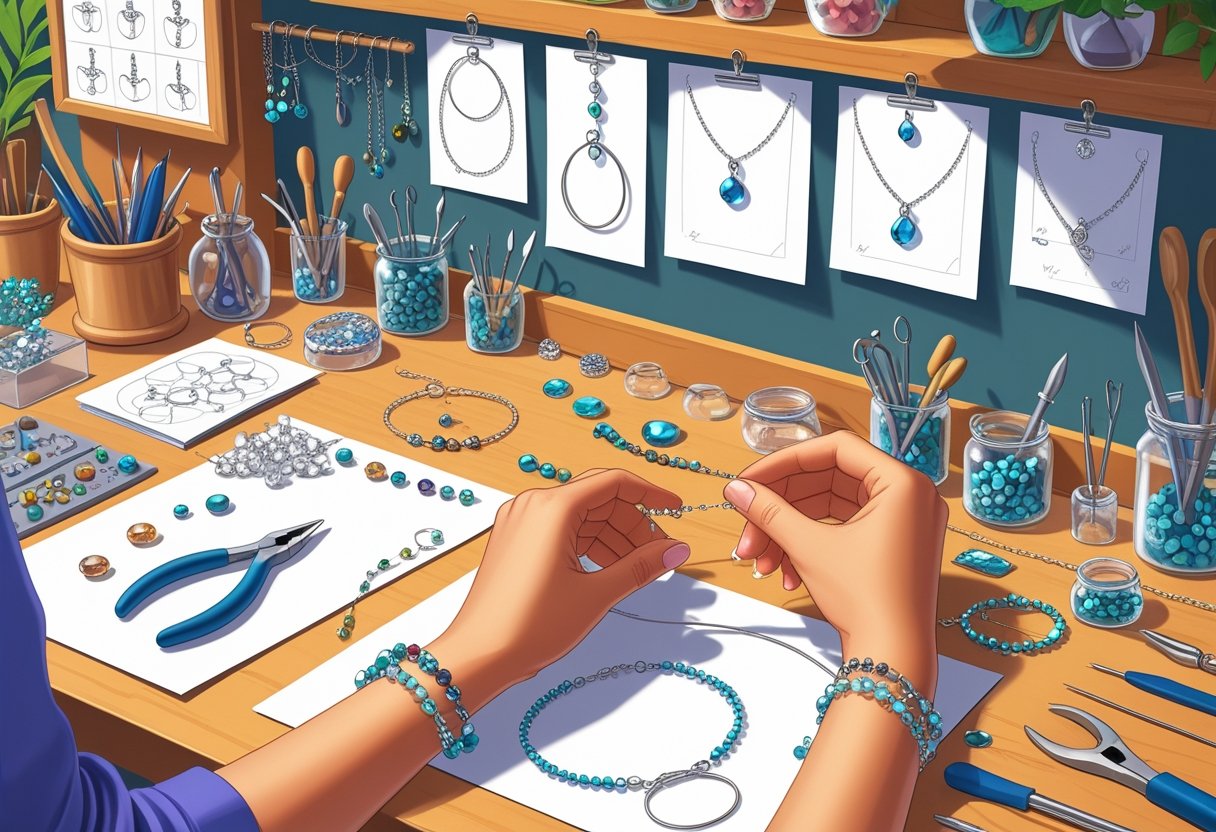
When you’re starting out, you’ll want to get familiar with basic tools, a couple techniques, and a small stash of materials. Most people kick things off with a beaded bracelet or a simple wire-wrapped pendant—nothing too intimidating.
Here’s a quick hit list of tools that make life easier:
- Round-nose pliers – for shaping loops and curves
- Flat-nose pliers – for holding and flattening wire
- Wire cutters – to trim off the extra bits
- Crimping tool – to lock down those crimp beads
Most beginners stick to bead stringing or wire wrapping at first. Stringing is just threading beads onto cord or wire, while wire wrapping is all about twisting pliable wire to hold stones (no flames required).
Knowing your findings—like clasps, jump rings, and earring hooks—is huge. Skimping on findings is tempting, but honestly, buying from a solid source like Continental Bead Suppliers pays off in durability.
Here’s a cheat sheet for beginner-friendly materials:
| Material | Common Use | Notes |
|---|---|---|
| Beads | Decoration | Glass, metal, or gemstone options |
| Wire | Structure | Pick your gauge for flexibility |
| Crimp beads | Securing ends | Especially for bead stringing |
| Chain | Necklaces, bracelets | Lots of link sizes and shapes |
It’s a learning curve, but with some patience and practice, you’ll get the hang of it—and probably find your own style along the way.
Jewelry Design Tips
Good jewelry design isn’t just about what looks cool—it’s balance, proportion, and a bit of gut instinct. Designers think about color, texture, and shape, making sure everything works together instead of fighting for attention.
Sketching ideas first isn’t a bad move. It helps you see where you’re going before you start cutting wire or pouring resin.
Sticking to a limited color palette keeps things from getting chaotic. Silver with cool stones feels modern, while warm metals and earthy beads are more boho or natural—just depends on your vibe.
Some folks keep a little reference list for materials, so they don’t get overwhelmed:
| Material Type | Common Use | Example |
|---|---|---|
| Beads | Accent or focal points | Glass, gemstone |
| Wire | Structure or wrapping | Copper, sterling silver |
| Findings | Connect components | Jump rings, clasps |
Using jewelry pliers and crimp beads the right way makes a difference—nobody wants mangled wire or loose beads. If you’re not careful, it’s easy to scratch or dent your materials, so take your time.
Mixing up texture and layering gives a piece more depth. Try pairing smooth metal with matte stones, or layering different chains for a bit of contrast.
Quality materials matter, so sourcing from someone like Continental Bead Suppliers is usually worth it. Keeping your beads, wires, and findings organized is also a sanity-saver—digging through a tangled mess is nobody’s idea of fun.
How To Make Jewelry
Pick a project—bead stringing, wire wrapping, maybe metal stamping if you’re feeling adventurous. Most people start with something simple to get a feel for how everything works together.
Here’s a rundown of tools you’ll probably need:
- Round-nose pliers
- Flat-nose pliers
- Wire cutters
- Crimping tool
- Ruler or measuring tape
And for materials, you might want:
| Material | Common Use |
|---|---|
| Beads | Stringing necklaces or bracelets |
| Wire | Wrapping pendants or connecting pieces |
| Findings | Clasps, jump rings, and ear hooks |
| Chain | Making necklaces or bracelets |
| Resin | Creating custom charms or pendants |
Set up a workspace that’s well-lit and not too cluttered. Keeping small parts in labeled containers is a lifesaver—otherwise, you’ll lose stuff constantly.
Start by stringing beads onto cord or wire, then secure the ends with crimp beads and your chosen findings. If you’re wire wrapping, it’s all about bending and coiling the wire around your beads or stones.
Metal stamping and soldering are a bit more advanced, so don’t forget safety gear and good ventilation. For resin jewelry, you’ll be mixing and pouring, then waiting for it to cure—patience required.
Suppliers like Continental Bead Suppliers have a solid range of stuff for both newbies and folks who’ve been at this for a while.
Jewelry Tools And Supplies
Every jewelry maker needs a decent set of basic tools. These help shape, cut, and put pieces together with a bit of accuracy.
Honestly, you can start with a small kit and just add more as you get the hang of things.
Essential hand tools include:
- Round-nose pliers for making loops and curves
- Chain-nose pliers for gripping or bending wire
- Flat-nose pliers to hold findings steady
- Wire cutters for snipping metal or beading wire
Here’s a simple table to keep track of the main tools and what they do:
| Tool | Primary Use |
|---|---|
| Round-nose pliers | Form loops and curves |
| Chain-nose pliers | Grip and bend wire |
| Flat-nose pliers | Hold components steady |
| Wire cutters | Cut wire or headpins |
| Crimping tool | Secure crimp beads |
Common materials and supplies you'll want: beading wire, headpins, ear wires, jump rings, and clasps. Makers rely on findings—the tiny components that link parts together—to finish off a design.
If you’re into special techniques, you might want metal stamps, resin kits, or soldering tools on hand. For beadwork, crimp beads and bead boards keep things neat and spaced out.
Suppliers like Continental Bead Suppliers and plenty of craft stores carry all sorts of tools, metals, and beads for every skill level.
Wire Wrapping
Wire wrapping is all about shaping and securing wire around beads, stones, or other bits to create decorative jewelry. No soldering needed here, which is nice if you're just starting out but still want room to get creative.
Popular wires are copper, sterling silver, and gold-filled. The gauge matters—24–26 gauge is good for wrapping beads, while 20–22 gauge is sturdier for frames.
You'll want these tools:
- Round-nose pliers for loops
- Chain-nose pliers for gripping and bending
- Wire cutters for trimming
- Nylon-jaw pliers to avoid scratching the wire
A basic wrap secures a bead or stone by looping the wire around itself. If you're feeling adventurous, you can play with multiple wires, layered wraps, or fancy weaves for a textured look.
| Technique | Purpose | Skill Level |
|---|---|---|
| Basic Loop | Attaches beads to chains or ear wires | Beginner |
| Briolette Wrap | Secures teardrop-shaped stones | Intermediate |
| Weaving | Creates decorative patterns | Advanced |
Wire wrapping is a nice balance between precision and creativity. Keeping tension even and coils tidy goes a long way toward making pieces that last and look good.
Bead Stringing
Bead stringing is probably the easiest way to get into jewelry making. Just thread beads onto a flexible material like nylon cord, silk thread, or coated wire, and you’ve got yourself a necklace, bracelet, or anklet.
Common materials used:
| Material | Description | Best For |
|---|---|---|
| Nylon cord | Durable and flexible | Everyday jewelry |
| Silk thread | Soft and elegant | Fine or traditional pieces |
| Beading wire | Strong with minimal stretch | Heavy or glass beads |
Pick out beads in different sizes, shapes, and materials. Consistent spacing and symmetry keep things balanced, and a bead board helps with layout.
To finish the ends, crimp beads lock the wire near the clasp. Pliers flatten the crimps for a clean finish. Some folks use wire guardians for extra durability.
Basic stringing techniques? There’s single-strand, multi-strand, and knotting between beads. Knotting’s especially handy for pearls or gemstones—keeps them from rubbing and adds a bit of flex.
Tool-wise, you really just need pliers, cutters, and maybe a bead reamer. Continental Bead Suppliers and similar shops have all the cords, wires, and findings you’ll need.
Metal Stamping
Metal stamping is a fun way to personalize jewelry, pressing letters, numbers, or designs into metal blanks. It’s more about steady pressure than brute force, so you get crisp impressions without mangling the piece.
Aluminum, brass, or copper blanks are easiest to start with since they’re soft. If you’re up for a challenge, stainless steel is tougher and needs stronger tools.
You’ll want these basics:
- Metal stamps in different fonts or shapes
- Steel bench block for a solid work surface
- Brass or steel hammer for even strikes
- Stamping tape to hold blanks steady
- Polishing cloths for the final shine
| Tool | Purpose |
|---|---|
| Bench Block | Firm base for clean impressions |
| Brass Hammer | Delivers controlled strikes |
| Metal Stamps | Make letters, numbers, or symbols |
| Stamp Enamel | Highlights your design |
To stamp, just secure your blank, line up the stamp, and give it one good whack. Lots of little taps can actually blur things, so resist the urge.
After stamping, you might darken the impressions with enamel or ink, then polish for contrast. The end result? Personalized pendants, tags, or charms that work for all kinds of jewelry styles.
Soldering Jewelry
Soldering connects metal pieces with a filler metal—solder—that melts at a lower temp than your components. It’s how you get clean, strong joins on rings, chains, and pendants.
You’ll need a torch, soldering block, flux, pickle solution, and tweezers. Each one helps with heat control, oxidation prevention, and cleanup. Good ventilation and a fire-resistant surface are musts.
Solder types differ by melting point:
| Type | Melting Point | Use |
|---|---|---|
| Easy | Low | Final joins |
| Medium | Moderate | Intermediate joins |
| Hard | High | Initial joins |
Pick soldering, sweat soldering, and butt joints are the basics. Most people practice on small pieces first to get a feel for heat and solder flow. Keeping metal clean and using enough flux makes a big difference.
After soldering, drop the piece in a pickle bath to remove oxidation, rinse, and polish. It takes some practice, but you’ll get steadier and more confident with the torch over time.
Resin Jewelry
Resin jewelry is about mixing epoxy or UV resin with molds, pigments, and inclusions—think dried flowers, glitter, or tiny charms. It’s a cool way to make lightweight, tough pieces with your own flair.
Epoxy resin is a good place to start—it cures slowly, so you’ve got time to pop bubbles or move things around. UV resin sets fast under a lamp, so it’s handy for quick projects like pendants or earrings.
Basic supplies you’ll want:
- Mixing cups and stir sticks
- Silicone molds or metal bezels
- Gloves and a surface you don’t mind messing up
- Colorants, mica powders, or little things to embed
| Step | Task | Tip |
|---|---|---|
| 1 | Measure and mix resin and hardener | Stick to the ratios on the box |
| 2 | Add color or inclusions | Mix gently to dodge bubbles |
| 3 | Pour into molds | Thin layers look clearer |
| 4 | Cure and demold | Let it cure all the way for strength |
To avoid headaches, keep moisture and dust away, and don’t overmix. If you spot bubbles, a heat gun or lighter can chase them out before curing.
Once cured, you can sand, polish, or put pieces together with findings like jump rings and earring hooks. Resin jewelry is a great playground for experimenting with shapes, colors, and textures, and you don’t need fancy equipment to get started.
Chain Making
Chain making is about connecting small metal links to create a flexible strand—think necklaces, bracelets, all sorts of jewelry. It takes a steady hand, a bit of patience, and a good eye for keeping those links uniform and lined up.
For tools, you'll want flat-nose pliers, round-nose pliers, and cutters. If you're going for closed-link chains, you'll need soldering equipment too.
Most folks just starting out stick with open-link chains, which skip the soldering altogether. That makes life a little easier.
Some popular chain types:
- Cable chain – classic round or oval links
- Curb chain – links twisted so they lie flat
- Rope chain – links twisted together for a textured look
- Box chain – square links, smooth surface
Each chain style brings its own vibe—some are sturdy, some are delicate. Thin chains work well for dainty pendants, but if you want a bold look, go thick.
Jewelers usually use jump rings or wire loops cut from the same gauge of wire. Keeping the loop size consistent is key for smooth movement and a clean look.
Here's a quick cheat sheet for materials and tools:
| Material | Common Use | Notes |
|---|---|---|
| Sterling silver | Necklaces, bracelets | Easy to solder |
| Brass | Practice or costume jewelry | Affordable option |
| Stainless steel | Durable chains | Harder to cut and shape |
Honestly, chain making is a solid way to get comfortable with handling wire and forming links. Those skills come in handy all over the jewelry world.
Jewelry Findings
Jewelry findings are all those tiny parts that hold jewelry together or help you actually wear it. We're talking clasps, jump rings, ear wires, bails—the unsung heroes. Without them, well, good luck keeping anything on.
Common Types of Findings
| Type | Function | Example Use |
|---|---|---|
| Clasps | Secure necklaces and bracelets | Lobster clasp, toggle clasp |
| Jump Rings | Connect components | Attach charms or pendants |
| Ear Wires | Hold earrings in place | Fishhook or lever-back styles |
| Bails | Attach pendants to chains | Pinch bails, glue-on bails |
| Crimp Beads | Secure stringing wire | Finish beaded necklaces |
If you're new, start with basics like jump rings and crimp beads—they're easy and you don't need a ton of fancy tools. Just a pair of flat-nose pliers or crimping pliers will get you through most simple tasks.
Once you get the hang of it, you might want to make your own findings. Wire wrapping and metal forming open up a whole world of custom shapes and finishes.
Shops like Continental Bead Suppliers carry a huge range of metal finishes—silver, gold, brass, stainless steel. Picking the right finish can make or break the look and durability of your piece.
Jewelry Pliers
Jewelry pliers are the workhorses—if you're shaping, cutting, or assembling any kind of metal or wire components, you'll need them. They're what let you form loops, open and close jump rings, and grip tiny parts without dropping them every two seconds.
Some types you'll see a lot:
- Chain-nose pliers: Tapered jaws, great for gripping and bending
- Round-nose pliers: Conical tips for making loops
- Flat-nose pliers: Wide jaws, perfect for holding or flattening metal
- Bent-nose pliers: Angled tips—handy for those hard-to-reach spots
- Cutting pliers: Sharp edges for snipping wire or pins
| Pliers Type | Primary Use | Key Feature |
|---|---|---|
| Chain-nose | Grip and bend wire | Tapered, flat inner surface |
| Round-nose | Create loops | Smooth, rounded jaws |
| Flat-nose | Flatten or hold metal | Wide, flat jaws |
| Bent-nose | Access tight spots | Angled tip |
| Side cutters | Cut wire | Sharp cutting edge |
Most beginners grab a basic set: chain-nose, round-nose, and cutters. That covers almost everything—wire work, beading, even quick repairs.
One thing: let the pliers do the work. If you squeeze too hard, you'll scratch up your metal or bend things out of shape. Gentle, steady pressure is the way to go.
And if you're working for hours, splurge on pliers with comfy grips and smooth joints. Your hands will thank you.
Crimp Beads
Crimp beads are tiny metal tubes that lock the ends of beading wire in place. They take the place of knots and keep your clasps or jump rings from slipping off. Most are made from soft metals like copper, sterling silver, or brass.
To use them, just slide the crimp bead onto your wire, add your clasp, then loop the wire back through the crimp. Grab your crimping pliers and squeeze until the bead flattens or folds. If you want a cleaner look, pop on a crimp cover after.
Here are the usual tools:
- Crimping pliers
- Flat-nose pliers
- Wire cutters
- Beading wire (nylon-coated stainless steel is the go-to)
| Crimp Type | Shape | Best For | Finish |
|---|---|---|---|
| Tube | Cylindrical | Multi-strand or heavier wire | Smooth, neat |
| Round | Spherical | Light designs | Subtle, minimal |
Honestly, crimping is way easier than trying to get perfect knots, and it holds better too. Just don't crush the bead too hard or use the wrong pliers, or you risk snapping your wire.
You can find crimp beads in all sorts of sizes and finishes at places like Continental Bead Suppliers. Pick the size that matches your wire, and you'll get a neat, secure result every time.
Continental Bead Suppliers
Continental Bead Suppliers is a family-owned business out in Las Vegas, Nevada. They’ve been there since 2003, and honestly, they’ve built quite a following among jewelry designers, hobbyists, and retail shops all over the place.
They cater to both wholesale and retail shoppers looking for jewelry-making materials. You get the sense they’re used to all kinds of customers, from first-timers to seasoned pros.
Their catalog’s packed: gemstone beads, metal findings, stringing materials, and a bunch of tools.
Whether you’re into wire wrapping or classic bead stringing, they’ve got something for you. Buy in bulk if you’re going big, or just grab a few things for a smaller project—no pressure.
Product Categories:
| Category | Example Items |
|---|---|
| Beads | Gemstone, glass, metal, wood |
| Findings | Clasps, jump rings, crimps |
| Tools | Pliers, cutters, bead boards |
| Stringing Materials | Wire, thread, cord |
They make a point of being accessible, whether you’re just starting out or you’ve been making jewelry for years. The selection’s pretty broad, so it covers everything from a quick bracelet to those complicated wirework pieces that make you swear under your breath.
People seem to appreciate the steady inventory and the fact that the product descriptions actually make sense. If you’re learning or just want to try something new, it’s a solid place to poke around for supplies.