


AI Jewelry Design: Transforming Customization, Manufacturing, and Retail in 2025
Artificial intelligence is shaking up the jewelry world, blending creativity with technical precision. Designers are now using AI to spark unique concepts, predict style shifts, and streamline the entire journey from idea to finished piece.
AI transforms jewelry design workflows by connecting inspiration, customization, and manufacturing into one efficient digital process.
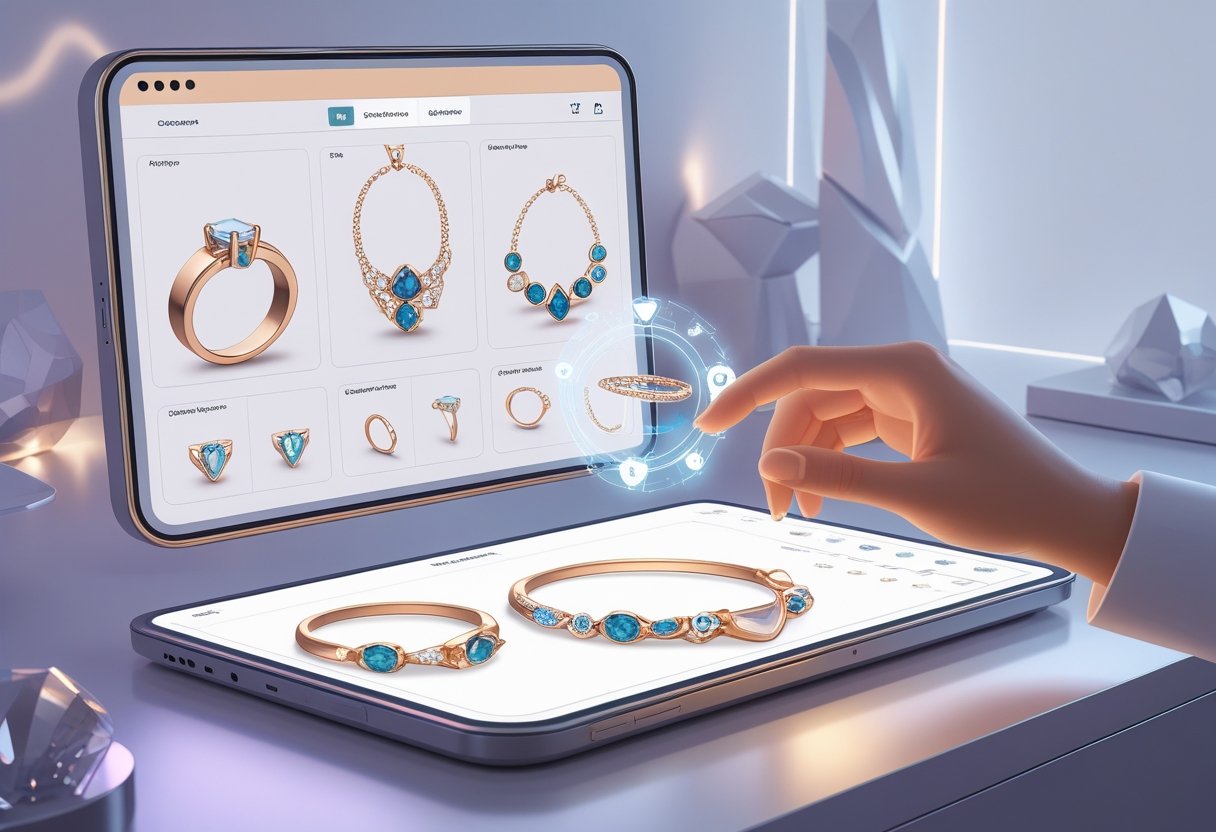
In 2025, AI-driven jewelry design trends are all about personalization, sustainability, and speed. Generative design now builds intricate patterns automatically, while virtual try-on tools let you see pieces in real time—no guessing, no surprises.
Tech has made it easier to create custom jewelry that actually feels personal and meets ethical standards. It's faster, too, and there are fewer mistakes along the way.
AI is also changing how manufacturing and retail work. 3D-native platforms now plug right into AI systems, skipping the old manual CAD conversions.
Analytics tools forecast demand and help wholesalers and retailers keep inventory just right. Honestly, AI is quickly becoming the backbone of how jewelry is imagined, produced, and even shopped for.
AI Jewelry Design: Revolutionizing Creativity
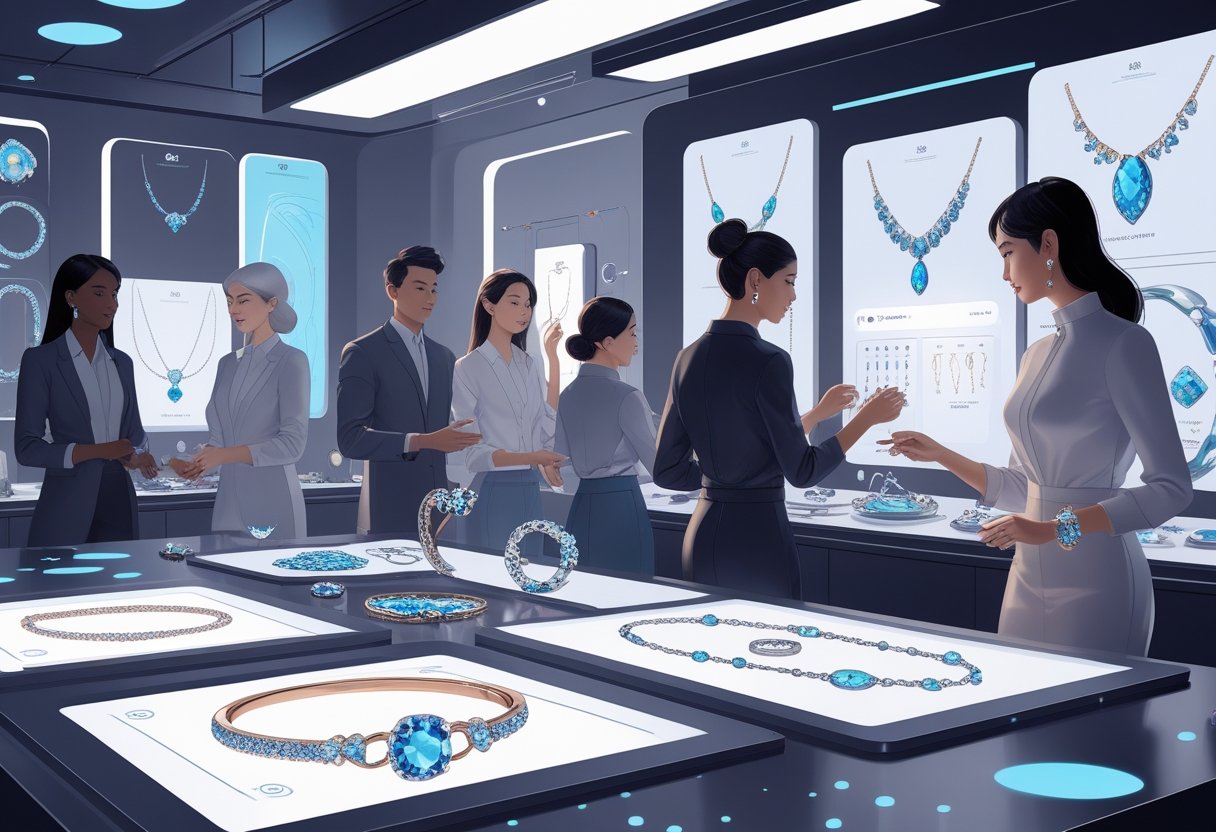
AI-driven jewelry design brings together data analysis, generative algorithms, and digital prototyping. Designers can generate new forms, test materials virtually, and tailor each piece to a client's taste—without losing efficiency.
How AI-Assisted Jewelry Design Works
AI-assisted jewelry design leans on algorithms to sift through patterns, styles, and customer preferences. Designers feed in things like material, gemstone shape, and price range.
The system spits out a bunch of design options that fit the bill. This speeds up the concept stage and saves loads of time on manual sketching.
Virtual try-on features let clients see rings, earrings, or necklaces before anything gets made. AI tools can hook up with CAD software, turning sketches into detailed 3D models.
Those 3D models can go straight to manufacturing—no extra steps. It means faster turnaround, fewer mistakes, and a steady level of quality for custom orders.
| Process Stage | AI Function | Benefit |
|---|---|---|
| Concept Creation | Style recognition, trend prediction | Rapid idea generation |
| Visualization | Virtual try-on, 3D modeling | Better client engagement |
| Production Prep | CAD integration, material optimization | Reduced waste and cost |
Generative Design Techniques in Jewelry
Generative AI is a bit of a game-changer. It runs algorithms that explore thousands of shapes and patterns based on a few constraints.
In jewelry, this means the system can find structural efficiencies and wild aesthetic combos you might never dream up by hand. Designers use generative design to balance weight, symmetry, and where gemstones go.
The system tests variations digitally, chasing down the best mix of looks and structure. For example, AI might suggest a delicate lattice for earrings that’s still strong but uses less material.
Or it can dream up organic ring forms inspired by math or nature. It’s a way to push creativity while keeping things practical and sustainable.
AI Tools for Conceptualizing Rings, Earrings, and Necklaces
Modern AI tools—think StarryAI, Style3D AI, and custom CAD-integrated platforms—help jewelers nail the details. They can whip up realistic renderings and even suggest materials like 925 silver, vermeil, or lab-grown diamonds based on what a client likes.
Designers can tweak proportions, textures, or gemstone settings right on the fly. AI checks out past sales and trend data to recommend features that’ll probably click with certain markets.
And with 3D printing integration, it’s possible to prototype rings, earrings, and necklaces super quickly. Generative algorithms and precision fabrication tech mean you can go from digital sketch to physical model without much waiting around.
Jewelry Design Trends 2025
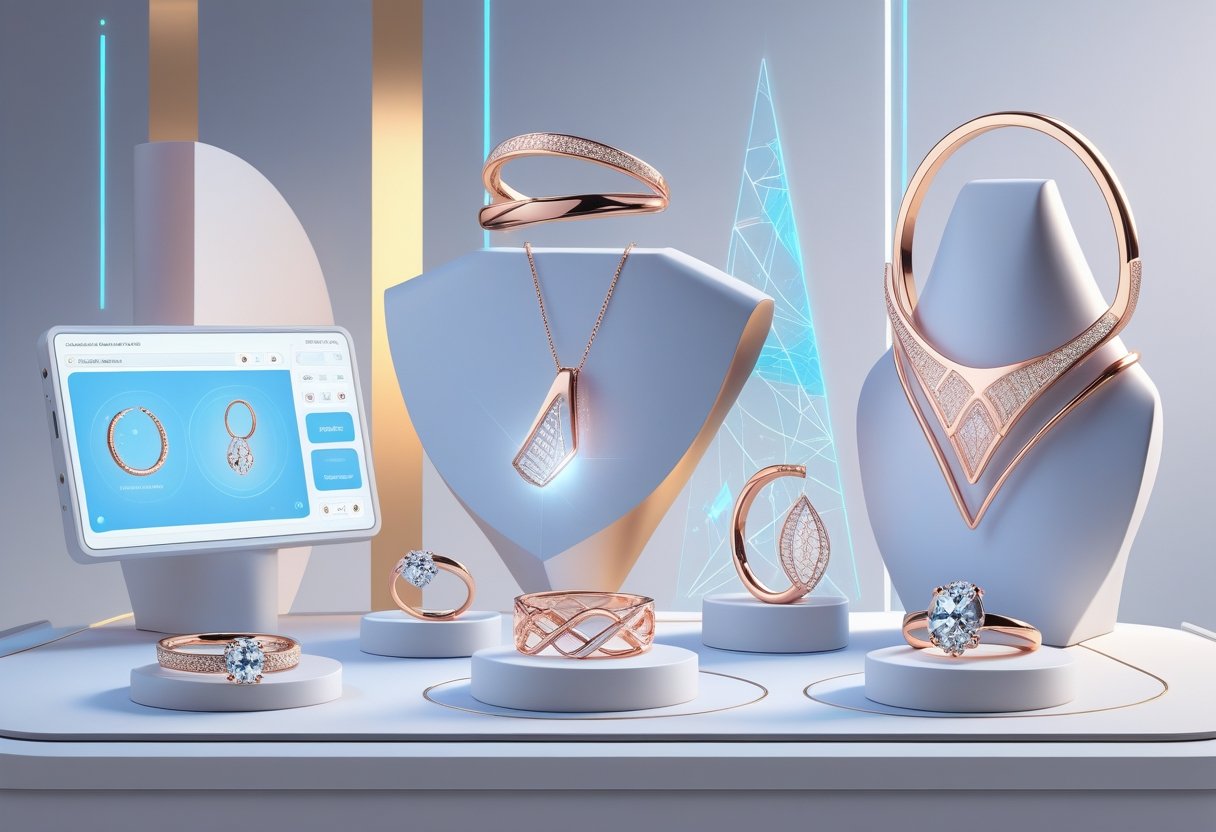
Jewelry design in 2025 is all about individuality, sustainability, and new materials. Designers are mixing advanced tech with old-school craftsmanship, making pieces that show off personal identity, responsible sourcing, and a fresh sense of style.
Modern Heirlooms and Personal Expression
There’s a real focus on modern heirlooms—pieces that mean something but still look current. You’ll see custom engravings, AI-generated motifs, or personalized gemstone setups inspired by a client’s story or vibe.
AI tools even analyze things like your style history or Instagram feed to shape design choices. This lets jewelers craft rings, necklaces, and bracelets that feel personal and, honestly, a bit timeless.
Minimalist shapes are still in, but customization gives them more depth. Maybe a simple gold band hides a digital engraving or a tiny gemstone for a birth month. It’s jewelry that’s meaningful without being flashy.
Vibrant Gemstones and Lab-Grown Diamonds
Color is having a moment in 2025. Designers are reaching for vivid gemstones like sapphires, emeralds, and spinels, often teaming them with lab-grown diamonds—ethical, sparkly, and not as pricey.
Lab-grown stones now rival natural diamonds for clarity and toughness, so they’re everywhere from fine to fashion jewelry. AI design systems can simulate gemstone pairings, letting jewelers preview color combos before anything gets made.
Key materials gaining traction:
| Material | Notable Use | Benefit |
|---|---|---|
| Lab-grown diamonds | Rings, earrings | Sustainable brilliance |
| Colored sapphires | Necklaces | Rich color depth |
| Spinels | Bracelets | Cost-effective variety |
The mix of bold color and sustainable sourcing is really setting the tone for gemstone innovation this year.
Maximalism and Statement Pieces
After a long run of minimalism, maximalist design is back. Think layered necklaces, chunky earrings, and big cocktail rings.
Jewelers are using AI-assisted generative design to play with scale and structure, making wild, intricate forms that are still wearable. Statement jewelry is all about texture and volume now—mixed metals, enamel, and gemstone clusters for serious visual punch.
AI modeling tools help keep these bold pieces comfy by optimizing weight and balance. People don’t just see these as accessories anymore—they’re more like wearable art or a confidence boost.
Pearls and Contemporary Materials
Pearls aren’t just for classic strands anymore. In 2025, designers are pairing freshwater and cultured pearls with titanium, resin, or even 3D-printed parts for a modern spin.
AI design platforms help map out pearl placement and symmetry, making it easier to try unconventional layouts in earrings and bracelets.
Contemporary materials like recycled silver and biopolymer blends are on the rise, too. It’s a cool mix—classic pearls meet modern, sustainable materials, giving them new life in both luxury and everyday collections.
AI-Powered Customization and Personalization
AI lets jewelry designers turn your preferences into real designs, not just rough ideas. It gets personal by analyzing your data, guessing your style, and making automatic tweaks to materials, sizing, and finishes for custom jewelry pieces.
AI for Personalized Jewelry
AI systems pore over customer preferences, purchase history, and style patterns to come up with tailored jewelry designs. These tools can suggest gemstone types, metal finishes, and design motifs that actually fit a buyer’s profile.
Designers use machine learning models to predict what people will like, making it easier to match concept to expectation. Maybe the platform suggests a rose gold bracelet with geometric engravings for someone who’s into minimalist looks.
AI-driven personalization also makes the customer experience smoother. Real-time visualization tools let clients instantly preview tweaks—like resizing or swapping gems. That means fewer design do-overs and happier customers at the end.
| AI Function | Application in Jewelry Design | Benefit |
|---|---|---|
| Preference Prediction | Suggests metals, stones, and motifs | Faster personalization |
| Real-Time Rendering | Displays design updates instantly | Improved customer confidence |
| Data-Driven Insights | Identifies trends and preferences | Better product alignment |
Custom Bead and Charm Design with AI
AI tools can cook up unique bead and charm patterns by blending generative algorithms with what customers want. Designers set the shape, texture, and material, and the system spits out a bunch of options to pick from.
These algorithms learn from past designs, so each piece stays true to the brand but still feels fresh. Maybe a designer uses AI to make a charm series that balances symmetry with a natural vibe, cutting down manual modeling time.
3D visualization and AI-assisted CAD tools make prototyping a breeze. Once a charm design gets the green light, it can go straight to 3D printing or casting. This is a win for both small makers and big manufacturers looking for quick, efficient customization.
Using AI to Personalize Beads, Charms, and Chains
AI personalization isn’t just about design—it’s about adaptive customization too. These systems adjust bead sizes, chain lengths, and charm layouts based on things like wrist size or personal taste.
Customers can play around with layouts in real time using virtual design interfaces, mixing and matching materials like 925 silver or brass before locking in their order.
This interactive approach makes the process more fun and cuts down on wasted materials by avoiding endless redesigns. AI also helps with inventory optimization, tracking popular customization trends so retailers can stock smart and keep things sustainable.
AI-Driven Jewelry Design Tools and Virtual Workflows
AI’s changing the way jewelry designers think up, test out, and deliver custom pieces. From 3D-native tools that connect design straight to manufacturing, to virtual try-ons that make collaboration with clients a bit more fun, these technologies are streamlining both creative and production workflows.
They’re also making things more precise and personal—if you’re into that.
Best AI Tools for Jewelry Designers in 2025
AI design platforms in 2025 are all about speed, customization, and integration with manufacturing. Tools like Jeweality AI, BLNG™ Creative Suite, and The New Black let designers go from text or image prompts to production-ready models—sometimes in just hours.
What’s especially handy is the 3D-native functionality. No more juggling separate CAD conversions, which means fewer headaches and fewer production delays.
Platforms are now stacking on features like AI-driven gemstone placement, material optimization, and even automated engraving suggestions. It’s wild how much detail and efficiency you can squeeze out of a few clicks.
| Tool | Core Features | Design Output Type |
|---|---|---|
| Jeweality AI | Text/Image-to-3D design, Sketch rendering | 3D CAD models |
| BLNG™ Suite | Brand-focused AI design, marketing integration | 2D & 3D visuals |
| The New Black | AI jewelry generator, trend-based design | Concept visuals |
These tools really help jewelry businesses pump out more creative work and keep collections looking sharp and consistent.
Virtual Jewelry Design for Custom Client Pieces
Virtual design spaces let clients co-create jewelry in real time. With AI visualization and slick virtual try-on tools, designers can show off lifelike previews of rings, necklaces, or charms before anyone cuts a single piece of metal.
Clients get to tweak materials, gemstones, and shapes right on the screen, and AI updates the 3D model instantly. It’s a lot less back-and-forth, and approvals move faster.
Some platforms even work with augmented reality (AR) for mobile or web-based try-ons. Retailers use this to simulate fit and look, so buyers can make up their minds without second-guessing. For custom jewelers, AI-powered virtual sessions are quickly replacing old-school sketches—collaboration’s just faster and more on point now.
How AI Is Transforming Jewelry Design Workflows
AI’s making every stage of the jewelry workflow slicker, from brainstorming to actual manufacturing. Generative design algorithms spit out multiple variations based on size, weight, or even what you want to spend on materials.
In production, AI-assisted CAD tools handle repetitive modeling and double-check for structural issues before casting or 3D printing. That means fewer manual fixes and less wasted material.
AI analytics give jewelry businesses a leg up on forecasting trends and managing inventory. By digging into sales data and customer tastes, systems can suggest which designs or gemstones to focus on. It’s a more data-informed, efficient, and adaptive process—one that tries to keep creativity and business goals in sync, though that’s always a bit of a balancing act.
Jewelry Manufacturing and Prototyping with AI
AI-powered manufacturing tools are streamlining how digital jewelry ideas become tangible pieces. They help with precision modeling, automated prototyping, and even sustainable production.
These systems plug into 3D printing, optimize CAD workflows, and let smart factories keep quality up and production scalable.
Integrating AI with 3D Printing for Jewelry Manufacturing
AI’s role in 3D printing is to analyze design data and predict how stuff will behave once you hit print. That means fewer errors and less wasted material.
Designers can have AI automatically generate support structures and pick the best print settings for metals, resins, or whatever hybrid material’s in play.
In the CAD workflow, AI algorithms scan for weak points before printing starts, so delicate bits like filigree or prongs don’t snap off. With machine learning in the mix, the system might even suggest different materials or shapes that hold up better but still fit the original vision.
Manufacturers get shorter lead times and more reliable quality. AI-based monitoring keeps an eye on each print layer, tweaking temperature and pressure as it goes. These feedback loops make the process steadier, whether you’re doing one-offs or big batches.
| AI Function | Benefit in 3D Printing |
|---|---|
| Predictive modeling | Reduces print failures |
| Material optimization | Improves strength and finish |
| Real-time monitoring | Ensures precision and consistency |
AI in Jewelry Prototyping and Production
AI speeds up prototyping by spinning out lots of design tweaks from a single idea. Designers can test proportions, textures, and where to plop gemstones digitally before making anything physical.
During production, machine vision systems scan castings and settings for defects. Automated quality checks use image recognition to spot surface flaws or crooked stones way faster than human eyes usually can.
AI also helps with resource efficiency. Algorithms predict how much material you’ll need and optimize layouts to use less. That’s good for the budget and better for the planet, all while keeping the design sharp.
Smart Jewelry Production in 2025
By 2025, smart jewelry production is this mix of robotics, IoT sensors, and AI analytics running the whole show. Factories rely on predictive maintenance to keep machines humming and avoid annoying downtime.
AI-driven scheduling systems juggle tasks based on which machines and materials are ready, easing up bottlenecks in casting, polishing, and assembly. Data from connected devices helps manufacturers tweak workflows on the fly to hit output goals.
Sustainability’s still a big deal. AI tracks energy use and recycling rates, helping producers hit environmental targets. With digital twins and simulation tools, jewelry makers can model out production before committing resources, which just makes sense for both efficiency and accountability.
Virtual Try-On and Augmented Reality in Jewelry Retail
AI and augmented reality are totally changing how customers browse, compare, and pick out jewelry. These tools let shoppers interact with digital versions of pieces, so they can actually see how something looks before buying—a big plus for anyone who hates returns.
AI-Powered Virtual Try-On Platforms
AI-powered virtual try-on platforms use computer vision and 3D modeling to map jewelry onto real-time images of users. People can preview rings, earrings, or necklaces on their own faces and hands, right from their phone or laptop.
This all works thanks to augmented reality (AR) overlays and machine learning for accurate sizing, lighting, and movement. Platforms like Touchtry, TryonJewel, and mirrAR are nailing these features, making the digital renderings look surprisingly close to the real thing.
Retailers see better engagement and more sales. AI looks at facial geometry and skin tone to recommend good designs, and backend analytics track what users like for smarter inventory planning.
| Feature | Function | Benefit |
|---|---|---|
| 3D Rendering | Displays jewelry in real-time | Increases product confidence |
| AI Fit Detection | Adjusts jewelry to user’s proportions | Enhances accuracy |
| Cross-Platform Support | Works on mobile and desktop | Expands accessibility |
Enhancing Customer Experience with AR and AI
Augmented reality makes jewelry shopping more fun by blending digital models into the shopper’s real world. You can see how a bracelet actually fits or if a pendant works with your outfit—no imagination required.
AI takes it up a notch by learning what you like. It’ll suggest matching pieces, tweak styles based on your face, and even show different lighting effects.
These technologies make online jewelry shopping less of a gamble. Brands can build trust by showing products in context, not just as flat images.
In 2025, lots of jewelry retailers are using AI-powered AR to roll out interactive digital boutiques that mimic in-store experiences, but with the convenience of shopping from your couch.
Sustainable and Ethical Jewelry Production with AI
AI helps jewelry makers cut material waste, improve resource tracking, and stick to responsible sourcing. It gives companies more control over production, making it easier to hit both efficiency and ethical targets.
AI for Sustainable Manufacturing
AI-driven manufacturing systems help jewelers use materials smarter and waste less during design and production. Algorithms can run through tons of digital design options before anyone makes a prototype, so you can pick the most resource-saving route.
Machine learning models watch production data for inefficiencies in casting, polishing, and finishing. Predictive analytics help tweak workflows to cut emissions and reduce defects.
Some key sustainability moves:
- Generative design: Makes lighter structures with less metal.
- AI-integrated 3D printing: Produces precise pieces with barely any scrap.
- Closed-loop recycling: Tracks leftover materials so they get reused, not tossed.
Manufacturers lean on AI to forecast demand, which keeps overproduction in check. Paired with digital inventory, it supports a circular economy—materials and designs keep improving and looping back in.
Ethical Sourcing and Eco-Friendly Practices
AI brings more transparency to the jewelry supply chain by verifying where raw materials come from. Blockchain-based AI can log every step of a gemstone’s journey, making sure it meets ethical sourcing rules.
Lab-grown diamonds and recycled metals get checked by AI quality tools that confirm purity and sustainability. These systems analyze spectral and structural data to make sure materials hit environmental and ethical marks.
Analytics powered by AI help brands vet suppliers for things like carbon footprint, labor practices, and compliance. That way, companies work only with vendors who meet responsible standards.
With traceability tech and eco-friendly design tools, jewelers can meet the demand for transparency, keep quality steady, and shrink their environmental impact.
AI Analytics and Trends for Jewelry Retail and Wholesale
AI systems now let jewelry businesses make smarter calls about product demand, pricing, and inventory flow. These tools also help suppliers spot market shifts, tidy up logistics, and find the most profitable niches in both retail and wholesale.
AI-Driven Inventory Forecasting and Trend Spotting
Jewelry retailers are tapping into AI analytics to keep tabs on sales data, seasonal demand, and whatever's buzzing on social media. Machine learning models dig through purchase histories and outside influences—think fashion cycles or even what’s hot in certain regions—to guess which designs might actually take off.
Automated forecasting steps in to help curb those annoying problems of overstocking or running out at the worst times. With more accurate demand projections, retailers can better match production, which means cash flow gets a little healthier and there’s less waste piling up.
This method nudges stores closer to sustainability goals, but it’s also about making sure those trending pieces don’t vanish from the shelves too soon.
AI’s pretty handy for trend spotting too. It scans online images, influencer posts, and search data, picking up on new materials, gemstone colors, and styles before everyone else catches on.
Retailers that move fast can tweak their collections early, maybe even beating competitors to the punch.
| Key Benefit | Description |
|---|---|
| Demand Prediction | Uses real-time data to forecast sales volumes |
| Style Insights | Detects emerging jewelry trends and preferences |
| Stock Optimization | Balances inventory levels to reduce waste |
AI for Wholesale Jewelry Suppliers: 2025 Insights
In 2025, wholesale jewelry suppliers are leaning on predictive analytics to wrangle distribution networks and manage client orders with a bit more finesse. AI tools dig into retailer buying patterns, which means suppliers can actually tweak their offerings for each market instead of just guessing.
These systems are getting cozy with ERP and CRM platforms, automating things like pricing, catalog updates, and tracking orders as they move. By picking apart gemstone availability, metal costs, and a mess of shipping data, AI is nudging procurement and logistics in a smarter direction.
Suppliers are tapping into AI-driven market intelligence to keep an eye on competitor moves and global demand swings. With all that data, it’s easier to figure out which product lines—or maybe just raw materials—are about to catch fire in different regions.
Examples of AI applications for wholesalers:
- Automated demand forecasting for bulk orders
- Real-time pricing adjustments based on raw material trends
- Inventory synchronization across multiple retail partners