


Primary Keywords for AI Jewelry Design Trends and Tools in 2025
AI jewelry design is shaking up how creators dream up unique pieces. Advanced tools now generate realistic mockups and clever prompts, letting designers quickly visualize concepts for pendants, chains, earrings, and charms from just text descriptions or uploaded photos.
With AI, artists can dive into trending jewelry styles for 2025, streamline their workflow, and churn out personalized accessories faster than ever.
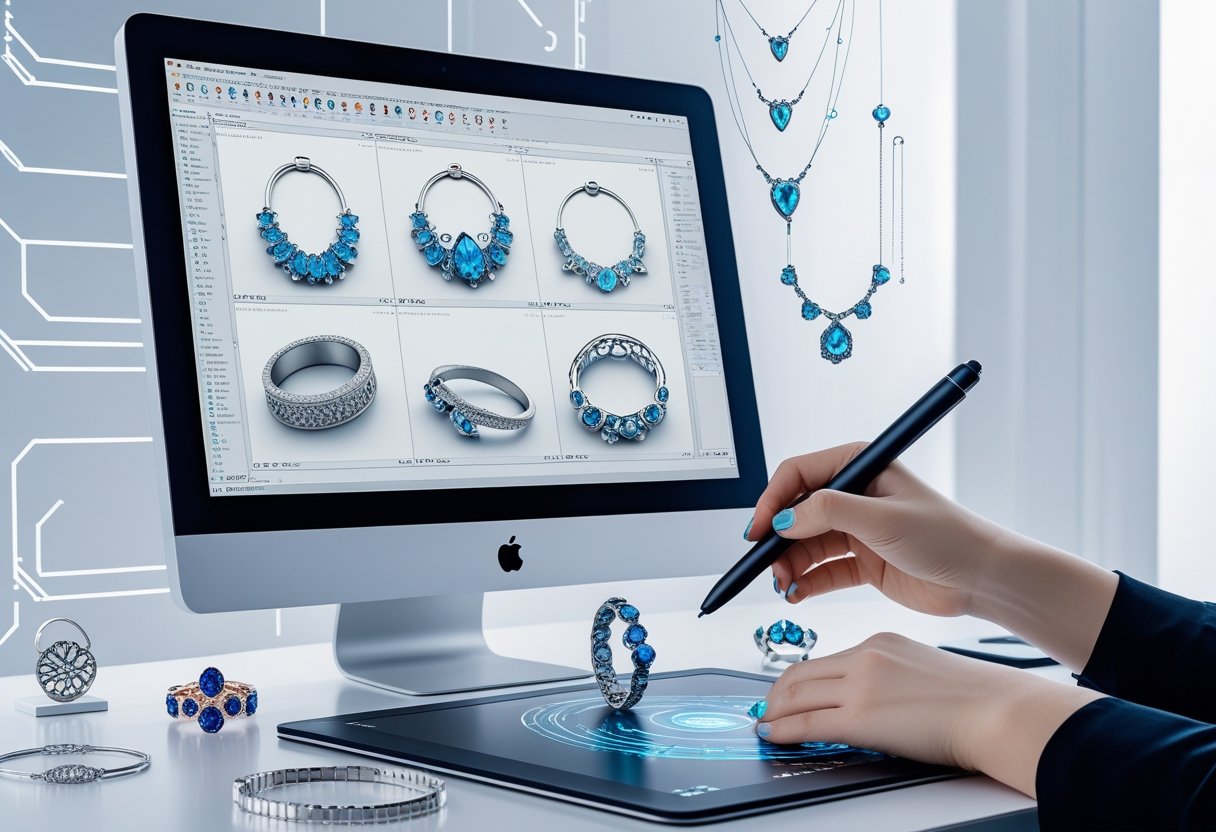
Jewelry makers now have digital platforms offering AI jewelry prompts tailored for everything from bridal designs to fashion accessories. These tools spark original ideas and help create detailed product renderings that keep up with market trends and material options like gold, stainless steel, or hypoallergenic bits.
AI isn’t just for creativity—it’s practical, too. Designers can integrate wholesale findings, bulk chains, and waterproof supplies right from the concept stage, making sure their ideas match what’s actually available to manufacture.
Honestly, it’s hard to imagine modern jewelry making without these innovations.
Understanding AI Jewelry Design
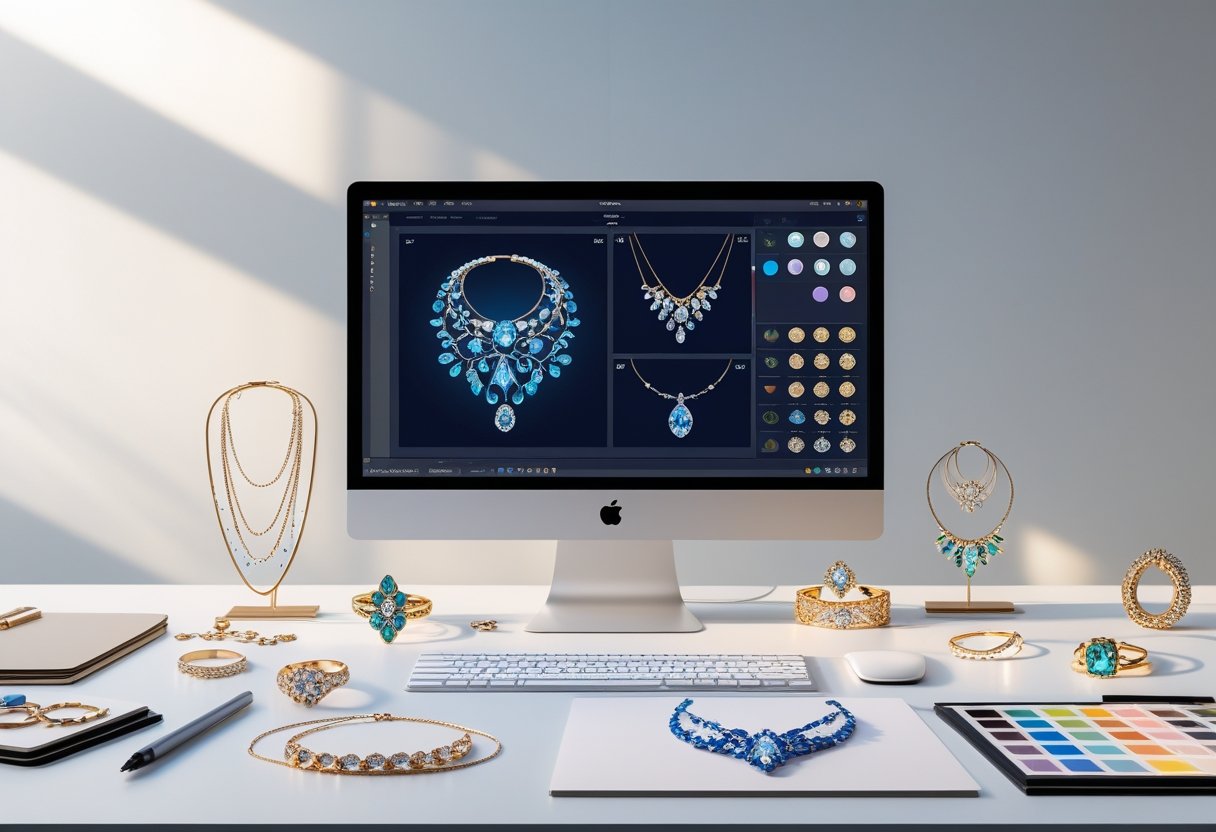
AI tech is totally changing how jewelry designers create, streamline, and experiment. It brings tools for fresh concepts, simulating materials, and producing digital mockups that help both design and manufacturing.
What Is AI Jewelry Design?
AI jewelry design uses artificial intelligence algorithms to create new and surprising jewelry ideas. These systems sift through huge datasets of existing designs, patterns, and trends, then spit out innovative concepts for pendants, chains, earrings, and more.
It covers tools like AI jewelry generators and prompt-based platforms that let users whip up multiple variations from text or images. Designers can tweak these outputs to match a style or client—creativity meets tech, basically.
Benefits of AI in Jewelry Creation
Using AI in jewelry gives faster concept development and a wild variety of designs. Designers can generate tons of ideas through prompts without losing that unique spark.
AI also nails the details in digital mockups, making it easier to visualize gold, stainless, or hypoallergenic materials. That means fewer costly mistakes in prototyping. Plus, AI keeps designers on track with 2025’s trending jewelry styles.
Evolution of AI Tools for Designers
The first AI tools were honestly pretty basic—mostly 2D sketches. Now? There are 3D-native platforms that run the whole workflow. CAD functions are built right in, so prepping files for manufacturing is a breeze.
Modern AI platforms even offer things like Midjourney jewelry prompts, Sora jewelry design prompts, and support for everything from bridal to fashion accessories. It’s kind of wild how much faster and more creative you can be with these tools.
AI Jewelry Generators: How They Work
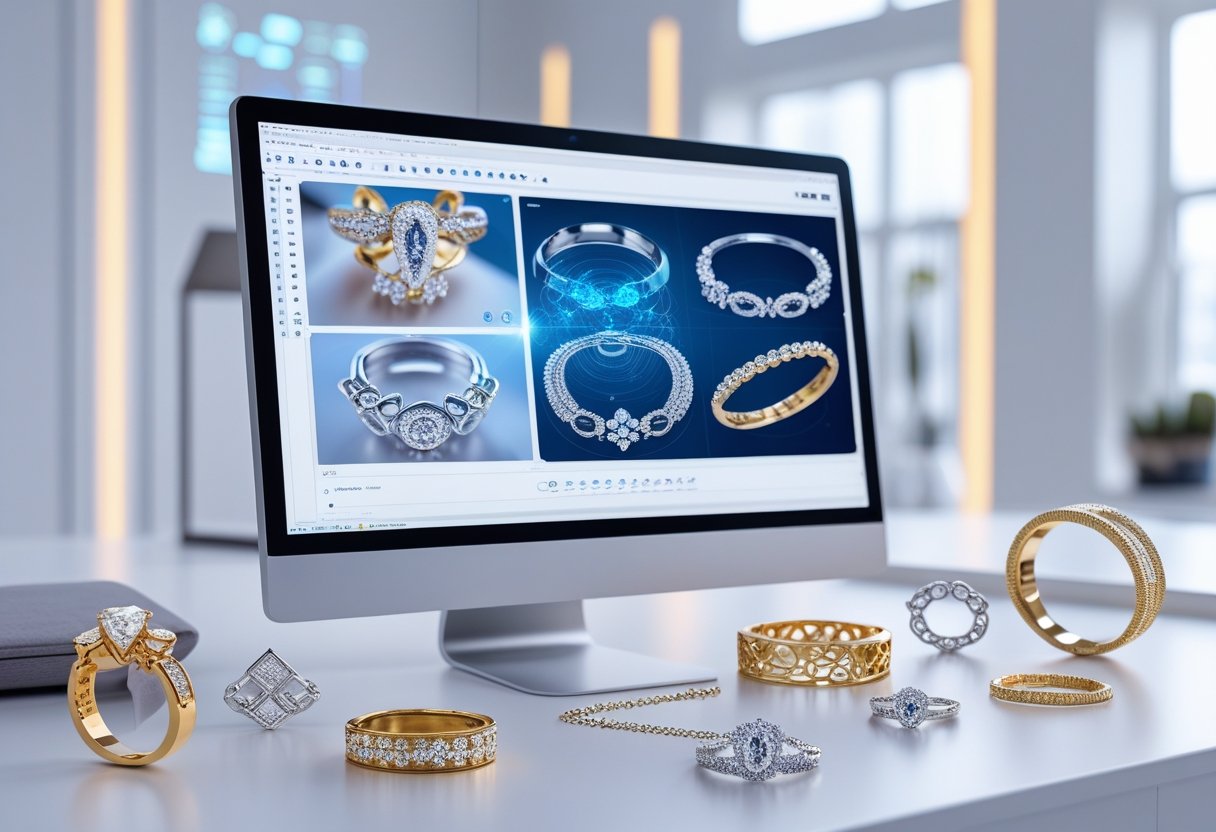
AI jewelry generators take your ideas and turn them into visuals by analyzing your input and using learned patterns. They rely on text prompts and image recognition to create detailed renderings, from quick 2D sketches to polished 3D models.
These tools really support a range of design needs—from first concepts to realistic mockups.
Overview of AI Jewelry Generators
These generators use machine learning to interpret your text or sketches, analyzing patterns in jewelry—shapes, textures, materials—to whip up new ideas fast.
What’s cool is you can type something like "emerald pendant with gold chain" and the AI will deliver a complex visualization. It’s a huge time saver and opens up unique style variations you might not have thought of.
Most generators also let you tweak details—like gem placement or metal type—so pros and hobbyists can both get a lot out of these tools.
How Text Prompts Influence Design
Text prompts are the main way you talk to AI jewelry generators. The more specific you are, the better the design turns out.
For example, something like "choker necklace with pearls and emerald accents, gold base" tells the AI exactly what you want. Vague prompts? You’ll probably get something generic and need to refine it.
Many generators let you include style cues—like "Art Deco" or "minimalist"—so the AI can match the latest AI jewelry trends in 2025 and your personal taste. Good prompts really speed up the workflow.
3D vs. 2D Jewelry Design Generation
AI jewelry generators can spit out both 2D and 3D designs. 2D sketches are quick and great for brainstorming or pitching ideas, while 3D models give you realistic mockups—depth, shine, texture, the whole deal.
3D is essential for showing clients or prepping for manufacturing. Some tools even blend both formats, so you can go from napkin sketch to production-ready file without missing a beat.
Crafting Realistic Jewelry With AI
AI lets designers create super detailed and accurate jewelry visuals. You can generate photo-realistic images, build digital mockups, and refine designs with advanced editing. All of this makes the design process smoother and client presentations way more impressive.
Creating Photo-Realistic Jewelry
Making jewelry look real with AI means generating images that mimic actual gold, silver, gemstones—you name it. The AI simulates reflections, textures, shadows, and captures the look of chains, pendants, earrings, and more.
Just describe what you want—metal type, setting, gemstone cut—and the AI takes it from there, producing jewelry with spot-on lighting and material effects. It’s a huge time saver since you don’t need physical prototypes right away.
Digital Jewelry Mockups with AI
Digital mockups show off jewelry designs in a way that’s perfect for marketing or getting client approval. AI-powered software builds 3D previews that look like real rings, necklaces, or earrings, either worn or displayed.
These tools use realistic textures and lighting, and can even fix or enhance specific areas using inpainting, so you don’t have to redo the whole thing. It’s honestly a game changer for quick, convincing visuals.
Editing AI-Generated Designs
Once you’ve got an initial concept, AI editing tools let you tweak shapes, colors, or textures. Inpainting is especially handy—say you want to change a gemstone’s color but keep everything else the same.
These editing features make it easy to evolve your design and keep quality high, so the final piece actually matches your vision (or your client’s).
Prompts and Inspiration for AI Jewelry Design
Nailing your AI jewelry prompts and picking the right tools is how designers get those high-quality, specific concepts. Mixing structured prompts with platforms like Midjourney and Sora really ups your creative game for necklaces, earrings, charms, and more.
Effective AI Jewelry Prompts
A good AI jewelry prompt breaks things down clearly—think style, material, details: "minimalist gold pendant," "intricate diamond chain," or "hypoallergenic stainless steel earring."
The clearer your prompt, the better the AI’s output. Using comma-separated descriptors—color, texture, form—helps, too.
Example:
"Elegant pearl necklace, delicate gold chain, vintage style, subtle sparkle" gives you a focused design from most AI generators.
If you mention your target audience or setting—like "bridal jewelry" or "everyday wear"—the results get even more tailored to what you need.
Midjourney and Sora Prompts for Jewelry
Midjourney is great for visually rich, detailed jewelry images. Try prompts like "Mid-century modern gold chain, layered look, soft lighting" for necklace designs that pop in mockups or client decks.
Sora focuses on technical polish and specs—materials, size, functionality—so it’s handy if you want something ready for production.
Either way, mixing keywords for creativity and realism works wonders. Try:
- "AI pendant design, rose gold, floral motif, 3D render"
- "Sora charm design, colorful enamel, lightweight, hypoallergenic"
Honestly, these prompt frameworks make it easy to spin up idea after idea—even if you’re not a modeling expert.
AI Jewelry Design Hacks: Viral Ideas & Tools for 2025 Creators
AI’s shaking up jewelry design in ways that honestly feel a bit wild. It mixes up styles, materials, and trends way faster than a human can, so you get fresh ideas just by playing with keywords like "bulk chains for designers," "waterproof gold jewelry supplies," or "unique AI charm designs."
Scrolling through AI’s output is like hunting for buried treasure—sometimes it’s a miss, sometimes it’s pure gold. Designers spot what clicks for their brand or customers, then tweak and run with it.
Digital jewelry mockups made with AI visuals? Huge time-saver. You can make decisions on the fly and see what’s working before you ever touch a physical sample.
It’s smart to keep prompts grounded in reality—mentioning stuff like wholesale charms and pendants or stainless steel jewelry findings makes the ideas more practical for actual production.
Mixing trend buzzwords with technical specs lets AI spit out new collections—bridal, fashion earrings, custom chains—without the usual headaches.
Jewelry Design Ideas by Type
AI tech can whip up detailed jewelry concepts in seconds, from delicate pendants to bold earrings. With the right prompts, you get realistic mockups, can swap out materials, and chase new trends without much hassle.
AI Pendant and Charm Designs
AI pendants and charms usually mash up intricate patterns with personal touches. If you feed a jewelry generator something like “gold charm with floral and geometric motifs,” it’ll spit out something you probably wouldn’t have drawn up yourself.
It’s fun to play with different metals—hypoallergenic alloys, waterproof gold, whatever’s trending. 3D mockups help you see if the idea works before you even think about making a prototype.
Symbolic elements? Totally doable. You can adjust size, texture, even engraving, and you don’t have to be a CAD wizard to pull it off.
AI Chain and Necklace Design
Chains and necklaces are a playground for AI. You can ask for stainless steel, bulk gold, or some wild mixed-material look—just type it out and see what comes back.
Want something on-trend for 2025? Try minimalist chains with a punchy focal point, or layered combos that do all the talking. Mockups help you nail down weight and proportions so you’re not guessing.
Wholesale jewelry findings make it easier to take an AI idea and actually build it. It’s a faster way to go from “what if” to “let’s make it.”
AI Earring and Bridal Jewelry Ideas
AI doesn’t care if you want simple studs or dramatic chandeliers. It’ll work gemstones, engraving, whatever you throw at it. Bridal stuff gets a boost when you use prompts that tie earrings, necklaces, and pendants into a set.
Midjourney prompts can nudge the AI toward delicate motifs for weddings. If comfort matters (and it always does), you can add hypoallergenic components to the mix.
The workflow lets you test metals and finishes without burning through materials. Digital mockups are great for showing clients options and making tweaks before committing.
Trending Jewelry Styles and Inspiration for 2025
2025’s jewelry scene is all about tech meets creativity. There’s a big push for personal, sustainable, and layered looks—AI’s right in the middle of it.
AI Jewelry Trends for 2025
Hyper-personalization is the buzzword. Designers are using AI to analyze what people actually want (hello, social media data) and turning that into pieces—think AI pendant or chain designs that really reflect the wearer.
AI prompts and midjourney commands speed up concepting for everything from earrings to bridal sets. It’s not just about making things faster; simulating materials digitally means less waste, which is a win for the planet.
3D modeling and digital mockups are now part of the standard workflow. It’s all about getting more accurate prototypes, faster.
Popular Digital Jewelry Styles
Layering isn’t going anywhere. Two-tone and tri-color metals are everywhere—stacking rings, bold chains, you name it. Mixing gold with stainless steel or hypoallergenic bits keeps it fresh and practical.
People want both bold and understated, so you’ll see statement pieces paired with subtler stuff. AI-generated bangles, chain links, and custom charms are popping up all over, blending new and classic vibes.
Sustainability’s still a big deal. More eco-certified gold, more designers looking for bulk chains and findings that won’t wreck the planet.
Sources for Design Inspiration
Designers are tapping into AI fashion accessory platforms for that initial spark. Prompts from Sora or curated midjourney lists can get you out of a creative rut, especially if you’re stuck on pendants or charms.
Fashion runways and digital mockups offer visual fuel, while wholesale findings and components keep things grounded. Blending AI tools with old-school craftsmanship? That’s where the magic happens, honestly.
With AI tools getting easier to use, it’s a lot simpler to experiment and try out new forms—less guesswork, more play.
Best AI Tools for Jewelry Designers
There are a bunch of AI tools out there now—some handle concept creation, others do 3D modeling or material simulation. Picking the right one depends on your workflow and how much you want to nerd out on features.
Top AI Jewelry Design Platforms
Some AI platforms really stand out. Fotor is super approachable—just type in what you want, and it gives you 2D ideas fast. AI Ease is more advanced, letting you model in 3D, play with materials, and get mockups that are actually ready for manufacturing.
Each tool fits a different stage—maybe you’re just brainstorming, or maybe you need a realistic rendering. You can explore AI-generated pendants, chains, or earrings by tweaking prompts, which honestly makes the process a lot more fun.
Comparison of AI Product Design Tools
| Feature | Fotor | AI Ease | Other AI Tools |
|---|---|---|---|
| Design Output | 2D image generation | 3D modeling and visualization | Mix of 2D and 3D options |
| User Skill Level | Beginner to intermediate | Intermediate to advanced | Varies |
| Concept Workflow | Text prompt based | Direct modeling with simulation | Hybrid prompt/model approaches |
| Manufacturing Support | Limited | Full design-to-manufacture | Depends on platform |
| Pricing | Free and paid tiers | Subscription-based | Freemium or one-time purchase |
Fotor’s great for quick idea sprints, while AI Ease is more for those who want to go deep and prep for actual production.
Integrating AI into Your Workflow
Best results come when you mix AI with your regular design process. Use AI for fast pendant or chain ideas, then refine them by hand or with CAD if you’re picky.
It’s about making AI outputs work with your materials—maybe you need hypoallergenic components or want to use those gold chains you’ve got in stock. AI can help you get there faster.
Let AI handle the first drafts and material testing. You’ll save time, and you can still customize for bulk findings or whatever’s hot in 2025.
How to Design Jewelry with AI: Step-by-Step
If you’re new to this, start by getting organized. Pick what you want to make (pendant, chain, earrings) and nail down your materials—gold, stainless, hypoallergenic, whatever fits.
Choose an AI tool that matches your needs. Some are better for 3D, others for quick mockups or spotting trends. Set your style (minimalist, bridal, charm-heavy) and think about who’s actually going to wear this stuff.
References help. Grab wholesale findings or whatever inspires you. Upload images or write out prompts about the look, size, and vibe you want.
Refining Results with Prompts
Prompts matter. Use keywords like “custom engagement ring,” “unique AI charm designs,” or “waterproof gold jewelry” to steer the AI.
Don’t be afraid to play with your prompts—change up style, metals, gemstones, see what pops out. The more you experiment, the better the results get.
Look at what the AI gives you with a critical eye. Mix and match images or models, tweak the shape or texture, and keep refining. It’s a bit of trial and error, but you’ll get the hang of it.
AI Design Workflow for Jewelry Makers
Start with rough sketches or just jot down keywords—then jump into AI mockups to see things come to life. Generate a bunch of options, pick your favorites, and use AI tools to simulate materials and render them realistically.
Digital mockups let you preview before you spend money on samples. Working with manufacturers on bulk chains or custom findings makes sure your designs are doable, not just pretty pictures.
A structured workflow means fewer revisions and a much shorter path from idea to finished piece. That’s the dream, right?
AI Jewelry Design for Fashion Accessories
AI isn’t just for traditional jewelry. Designers are using it to create fashion accessories—charms, pendants, chains—with way more detail and way less hassle.
AI Is Reinventing Fashion Accessories—And Everyone’s Watching
AI fashion accessories design is shaking things up, giving designers tools to whip up styles that range from delicate little charms to those wild, statement pendants you can’t miss.
With AI, you can play around with materials—think hypoallergenic stuff or shiny stainless steel findings—so pieces look good and actually feel good to wear.
AI models, trained on what’s hot and what’s not, are already predicting what’ll be big in 2025. That means creators can actually get ahead and shape their collections to fit what people want right now.
Plus, it’s making bulk customization for wholesale charms, chains, and other supplies way easier, which is a huge win for scaling up production.
Creating Unique Concepts with AI
Designers can feed AI detailed prompts—shapes, textures, materials, you name it. Suddenly, you’ve got a bunch of design ideas to sift through, all in record time.
There’s also the digital mockup magic: AI helps you see what those pendants, chains, or earrings will look like before you ever make them. That’s less waste, fewer surprises, and smoother teamwork between designers and suppliers.
Most designers don’t just let AI run wild, though. They’ll tweak those AI-generated jewelry prompts by hand, mixing in their own flair for charm designs and bridal accessories that actually stand out.
Materials, Supplies, and Components for AI Jewelry Designs
It’s not all about the tech—what you make still depends on the stuff you use. Picking the right chains, findings, and charms? That’s where quality, durability, and whether you can even get the supplies all come into play.
Jewelry-Making Supplies and Components
If you’re designing jewelry, you’re reaching for metals, chains, clasps, and all those little decorative bits. Gold chains for jewelry designs are always in style—there’s just something about that shine.
Stainless steel findings are a go-to for anyone who wants their pieces to last and not rust out. Modern designs really do need that kind of toughness.
Charms and pendants let you switch things up for each customer, and buying them in bulk keeps costs down. Waterproof gold jewelry supplies? Those are a must if you want pieces that last, even for folks who wear them every day.
And let’s not forget the tools—pliers, soldering kits, all the stuff that actually brings a design to life.
Sourcing Bulk and Wholesale Findings
Wholesale jewelry findings are kind of a lifesaver. Designers get more choices at better prices, and bulk chains come in every thickness and finish you could want, so scaling up production isn’t such a headache.
Buying wholesale charms and pendants keeps things fresh without blowing up your inventory costs. Reliable suppliers even offer detailed catalogs with hypoallergenic jewelry components and special items—engraved pendants, gemstone settings, you name it.
That’s really important for anyone leaning into AI-generated designs, since matching up your digital models with the real-world parts can get surprisingly tricky.
Shockingly Tough & Allergy-Proof Jewelry Picks Everyone’s Talking About
Durability and wearer safety—honestly, those are non-negotiables when you’re picking jewelry materials. Stainless steel jewelry findings get a lot of love for their resistance to tarnishing and hypoallergenic properties.
They just hold up, even in AI-designed pieces you want to wear every day. You don’t have to worry about them looking worn out too quickly.
Hypoallergenic jewelry components like nickel-free or medical-grade metals help keep skin irritation at bay. Waterproof gold elements add another layer of protection from moisture, and—let’s be real—they look pretty good doing it.
These qualities just fit with the whole trend of functional, comfortable fashion accessories. Why settle for anything less?